
 By admin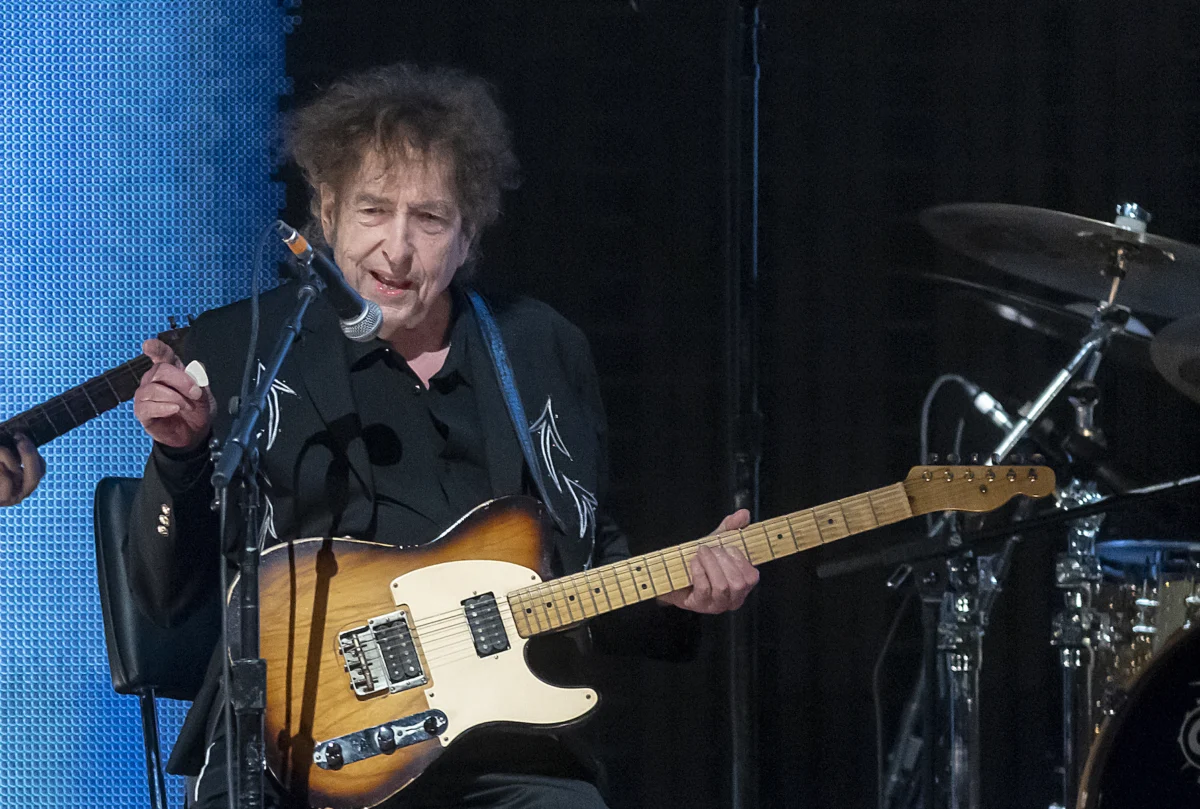
HangupsMusic.com – Omaha, Nebraska, witnessed a seismic shift in Bob Dylan’s ongoing Rough and Rowdy Ways tour as the legendary artist launched its 2026 leg at the Orpheum Theater on Saturday evening. Far from merely resuming his acclaimed series of performances, Dylan unveiled a dramatically reconfigured sonic landscape, marked by significant instrumental changes, a trimmed focus on his latest studio work, and a collection of unearthed gems and surprising debuts that sent ripples of excitement through his devoted fanbase. The evening underscored Dylan’s enduring commitment to artistic evolution, proving once again that predictability remains a foreign concept in his storied career.
The most striking alterations to the tour’s established formula were immediately apparent. Where previous legs often featured nine selections from the Rough and Rowdy Ways album, Dylan pared this down to just six, signaling a deliberate broadening of the setlist’s scope. Furthermore, his familiar grand piano, a staple of recent tours, was conspicuously absent, replaced by a more modest keyboard positioned centrally on the stage. This instrumental downshift extended to his bandmates, with guitarists Bob Britt and Doug Lancio, usually purveyors of electric textures, performing entirely on acoustic instruments. An electric guitar rested untouched on Dylan’s amplifier throughout the entire performance, a silent testament to the evening’s acoustic mandate and an intriguing visual metaphor for the chosen path.
The evening commenced with the familiar strains of "I’ll Be Your Baby Tonight," a classic opener that provided a momentary anchor before the setlist veered into uncharted territory. The first major surprise arrived swiftly with the inclusion of "The Man in the Long Black Coat," a haunting narrative from his critically acclaimed 1989 album, Oh Mercy. Its last live appearance dated back to 2013, making its return a poignant moment for long-time followers familiar with its atmospheric depth and lyrical intrigue. This deep cut’s reappearance set the tone for an evening peppered with rarities and fresh interpretations, moving beyond the well-trodden paths of the Rough and Rowdy Ways repertoire.
The set continued to unfold with calculated unpredictability, weaving in other unexpected selections. The timeless folk standard "Don’t Think Twice, It’s All Right," a testament to Dylan’s enduring connection to his folk roots, found a welcome spot. Additionally, Bo Diddley’s gritty rhythm and blues classic, "I Can Tell," made a notable appearance. This particular cover had, in recent years, been reserved almost exclusively for his appearances at the Outlaw Festival, making its inclusion in a more intimate theater setting a refreshing change and further indication of Dylan’s intent to diversify the live experience. Each of these inclusions, rendered through the evening’s newly adopted acoustic lens, offered fresh perspectives on familiar and lesser-played material, prompting fans to reconsider the songs’ inherent structures and lyrical nuances.
However, the zenith of the evening’s surprises arrived near its conclusion: the live debut of Eddie Cochran’s 1958 rock and roll anthem, "Nervous Breakdown." For an artist whose career spans over six decades, a "live debut" is a rare and momentous occasion, particularly when it delves into the catalog of an early rock and roll pioneer. Cochran, a seminal figure tragically lost too soon, influenced countless musicians, and Dylan’s decision to tackle this energetic classic for the first time on stage speaks volumes about his eclectic musical palate and his continuous engagement with the foundations of American popular music. While the venue maintained a strict ban on audience phones, preventing any visual recordings, dedicated fans managed to capture pristine audio recordings, ensuring that these historic moments would be preserved and shared with the wider world, offering a tantalizing glimpse into Dylan’s unexpected foray into raw, early rock and roll.
This deliberate pivot towards an acoustic, phone-free environment at the Orpheum Theater stands in stark contrast to Dylan’s most recent American performances during the final leg of the Outlaw Festival tour in September 2025. Those shows were characterized by what many described as "supremely odd" stage antics, even by Dylan’s idiosyncratic standards. During the Outlaw Festival engagements, Dylan frequently performed obscured from view, donning a hoodie pulled tight over his head and employing a music stand with bright lights positioned strategically around his piano, effectively making it nearly impossible for audience members to discern his face. This unusual stagecraft was widely interpreted as a direct response to the pervasive issue of fan filming and photography, a challenge inherent to large outdoor amphitheaters where the strict phone-free policies enforceable in smaller theater settings are often impractical. The Omaha concert, therefore, represented a return to a more traditional, albeit acoustically re-imagined, stage presence, allowing fans a clear, unobstructed view of the artist throughout the evening.
Despite the palpable excitement generated by the setlist’s daring innovations and the refreshed musical arrangements, the Omaha performance was not entirely without its challenges. Matt Simonsen, reporting for Ray Padgett’s insightful "Flagging Down the Double E" newsletter, candidly described the concert as "[It was] the roughest concert of the Rough and Rowdy Ways tour." Simonsen’s observations highlighted recurring technical issues, particularly concerning Dylan’s microphone placement. He noted that Dylan frequently found himself "too far from it when he sat, uncomfortable when he leaned into it," leading to repeated adjustments. The microphone stand was reportedly picked up and "plopped down about 10 times throughout the night," each instance emitting a "louder boom than the time before." Indeed, Simonsen quipped that the "loudest instrument of the night was the microphone stand as it hit the stage floor!" This recurring distraction undeniably impacted the vocal delivery, with Simonsen remarking that while Dylan’s voice sounded "really good when he was comfortable with the microphone," there were "other times we couldn’t hear him well due to the distance between him and the mic." Such candid observations offer a glimpse into the raw, unpolished, and sometimes challenging nature of Dylan’s live performances, a characteristic that, for some, adds to the authentic, unpredictable charm of his artistry.
The Rough and Rowdy Ways album itself, released in 2020, marked Dylan’s first collection of original material in eight years and was met with widespread critical acclaim. Its lyrical depth, drawing on themes of mortality, love, and American history, combined with its blues-infused instrumentation, solidified its place as a late-career masterpiece. Live, the songs from this album, such as "False Prophet," "Goodbye Jimmy Reed," and "I’ve Made Up My Mind to Give Myself to You," have taken on new dimensions, with Dylan often reinterpreting their arrangements nightly. The decision to reduce their prominence in the Omaha set, coupled with the acoustic instrumentation, suggests a conscious effort to prevent the tour from becoming solely a showcase for the new album, instead positioning it as a broader exploration of his vast catalog and musical influences. This artistic choice reaffirms Dylan’s perpetual motion, his refusal to settle into any one sound or era, and his ongoing dialogue with the ever-evolving traditions of American music.
As the 2026 spring leg of the Rough and Rowdy Ways tour continues, fans across the United States eagerly anticipate what further surprises Dylan might have in store. The tour is set to resume its journey Sunday night at the Mary W. Sommervold Hall in Sioux Falls, South Dakota, before winding its way through various cities and concluding on May 1 at the Abilene Auditorium in Abilene, Texas. Beyond the spring itinerary, Dylan has also announced a select number of additional U.S. engagements for the summer, including two dates on June 6 and 7 at the picturesque Chateau Ste. Michelle Winery in Woodinville, Washington, and a single performance on July 2 at the WinStar World Casino and Resort in Thackerville, Oklahoma. These upcoming dates promise to continue the narrative of reinvention and unexpected musical revelations that commenced so memorably in Omaha, leaving audiences to wonder what fresh interpretations and long-lost gems the enigmatic troubadour will unearth next.
