 By admin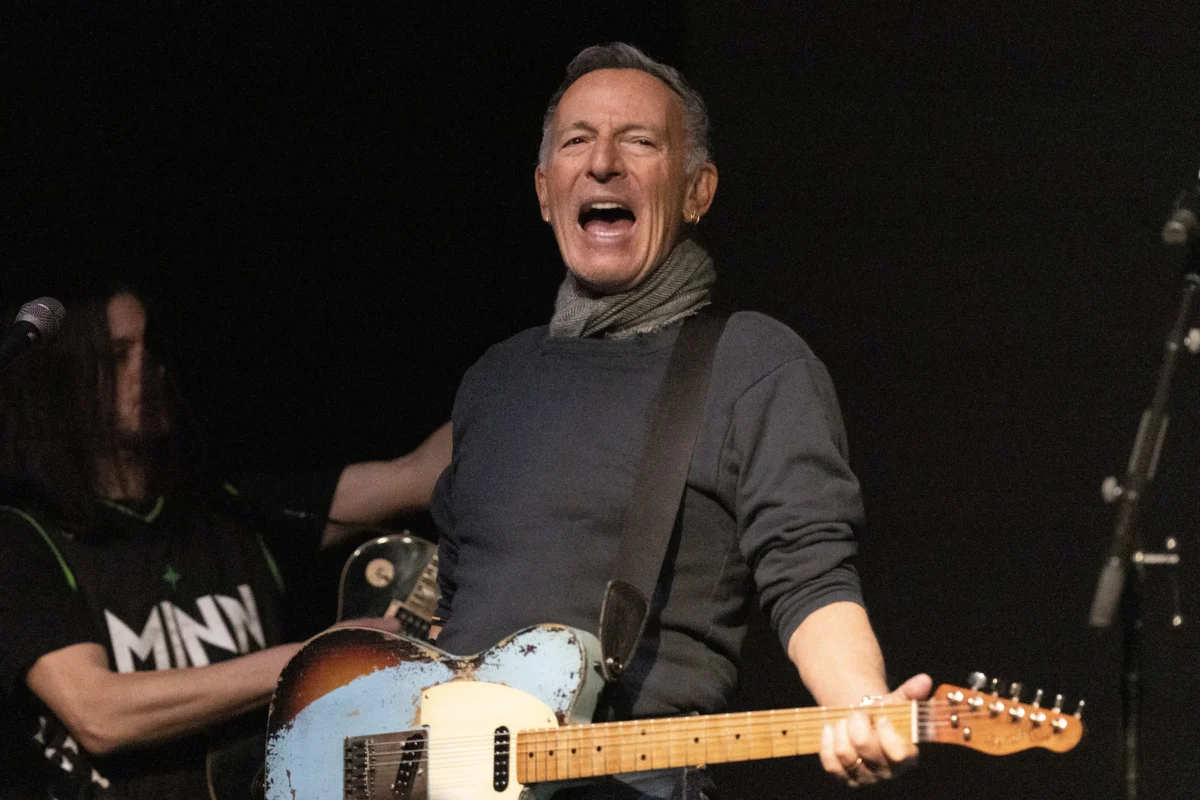
HangupsMusic.com – As the United States Supreme Court prepares to deliberate on one of the most significant constitutional cases in modern history, Trump v. Barbara, the American Civil Liberties Union (ACLU) has launched a powerful public awareness campaign featuring an unlikely, yet iconic, ally: Bruce Springsteen. On April 1, the nation’s highest court will hear arguments concerning a January 2025 Executive Order from former President Trump, which sought to fundamentally alter the interpretation of the 14th Amendment’s citizenship clause, effectively ending automatic birthright citizenship for individuals born within U.S. borders. This controversial order, previously blocked by multiple district courts nationwide, now faces its ultimate challenge, with the Supreme Court’s decision poised to reshape the very definition of American identity.
In a strategic move to galvanize public opinion and underscore the profound human stakes of the case, the ACLU has collaborated with "The Boss" to produce a poignant 30-second video. The campaign masterfully pairs Springsteen’s universally recognized 1984 anthem, "Born in the U.S.A.," with a compelling visual montage of diverse Americans. These are ordinary citizens from all walks of life—families, workers, students—whose lives and the lives of future generations stand to be dramatically impacted by the Court’s ruling. The video, set to premiere on Morning Joe, aims to ignite a national conversation, reminding viewers of the deep-seated principle of birthright citizenship that has anchored the nation for over a century.
Anthony D. Romero, the executive director of the American Civil Liberties Union, shared exclusive insights into the genesis of this impactful campaign, the arduous journey to the Supreme Court, and the enduring relevance of Springsteen’s music in this critical moment. Romero revealed that the spark for the video struck him during an interview with Katie Couric, just days after President Trump’s 2025 inauguration. Trump’s immediate executive action targeting birthright citizenship, which Romero described as an audacious attempt to unilaterally rewrite the 14th Amendment, was a breathtaking affront to the civil rights community.
For the ACLU, birthright citizenship is more than a legal clause; it is "sacred ground." Romero explained its foundational role in rectifying America’s original sin of chattel slavery, granting citizenship to the descendants of enslaved people and establishing a pathway to equality for a nation built by immigrants. It was during this reflection that the chorus of "Born in the U.S.A." spontaneously came to mind, planting the seed for a campaign that would resonate far beyond legal briefs and courtrooms.
The ACLU’s proactive stance was not accidental. Having closely monitored Project 2025, a comprehensive conservative initiative outlining a potential future administration’s agenda, the organization had anticipated that birthright citizenship would be a prime target for redefining national belonging. This foresight enabled the ACLU to meticulously prepare its legal arguments and identify potential clients long before the election. Just days prior to the 2025 inauguration, an internal alert from someone close to the incoming administration confirmed their suspicions: birthright citizenship was indeed a top priority for executive action.
True to their intelligence, President Trump signed the executive order on his inauguration day. The ACLU, already primed for battle, filed the first lawsuit challenging the order a mere two hours later, even on a federal holiday. This swift response underscored their understanding of the monumental struggle ahead. However, the legal fight, as Romero noted, was only one front. Equally crucial was the battle for the "hearts and minds of the American people."
The ACLU recognized the necessity of a public campaign to re-engage ordinary citizens with the bedrock principles of their country. They sought to evoke the visceral sense of American pride associated with national symbols and holidays—the flag, the anthem, community celebrations. This initiative was a deliberate effort to reclaim the narrative of patriotism, refusing to cede it to those attempting to sow division. The goal was to present a positive, unifying vision of America, reaching audiences who might not typically engage with the ACLU’s work.
"Born in the U.S.A." emerged as the perfect conduit for this message. Romero highlighted the song’s power to encapsulate the profound stakes of the Supreme Court case, illustrating how birthright citizenship is interwoven with the nation’s fabric. Despite its often-misinterpreted, jingoistic refrain, the song’s lyrics tell a poignant story of a Vietnam veteran returning to a nation that had seemingly abandoned its own. It is a powerful call for America to live up to its founding ideals. Romero emphasized how the song’s stirring melody and brassy chorus inherently evoke a sense of pride and resolve, encouraging listeners to stand tall and reflect on the values that truly define the nation. Decades after its release, its resonance for those grappling with the American dream and the struggle to uphold national values remains as potent as ever.
The process of securing Springsteen’s involvement began with a long-standing relationship between Romero and Jon Landau, Springsteen’s manager. Romero had observed Springsteen’s increasingly vocal critiques of the administration, particularly his courageous on-stage remarks, such as those made in Minneapolis in January 2025. Springsteen’s willingness to "speak truth to power" when many others remained silent convinced Romero that he was ready to join the fight. Following the Couric interview, Romero tasked his team with exploring how the song could be integrated into an ad campaign. Richard Lovett at CAA, a mutual contact, immediately grasped the vision, providing crucial support before the formal pitch to Landau. With Landau’s enthusiastic endorsement, Sony Music and Sony Music Publishing quickly came on board, recognizing the gravity of the moment and Springsteen’s clear stance.
However, securing the song rights proved to be the easier part. The true challenge lay in navigating the complex legal landscape to ensure the ACLU’s specific case reached the Supreme Court. Multiple lawsuits challenging Trump’s executive order had been filed by various organizations and state attorneys general, some progressing faster in lower courts. It wasn’t until December 2025 that the Supreme Court announced it would take up Trump v. Barbara and only that case, cementing the ACLU’s position at the forefront. The argument date, April 1, 2026, was finally set in February, triggering a frantic scramble for the ACLU team.
With the legal battle secured, the focus shifted to producing a "Super Bowl-caliber ad" worthy of the moment. Collaborating with CAA, the ACLU was introduced to top-tier directors, ultimately selecting Anderson Wright from Stink Films. The production was a whirlwind: 13 shoots across Southern California in just five days, involving a cast of over 115 individuals, all racing against the clock to craft a visually stunning and emotionally resonant piece.
The video’s ultimate aim, Romero articulated, is to foster a sense of shared belonging, allowing viewers to see themselves and their neighbors as integral threads in the nation’s diverse tapestry. It transforms everyday scenes—classrooms, construction sites, family gatherings—into a triumphant affirmation of America, a nation sustained by birthright citizenship. The campaign seeks to instill pride in being "Born in the U.S.A.," emphasizing that the character of the nation itself is on the line. Beyond political engagement, it strives to capture the attention of those typically disengaged from Supreme Court proceedings, even encouraging supporters of the former President to pause and consider the far-reaching implications.
Romero hopes the campaign will dispel dangerous misunderstandings about birthright citizenship, serving as a rallying cry against attempts to erode the Constitution, demonize immigrants, and target activists. The ACLU envisions their anticipated victory at the Supreme Court as a critical "inflection point," halting a dangerous trend and swinging the pendulum back towards constitutional integrity. Ending birthright citizenship, he warned, would irrevocably tear the fabric of the country, shredding a foundational pillar of the 14th Amendment. Practically, it would plunge hundreds of thousands into legal limbo, creating chaos for generations and establishing a permanent underclass devoid of legal identity and protection.
Revisiting the choice of "Born in the U.S.A.," Romero reiterated its unique power. Everyone knows the song; it evokes potent emotions. While its melody is proudly patriotic, its lyrics narrate the painful experience of national abandonment, a reality tragically familiar to many immigrants today. He recalled playing the song repeatedly in his college dorm, introducing it to his roommate from Kolkata, who later became an American citizen. Romero’s godchildren, born in the U.S.A., would be stripped of their citizenship if Trump’s order prevailed, making the fight deeply personal for him and countless others.
Springsteen himself has acknowledged "Born in the U.S.A." as both his most popular and most misunderstood song. This complexity—a dark, critical narrative juxtaposed with an anthemic, patriotic melody—is precisely what makes it quintessentially American and perfect for this campaign. Just as Springsteen sought to "wake people up" with his original release, the ACLU aims to rouse the nation to protect its neighbors, families, and children. Romero expressed unwavering confidence in a victory, citing over a century of clear constitutional precedent and unanimous lower court rulings. The president, he affirmed, does not possess the authority to redefine citizenship.
Should the unimaginable occur and the Supreme Court rule against birthright citizenship, Romero assured that the ACLU is prepared for an extended, relentless struggle. "We will cry for one day," he declared, "and then we will also get to work to restore what we lost." With a 106-year legacy, the organization is committed to fighting at every level, for as long as it takes, whatever it takes, to safeguard this fundamental right. The creation of a permanent underclass, an outcome he firmly believes does not reflect American values, is a future the ACLU will never accept. The "Born in the U.S.A." campaign is a vibrant call to unity, inviting all Americans to stand together in defense of a principle that defines the very soul of their nation.
