
 By Azzam Bilal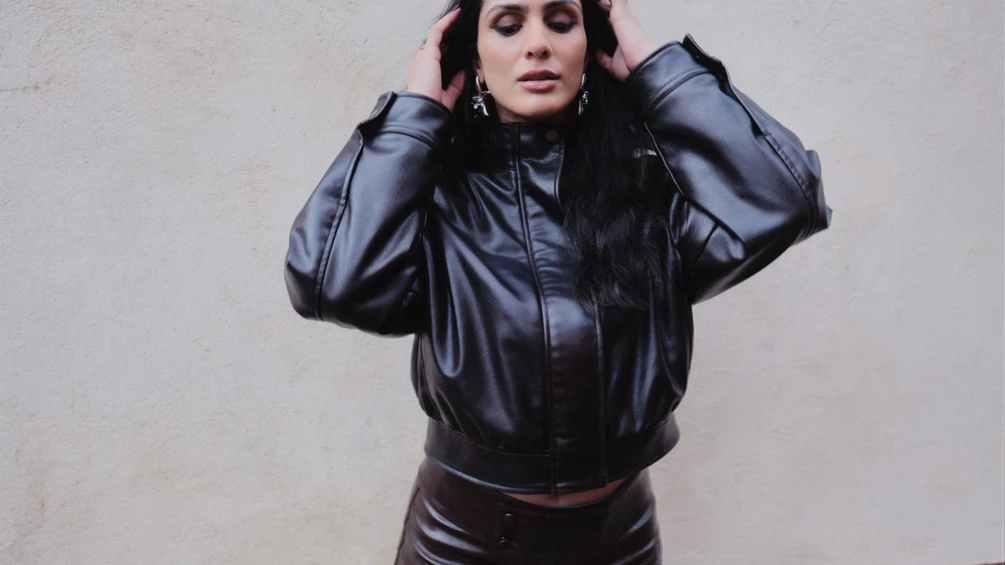
HangupsMusic.com – New York, The landscape of contemporary electronic music is increasingly defined by its ability to collapse geographical distances, turning the global club scene into a singular, vibrating tapestry of cultural exchange. At the forefront of this movement is ZAINAB, a Pakistan-born, New York-based producer whose debut EP, Canal View, has recently arrived via Technicolour, a sub-label of the legendary Ninja Tune. This six-track collection is more than just a rhythmic exercise; it is a sonic cartography that maps the emotional and physical journey from the residential streets of Lahore to the high-energy dance floors of Brooklyn. By weaving together the structural rigidity of New York house with the fluid, evocative melodies of the Global South, South Asia, and the Arab world, Zainab Anwar—the artist behind the moniker—has crafted a debut that feels both deeply personal and universally resonant.
The title of the EP, Canal View, serves as a direct reference to the Lahore neighborhood where Anwar spent her formative years. In the world of electronic music, where titles are often abstract or utilitarian, this choice grounds the project in a specific sense of place. It suggests a perspective shaped by the sights and sounds of a Pakistani upbringing, viewed through the lens of a later life spent in the United States. Anwar herself describes the record as an "amalgamation," a conscious effort to look back at her roots while simultaneously engaging with the avant-garde electronic scene of her current home. This duality—the "looking back and forth"—is the engine that drives the EP, creating a soundscape where the traditional and the experimental do not merely coexist but actively transform one another.
One of the most striking elements of Canal View is its commitment to "locally influenced, globally oriented" production. This philosophy is perhaps most evident in the standout single "Banglahore." The track is a high-concept collaboration featuring the British-Bengali producer and rapper Surya Sen. On a surface level, it is a propulsive, club-ready anthem, but beneath the beat lies a layer of profound geopolitical symbolism. Anwar has explicitly noted that the track represents a bridge between Pakistan and Bangladesh—two nations with a complex, often painful shared history marked by the events of 1971 and subsequent decades of diplomatic tension. By bringing together artists from these two backgrounds, "Banglahore" acts as a cultural olive branch. It asserts that music can serve as a medium for reconciliation, replacing historical animosity with a shared rhythm. Anwar’s message is clear: the dance floor is a space where political boundaries can be dissolved in favor of human connection.
The EP’s linguistic diversity further emphasizes its transcontinental identity. The single "Jadoo," which translates to "magic" in Urdu, features Anwar singing in her native tongue. In a global music industry where English remains the dominant lingua franca, the inclusion of Urdu lyrics in a house music context is a radical act of self-assertion. It reclaims the genre’s roots as a sanctuary for marginalized voices while introducing the phonetic beauty of South Asian languages to a wider audience. The track does not treat the language as an exotic texture but as a primary narrative tool, allowing the emotional weight of the performance to transcend the language barrier for non-Urdu speakers.
Beyond its sociopolitical themes, Canal View is a masterclass in genre-bending production. The track "Ayewah!" sees Anwar collaborating with Los Angeles-based artist Tony Quattro, resulting in a composition that feels like a dialogue between different urban centers. The track leans into the percussive complexities of the Global South, utilizing rhythms that diverge from the standard four-on-the-floor house beat to create something more syncopated and unpredictable. Meanwhile, "Her Eyes" offers a more atmospheric, perhaps more introspective side of the EP, showcasing Anwar’s ability to manipulate mood and texture through synthesis and vocal processing.
The release of Canal View on Technicolour is a significant milestone for Anwar. As a label, Technicolour has long been a curator of forward-thinking electronic music, often serving as a launchpad for artists who defy easy categorization. By joining this roster, ZAINAB is positioned alongside some of the most innovative names in the industry, reinforcing the idea that her "fusion" sound is not a niche experiment but a central component of the future of house music. The EP arrives at a time when the "South Asian Underground" is experiencing a global renaissance, with artists of the diaspora increasingly taking center stage at major festivals and on influential labels. Anwar’s contribution to this movement is distinguished by its specific focus on the intersection of Lahore’s residential nostalgia and New York’s industrial grit.
In her press statements surrounding the release, Anwar emphasized the importance of asking what sounds become when they are merged. This spirit of inquiry is what prevents Canal View from feeling like a mere collection of samples. It is not an "East meets West" cliché; rather, it is a study in how identity is reconstructed in the modern world. For an immigrant artist, the concept of "home" is often fluid, existing somewhere between the place of origin and the place of residence. Canal View captures this fluidity perfectly. The beats are informed by the relentless pace of New York life—the subways, the late-night clubs, the urban density—while the melodic structures and vocal deliveries carry the warmth and history of Lahore.
The critical reception of the EP has already begun to highlight its technical proficiency and emotional depth. Critics have noted that Anwar possesses a keen ear for balance, ensuring that the heavy basslines required for club play do not overwhelm the intricate melodic flourishes that give the record its soul. This balance is difficult to achieve; many producers who attempt to blend traditional music with modern electronics fall into the trap of "world music" tropes that can feel superficial. Anwar avoids this by treating every element, whether it be an Urdu vocal or a Roland-style drum machine, with equal reverence and creative agency.
As the EP continues to circulate through the global DJ circuit and streaming platforms, its impact is likely to grow. For listeners in the South Asian diaspora, Canal View offers a rare moment of representation in a genre that has historically been dominated by Western perspectives. For the broader electronic music community, it provides a refreshing alternative to the increasingly homogenized sounds of mainstream house. It challenges the listener to consider the origins of the rhythms they dance to and to recognize the cultural histories embedded within them.
Ultimately, ZAINAB’s debut is a testament to the power of artistic curiosity. By mining her own history and the complex history of her region, she has created a body of work that is as educational as it is danceable. Canal View stands as a vibrant, rhythmic manifesto for a world where borders are porous and music is the ultimate connective tissue. Whether it is the symbolic unity of "Banglahore" or the enchanting Urdu melodies of "Jadoo," the EP invites the listener to step into a world where Lahore and New York are just a heartbeat apart. As Anwar continues to evolve as a producer and performer, Canal View will undoubtedly be remembered as the moment she established herself as a vital new voice in the global electronic dialogue, proving that the most compelling sounds are often found at the crossroads of different worlds.
