
 By Azzam Bilal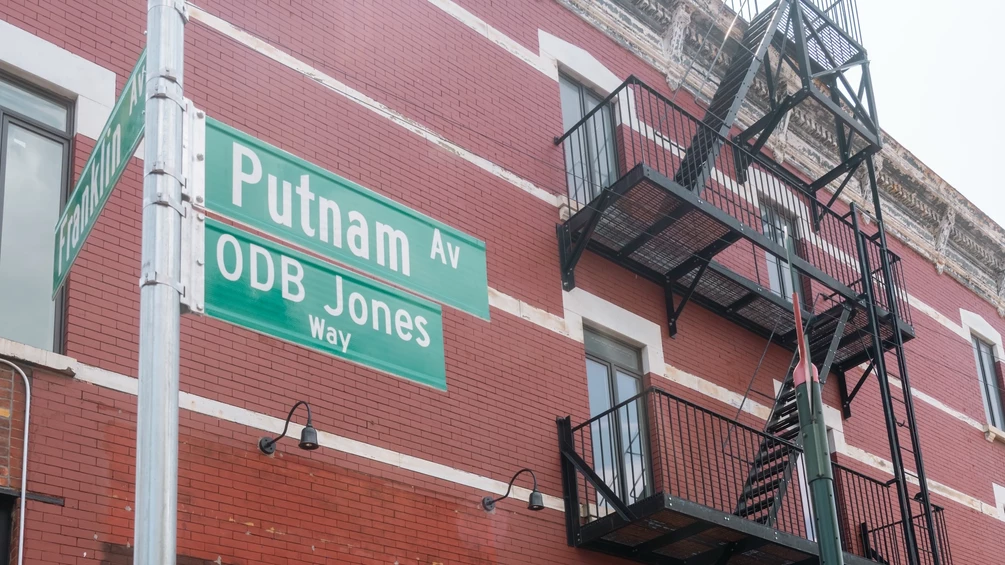
HangupsMusic.com – New York, The concrete canyons of Brooklyn echoed with the spirit of hip-hop’s most eccentric visionary this past weekend as local officials and the family of Russell Tyrone Jones, known globally as Ol’ Dirty Bastard, gathered to immortalize his name in the very fabric of the borough. In a ceremony that blended somber remembrance with a vibrant celebration of culture, the corner of Putnam and Franklin Avenues in the Bedford-Stuyvesant neighborhood was officially co-named “ODB Jones Way.” The event, held on Sunday, July 26, served as a profound homecoming for the late Wu-Tang Clan co-founder, marking a permanent tribute to a man whose influence on the genre remains as potent today as it was during the height of the 1990s.
The intersection chosen for this honor is steeped in personal and artistic significance. It sits directly adjacent to a long-standing mural of the artist, a towering piece of street art that recreates the iconic cover of his 1995 solo debut, Return to the 36 Chambers: The Dirty Version. The mural, which features ODB’s likeness styled after a New York City welfare identification card, has long been a pilgrimage site for fans of the Wu-Tang Clan. By placing the "ODB Jones Way" sign at this specific location, the city has bridged the gap between grassroots community art and official municipal recognition.
The initiative was the result of a coordinated effort between the Estate of Ol’ Dirty Bastard and New York City Council Member Chi Ossé, who represents the 36th District. Ossé, a vocal advocate for Brooklyn’s cultural heritage, was instrumental in navigating the legislative process to ensure the rapper’s name would be etched into the cityscape. The unveiling was a family affair, attended by ODB’s mother, Cherry Jones, and his eldest brother, Ramsey Jones, alongside a crowd of enthusiasts, neighbors, and hip-hop historians.
During the ceremony, Ramsey Jones spoke emotionally about the deep-rooted ties the family maintains with this specific patch of Brooklyn. He noted that their grandmother’s home is located on the very block of Putnam Avenue where the mural and the new street sign now stand. "I am very honored to be here because my grandmother’s house is on this block," Jones remarked to the gathered crowd. He expressed that the recognition felt like a validation of his brother’s life and the family’s presence in the neighborhood, stating that both he and his mother were deeply moved by the gesture.
Council Member Ossé took to social media following the event to reflect on the artist’s legacy, describing ODB as "brilliant yet hilarious" and praising him for remaining "unapologetically true to himself." Ossé’s remarks highlighted the dual nature of the rapper’s public persona—a wild, unpredictable force of nature who simultaneously possessed a sharp, innovative musical mind. Through his work with the Wu-Tang Clan and his solo endeavors, ODB helped craft a sonic identity that was gritty, melodic, and entirely distinct from anything else in the hip-hop landscape. His impact, as Ossé noted, radiates from the streets of Bed-Stuy to the global stage.
Russell Tyrone Jones was born and raised in the nearby Fort Greene neighborhood, but his identity was inextricably linked to the entire borough of Brooklyn. From his early days as a founding member of the Wu-Tang Clan—the legendary collective that emerged from Staten Island and Brooklyn to dominate the music world—to his solo superstardom, he carried the borough’s raw energy with him. His career was defined by a series of high-energy performances and a vocal style that defied categorization, blending rapping, singing, and scatting into a chaotic yet compelling whole.
However, the ODB story is also one of tragedy. The artist passed away on November 13, 2004, just two days before his 36th birthday. His death, caused by an accidental drug overdose at a recording studio in Manhattan, sent shockwaves through the music industry and left a void in the Wu-Tang Clan that has never truly been filled. Despite his premature passing, the fascination with his life has only grown. In 2024, a new documentary titled A Tale of Two Dirtys premiered on A&E, directed by the acclaimed filmmaking duo Sam and Jason Pollard. The documentary seeks to peel back the layers of the "Ol’ Dirty Bastard" character to reveal the complex, sensitive man behind the headlines, exploring his struggles with fame, mental health, and the legal system.
The street naming comes at a time of renewed reflection for the Wu-Tang Clan as a whole. The group is currently in the midst of "The Final Chamber," an extensive international farewell tour intended to serve as a closing chapter for one of the most influential acts in music history. As they traverse the globe, the group’s 1993 debut album, Enter the Wu-Tang (36 Chambers), continues to be celebrated as a foundational text of modern hip-hop. Recent retrospectives have highlighted how the album’s lo-fi production, cinematic themes, and diverse lyrical styles created an "eternal" blueprint for the genre.
The year 2024 has been a bittersweet one for the Wu-Tang family. In April, the group reached the pinnacle of institutional recognition when they were inducted into the Rock & Roll Hall of Fame. They joined an eclectic class of inductees that included Sade and New Order/Joy Division, a testament to the group’s cross-genre appeal and lasting cultural weight. However, this triumph was preceded by loss; in February, the group mourned the passing of Oliver “Power” Grant. Grant, a co-founder of the group and the executive producer of all their major albums, died at the age of 52. As the visionary who helped build the Wu-Tang brand—from the music to the Wu-Wear clothing line—Grant was a pivotal figure in the group’s rise to power, and his absence was felt deeply during the Hall of Fame festivities.
The dedication of "ODB Jones Way" is part of a broader trend in New York City to honor its musical legends through the renaming of public spaces. In recent years, intersections have been dedicated to the likes of The Notorious B.I.G. and Phife Dawg of A Tribe Called Quest. These designations serve as more than just honorary titles; they act as geographical markers of a history that is often overlooked in the city’s rapidly changing landscape. In a neighborhood like Bed-Stuy, which has faced significant gentrification over the last two decades, the permanent installation of ODB’s name ensures that the area’s rich African-American cultural history remains visible and celebrated.
For the fans who gathered on Sunday, the new street sign is a reminder of ODB’s "Dirt Dog" persona—the man who once took a limousine to pick up welfare checks with an MTV film crew in tow, and who famously interrupted the 1998 Grammy Awards to proclaim that "Wu-Tang is for the children." While those moments became part of pop culture folklore, the street naming focuses on the man behind the myth: Russell Tyrone Jones, a son of Brooklyn who changed the world with his voice.
As the "Final Chamber" tour winds down and the documentary continues to find new audiences, the legacy of Ol’ Dirty Bastard appears more secure than ever. He was a figure who stood at the intersection of madness and genius, a man who refused to conform to the expectations of the industry or society. Now, at the corner of Putnam and Franklin, his name will stand as a permanent sentinel over the neighborhood that shaped him. The sign "ODB Jones Way" is a small piece of metal, but it carries the weight of a monumental career and the love of a community that refuses to let his memory fade. Through this dedication, Brooklyn ensures that while the man may be gone, the "Dirty Version" of the American dream he represented will live on for generations to come.
