
 By admin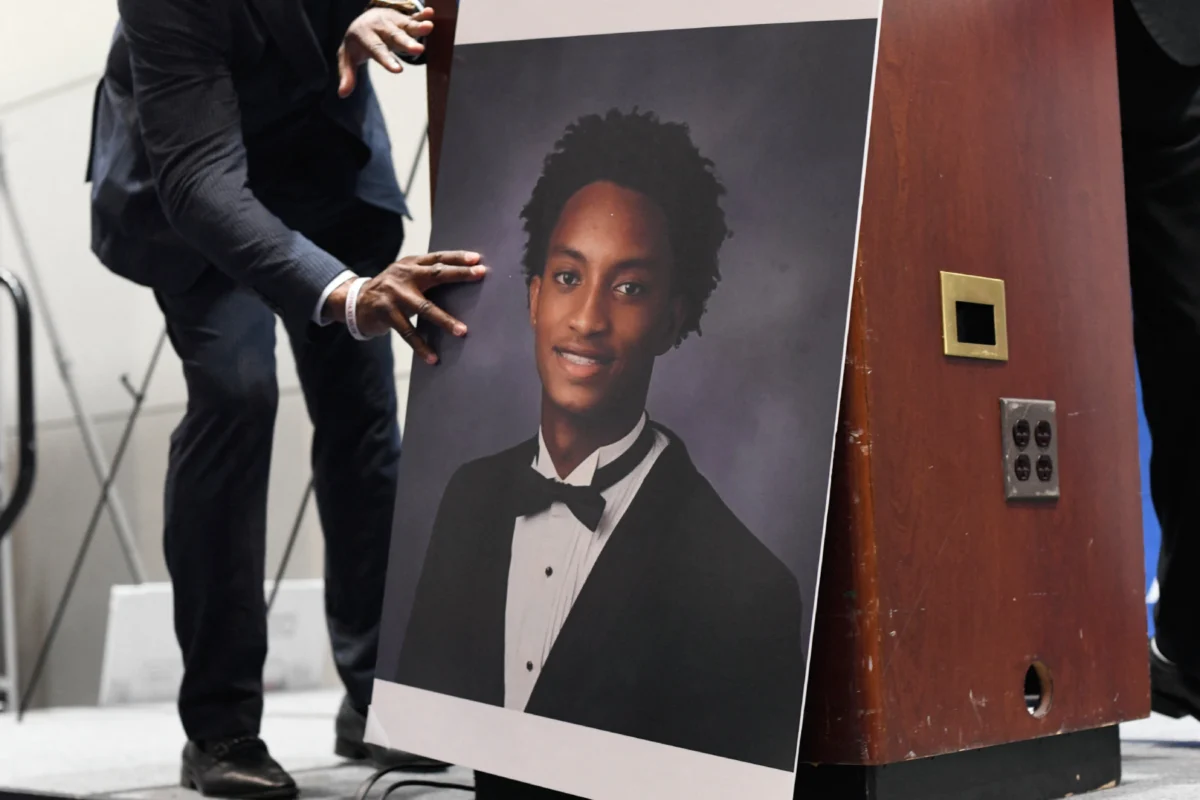
HangupsMusic.com – Jackson County, Mississippi – The somber quest for definitive answers surrounding the untimely death of 18-year-old Nolan Xavier Wells has reached a pivotal, yet for many, unsatisfying juncture. A grand jury, convened to meticulously examine the circumstances of the promising young athlete’s demise on Horn Island last July, has unanimously opted against issuing any indictments, effectively closing the official investigation without criminal charges. This decision, announced late Monday by Jackson County District Attorney Angel Myers McIlrath, has done little to quell the profound grief and persistent questions that have enveloped Wells’ family and a concerned national audience, intensified by the vocal involvement of prominent public figures.
The narrative surrounding Nolan Wells’ death is one steeped in ambiguity and conflicting perspectives. A vibrant football player from Ocean Springs, Mississippi, Wells was reportedly enjoying the Fourth of July holiday with a group of friends on Horn Island, a serene yet isolated barrier island nestled off the Mississippi coast, close to the Alabama border. As the day drew to a close, Wells’ friends departed the island by boat, leaving him behind. Accounts suggest Wells made the independent choice to remain on the island, a decision that would tragically seal his fate. He was last observed around 3 p.m. that day, dressed in blue swim trunks and sunglasses, seemingly in good spirits. Two days later, a U.S. park ranger made the grim discovery of his body on the very island where he was last seen alive, igniting a firestorm of speculation and a deeply personal quest for justice.
The subsequent investigation into Wells’ death became a focal point of public scrutiny, fueled in part by the indeterminate nature of initial findings. An initial autopsy, conducted on July 7 by a state medical examiner in Mississippi, revealed bruising on the back of Wells’ head but concluded it was not a fatal injury. Crucially, this first examination found "no evidence of any fatal injury or organic disease," leaving the immediate cause of death shrouded in mystery. Dissatisfaction with these initial results prompted Wells’ family to commission an independent autopsy. This critical step was made possible through the financial backing of former NFL quarterback and social justice advocate Colin Kaepernick, whose involvement underscored the growing national interest in the case and the family’s fervent desire for an exhaustive and transparent examination. The independent pathologist’s report further complicated matters, classifying the cause of death as "undetermined pending investigation," a finding that only deepened the resolve of those who suspected foul play.
The call for clarity resonated deeply within various communities, leading to widespread public advocacy. During Wells’ poignant memorial service, civil rights leader Reverend Al Sharpton delivered a powerful eulogy, using the platform to announce a substantial $50,000 reward for any information leading to an arrest or conviction in the case. The urgency of his appeal was amplified when, mid-eulogy, acclaimed actor and filmmaker Tyler Perry spontaneously texted Sharpton, pledging to match the reward. The momentum continued with retired football star Terrell Owens contributing an additional $25,000, elevating the total reward to an impressive $125,000. Sharpton’s impassioned words during the service—"He was not on that island by himself. Somebody saw something or knows something"—encapsulated the family’s conviction that the truth lay hidden within the knowledge of others.
The grand jury’s formal report, made public on Monday, outlined the extensive investigative efforts undertaken. It detailed the issuance of 132 subpoenas and the testimonies heard from 43 witnesses, with seven individuals specifically invited to provide sworn statements. The report acknowledged the consideration of "credible evidence concerning the circumstances of how Mr. Wells sustained the injury to the back of his head, but the exact cause of injury remains uncertain." A particularly significant piece of testimony came from a witness who recalled seeing Wells "slip awkwardly off the side of a boat" around 3:30 p.m. on July 4. However, this witness could not definitively state whether Wells struck his head during the fall and observed that Wells continued to socialize normally afterward, showing no apparent signs of injury. This detail, while offering a potential explanation for the bruising, ultimately did not provide a conclusive link to his death.
District Attorney McIlrath’s statement sought to address some of the more contentious allegations that had circulated since Wells’ death. She emphatically stated that the grand jury’s "no true bill" was the unanimous outcome of a "thorough and exhaustive investigation," and that "in addition to bringing prosecutions against the guilty, the grand jury must also exonerate those who have been falsely accused." McIlrath directly confronted the sensitive issue of racial motivation, asserting, "There is absolutely no evidence to support the allegations that Nolan’s disappearance and death were racially motivated. Nolan’s friends loved Nolan and Nolan loved them. Nolan chose to stay on the island that day, and there is not a scintilla of evidence to contradict that." This firm stance aimed to dispel what had become a pervasive undercurrent of suspicion and to affirm the integrity of the investigation.
However, for the Wells family and their legal representative, renowned civil rights attorney Ben Crump, the grand jury’s decision felt less like a resolution and more like an evasion of accountability. Following the report’s release, Crump took to social media platform X to express his profound disappointment, declaring that "The public still deserves a clear account supported by records, evidence, and independent scrutiny. Nolan Wells’ death still demands answers." He further criticized the grand jury’s conclusion as an attempt "to close the chapter on Nolan Wells’ death without getting to the truth," as reported by CNN. Crump’s unwavering commitment to the family’s cause was evident in his resolve: "Nolan’s family will not rest until we know what happened to him, and neither will we."
Conversely, attorney Edward Paltzik, representing the friends who accompanied Wells on the boat trip – identified as Warren Hudson, Jax Pitalo, and Morgan Seymour – welcomed the grand jury’s decision as a complete vindication. In a statement also shared on X, Paltzik asserted, "We said it all along: Warren Hudson, Jax Pitalo, and Morgan Seymour were always completely innocent. There was never any doubt. They are terrific people." He extended his "deepest gratitude to District Attorney Angel Myers McIlrath and the Jackson County Sheriff’s Department for their professional, thorough, and unbiased investigation that was unprecedented both in care and scope." This stark contrast in reactions underscores the deep division in public opinion and the lingering questions that remain, despite the official conclusion of the criminal investigation.
The Horn Island tragedy resonates beyond the immediate grief of a family and the legal intricacies of a grand jury. It highlights the complexities inherent in cases where evidence is sparse, narratives are contested, and public trust is fragile. The involvement of high-profile figures like Kaepernick, Sharpton, Perry, and Owens not only brought significant financial resources to the family’s independent efforts but also ensured that Nolan Wells’ story transcended local news, becoming a national conversation. Their collective spotlight illuminated the case, pushing for transparency and accountability in a way that might not have occurred otherwise.
Horn Island itself, a federally protected wilderness area, typically evokes images of pristine beauty and tranquil escape. Yet, for the Wells family, it has become a place forever associated with unanswered questions and profound loss. The absence of a definitive cause of death, coupled with the grand jury’s inability to find grounds for indictment, leaves a void that facts alone cannot fill. The family’s enduring plea for truth, amplified by the voices of prominent advocates, ensures that while the legal chapter may be closed, the broader narrative of Nolan Wells’ mysterious passing on Horn Island remains unfinished, echoing with a persistent demand for clarity and closure. The pursuit of "what happened" will undoubtedly continue in the court of public opinion, a testament to the enduring impact of a young life tragically cut short under enigmatic circumstances.
