
 By admin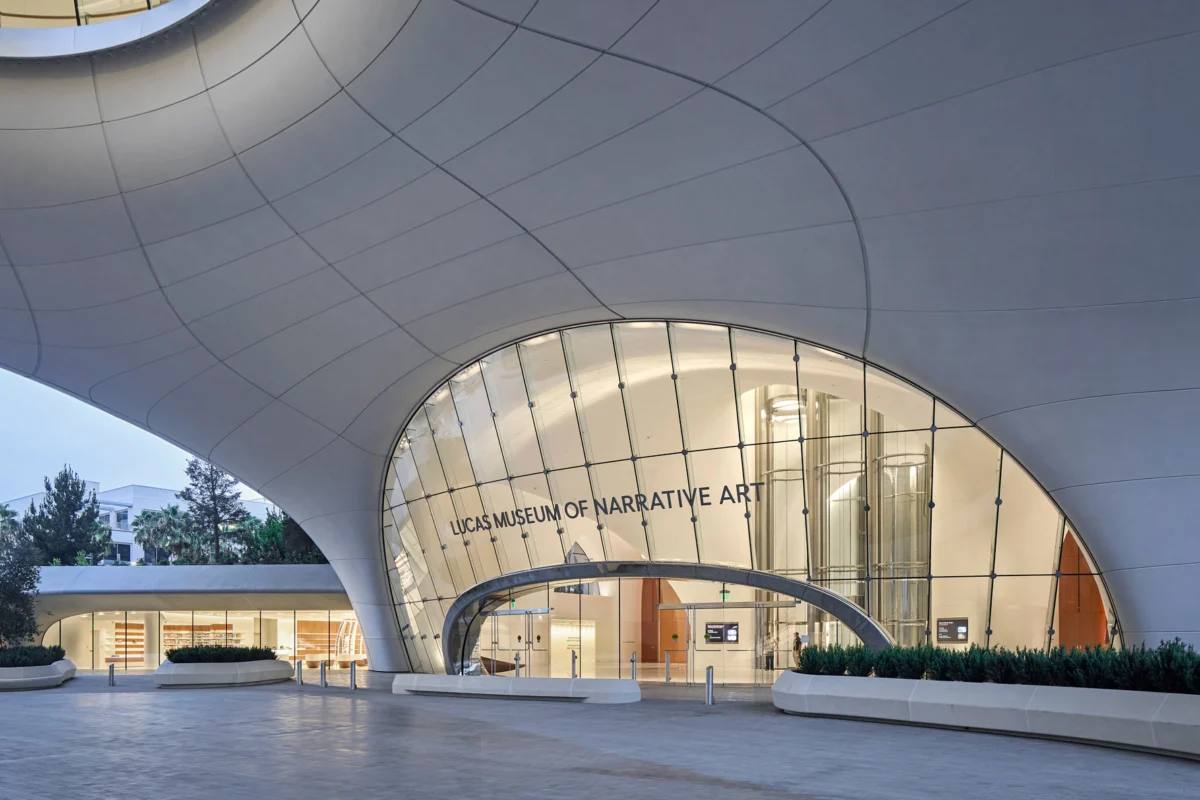
HangupsMusic.com – Los Angeles, The long-anticipated Lucas Museum of Narrative Art, a monumental testament to visual storytelling championed by visionary filmmaker George Lucas and his wife Mellody Hobson, has officially opened its doors in the heart of Los Angeles. After a journey spanning more than sixteen years and navigating through proposed locations in San Francisco and Chicago, the futuristic, "spaceship-like" edifice designed by renowned architect Ma Yansong now anchors Exposition Park, casting an imposing yet inviting presence adjacent to the University of Southern California, Lucas’s alma mater. This sprawling cultural institution, encompassing 300,000 square feet of exhibition space across a 13-acre campus, represents a staggering investment exceeding $1 billion from its founders, poised to redefine how the public engages with art that tells a story.
The opening marks the culmination of a deeply personal quest for Lucas, who revealed during an advance press event that the project stemmed from a desire to champion forms of art often overlooked by traditional institutions. He described himself as driven by challenging conventional wisdom, finding fascination in "doing things people say can’t be done." For Lucas, the museum is more than a collection; it’s a profound statement on the power of visual narratives to forge collective understanding and shared belief systems. He articulated a philosophy rooted in humanity’s earliest forms of communication, asserting that images and stories, when combined, possess an unparalleled capacity to shape society, fostering cooperation and a sense of shared purpose. This ethos, born from a lifetime of crafting epic tales, forms the intellectual backbone of the museum.

Architect Ma Yansong of MAD Architects has translated Lucas’s grand vision into a physical marvel. The building’s exterior is a fluid, organic form, reminiscent of a celestial vessel or perhaps a cloud, defying the rigid lines typically associated with institutional architecture. Its sculpted concrete skin and expansive glass surfaces reflect the vibrant Los Angeles sky, creating a dynamic interplay of light and shadow that changes throughout the day. The design, with its gentle undulations and terraced public spaces, feels less like a static monument and more like a living landscape, encouraging exploration both inside and out. This "mountain of culture," as Yansong has described it, stands as a bold new landmark, its innovative structure promising an experience as distinctive as the collection it houses.
Within its captivating walls, visitors embark on a journey through an astonishing array of more than 1,300 artifacts currently on display, drawn from a permanent collection exceeding 40,000 works. The museum’s interior is a deliberately meandering environment, inviting visitors to wander without a prescribed path. This labyrinthine layout, far from being accidental, encourages serendipitous discovery, where unexpected juxtapositions spark new connections. While the overarching theme of "visual storytelling" provides a conceptual framework, the exhibition design embraces a wonderfully eclectic and sometimes delightfully disorienting approach. One moment, a life-sized representation of the Cowardly Lion from The Wizard of Oz might greet you with an air of nostalgic whimsy; the next, a deeply introspective 1940 self-portrait by Frida Kahlo or an intimate 1931 photographic study of the artist commands attention.
The breadth extends to contemporary social commentary, with a dedicated section showcasing works by the enigmatic street artist Banksy. These pieces offer sharp critiques of modern society, often presented with subversive humor. Nearby, a modified golf cart, humorously armed with torpedoes and guns, and adorned with a bucket of fried chicken and a hamburger, offers a pointed satirical jab at political figures. This diverse presentation, while occasionally challenging traditional curatorial cohesion, ultimately contributes to the museum’s unique charm, infusing the experience with a sense of playful discovery and boundless inspiration. It’s an approach that mirrors Lucas’s own boundary-pushing career, inviting viewers to engage with art on multiple emotional and intellectual levels.

Several galleries are thoughtfully dedicated to the giants of illustration, celebrating masters such as Norman Rockwell, whose works captured the essence of American life; Jessie Willcox Smith, renowned for her enchanting depictions of children; and Frank Frazetta, whose powerful fantasy art influenced generations. Other sections are organized by thematic narratives, delving into genres like Manga, Children’s Stories, Graphic Stories, Romance, Science Fiction, Love and Community, and the dignity of Work. Iconic pop culture figures, from the heroic Batman and the beloved Snoopy to an otherworldly alien from Close Encounters of the Third Kind, make memorable appearances, underscoring the museum’s commitment to showcasing the full spectrum of narrative art, regardless of its perceived "high" or "low" cultural status.
Unsurprisingly, a significant, though carefully curated, portion of the museum acknowledges Lucas’s indelible legacy through Star Wars. While it occupies less than ten percent of the total exhibition space, fans will find a comforting familiarity among the meticulously preserved artifacts. Models of the iconic droids R2-D2 and C-3P0 stand alongside imposing figures of Darth Vader and a Stormtrooper. Wax representations of key characters are subtly integrated throughout, adding an immersive layer to the storytelling. A particularly impressive display features seven full-sized vehicles that graced the silver screen, including Luke Skywalker’s iconic landspeeder from the inaugural film, allowing visitors a tangible connection to the cinematic universe that redefined science fiction.
For music aficionados, the museum offers several points of interest. Beyond paintings that capture musicians from various historical periods, the photography gallery is a standout. Here, the profound visual narratives of music history unfold through iconic images. A striking portrait of jazz legend Louis Armstrong emanates his timeless cool. Richard Avedon’s monumental, psychedelic-tinged 1967 portrait of The Beatles, a masterpiece of pop art and photography, captures the band at the zenith of their cultural influence. Nearby, Iain MacMillan’s legendary 1969 photograph for The Beatles’ Abbey Road album cover, an image etched into the global consciousness, evokes a powerful sense of place and moment. These musical touchstones are interspersed with equally impactful historical photographs, such as John Dominis’s powerful capture of the 1968 Olympics Black Power salute, reminding visitors of the deep interplay between visual art, music, and societal change. The collection thoughtfully illustrates how music, like other forms of narrative art, possesses an inherent visual language that transcends sound, shaping collective memory and cultural identity.

The museum’s architectural brilliance extends beyond its exhibition spaces, offering breathtaking vistas from various vantage points. Level four boasts expansive viewing platforms that provide sweeping panoramas across the north, south, and eastern sides of the building, seamlessly integrating the urban landscape into the museum experience. A colossal oculus at the heart of the structure, situated above the public plaza, floods the central spaces with abundant natural light, creating an ethereal atmosphere. Perched on level five, the Skywalker Grill offers patrons an unparalleled rooftop vantage point. Despite its sophisticated, ultra-sleek aesthetic, the restaurant embraces an inclusive approach, foregoing the multi-course exclusivity often found in such exquisite settings. Inside, large, cherrywood-wrapped booths create intimate dining pockets, while the outdoor terrace provides an extraordinary panoramic view of the Los Angeles skyline, stretching to embrace the iconic Hollywood sign.
Further artistic discoveries await outside the museum’s walls, within the meticulously landscaped gardens designed by Mia Lehrer. These verdant grounds serve as an extension of the narrative experience, featuring a collection of bronze statues. Among these striking installations, visitors might encounter an unexpected and powerful depiction of Princess Leia, mid-strangle, subduing Jabba the Hutt with her chain—a vivid embodiment of resilience and triumph over oppression.
Described by Lucas as a "temple to the people’s art," the museum also features two state-of-the-art theaters and a comprehensive library, enriching its offerings as a hub for cultural engagement and learning. Admission to the museum is set at $25, with complimentary access extended to individuals under 18, active-duty military personnel, and residents within the museum’s specific zip code. The surrounding park and gardens, the museum store, the Skywalker Grill, and the casual café are all accessible without the need for a ticket, ensuring that a significant portion of the Lucas Museum of Narrative Art remains a vibrant, open public space for the entire community.
