
 By admin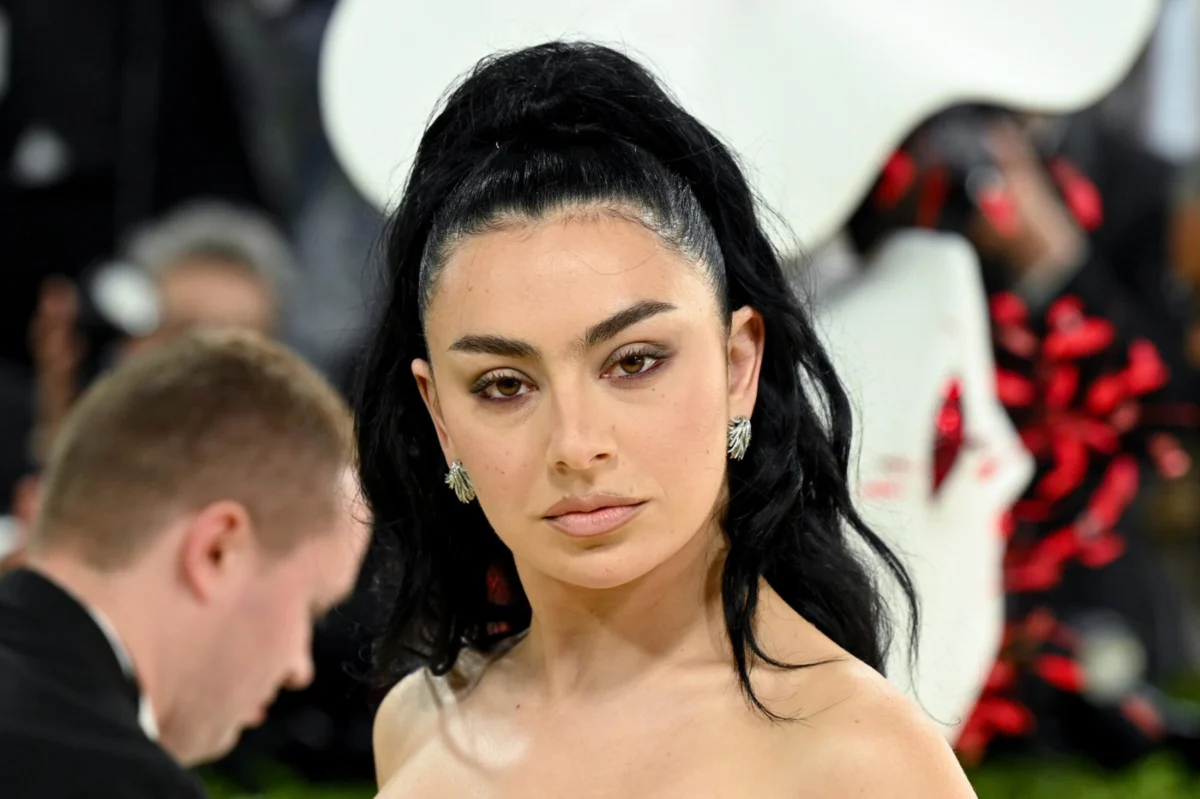
HangupsMusic.com – New York, The music world has been holding its breath for two years, anticipating how Charli XCX, the indefatigable architect of pop’s avant-garde, would follow her career-defining magnum opus. Today, July 24, 2026, the wait concludes as the pop polymath unveils her latest studio album, Music, Fashion, Film, a project that not only defies easy categorization but also cements her reputation as one of the 21st century’s most intrepid and influential artists. This release arrives in the formidable shadow of 2024’s Brat, an album that transcended critical acclaim to become a bona fide cultural phenomenon, achieving both widespread commercial success and near-universal adoration. The challenge of eclipsing or even matching such a milestone is a burden few artists willingly shoulder, yet Charli XCX, ever the strategist, has navigated this treacherous terrain with characteristic ingenuity, culminating in an album that is as surprising as it is quintessentially her own.
The journey from Brat to Music, Fashion, Film was not a direct path, but a carefully orchestrated sequence designed to both prolong the impact of her previous triumph and prepare her audience for a radical shift. Following Brat‘s release, Charli XCX embarked on an exhaustive global tour that transformed arenas into pulsating, communal celebrations of hyper-pop euphoria. The tour, extending well into 2025, wasn’t merely a series of concerts but a cultural happening, amplified by a constant stream of remixes, extended cuts, and collaborative projects that kept Brat firmly embedded in the zeitgeist. This extended victory lap allowed her to fully bask in the glow of Brat‘s success, ensuring that its legacy was thoroughly explored before she turned her attention to new frontiers.
Once the Brat era had reached its natural zenith, Charli XCX made a calculated pivot, stepping away from the direct pressure of a mainstream pop follow-up by immersing herself in a distinct, yet equally high-profile, endeavor: crafting the complete soundtrack for Emerald Fennell’s much-anticipated adaptation of Emily Brontë’s Wuthering Heights. Released earlier this year, this soundtrack served as an intriguing interlude, allowing her to explore a different artistic muscle. Known for her darkly comedic and stylized directorial vision in films like Promising Young Woman and Saltburn, Fennell’s choice of Charli XCX for the soundtrack raised eyebrows, hinting at an unconventional, perhaps anachronistic, take on the classic tale. The resulting score was a masterclass in atmospheric tension, blending gothic electronica with haunting, almost operatic vocalizations, showcasing Charli’s versatility and ability to imbue even period-specific narratives with her unique contemporary edge. It was, in essence, a palate cleanser – a chance to experiment outside the confines of a "proper" pop album, simultaneously demonstrating her depth as a composer and subtly signaling her willingness to embrace new sonic landscapes.
The stage thus meticulously set, anticipation for Music, Fashion, Film reached a fever pitch. Whispers and cryptic social media posts from the artist herself began to circulate, hinting at a dramatic "pivot to rock music." These comments, coupled with early snippets and behind-the-scenes glimpses, fueled intense speculation among fans and critics alike. Would Charli XCX, the queen of digitized beats and synthetic euphoria, trade her synths for guitars, her 808s for drum kits? The lead single, boldly titled "Rock Music," served as the album’s incendiary opening statement. Released weeks prior, it immediately grabbed attention with its raw, distorted guitar riffs, pounding drums, and Charli’s snarling, almost defiant vocal delivery. It was a visceral, unpolished sonic assault that seemed to confirm the rumors, sending shockwaves through the pop landscape and creating an unprecedented level of buzz for the upcoming full-length.
Further fueling the album’s multi-faceted identity was Charli XCX’s appearance at the 2026 Met Gala on May 4th in New York. The annual event, celebrating "Costume Art," saw her arrive in a breathtaking ensemble that was itself a performance piece, blurring the lines between haute couture and avant-garde sculpture. Her choice of attire, an intricate garment that seemed to embody both futuristic sleekness and raw, almost industrial textures, was widely interpreted as a visual manifesto for Music, Fashion, Film. It suggested an album that would not merely explore sound but would also delve into the broader cultural tapestry of artistic expression, encompassing visual aesthetics and cinematic narrative alongside its musical core. The "fashion" and "film" elements of the title, previously enigmatic, began to snap into clearer focus, hinting at a cohesive artistic vision rather than a mere collection of songs.
With Music, Fashion, Film now in hand, the question of its genre designation looms large, and as expected from an artist who thrives on subversion, the answer is delightfully complex. While the album certainly embraces a more guitar-forward sound, significantly dialing back the heavy beats and intricate electronic layers that defined Brat, it resists any simplistic categorization as a straightforward rock record. Those expecting a faithful homage to ’00s New York indie rock, a la The Strokes (who coincidentally released their own new album this week), will find themselves both satisfied by certain elements and challenged by the album’s broader scope.
Instead, Charli XCX presents a kaleidoscopic fusion, where the raw energy of grunge and punk-infused guitars coexists with the meticulously crafted sonic landscapes and infectious attitude of her dance and pop roots. Tracks like "Distortion Drive" feature relentless, fuzzed-out riffs that could easily slot into a classic alternative playlist, yet they’re underpinned by a rhythmic urgency and a vocal delivery that retains the undeniable swagger of a pop superstar. Conversely, "Neon Echoes" might open with a blistering guitar solo, only to transition into a glittering, synth-driven chorus that feels both nostalgic and utterly contemporary, a testament to her mastery of sonic alchemy.
The eleven new songs on Music, Fashion, Film showcase a remarkable evolution in Charli XCX’s songwriting and production choices. While the ubiquitous hyper-pop flourishes of her earlier work are less prominent, the sonic meticulousness remains. Each guitar tone, every drum hit, and even the subtlest synth textures are deliberate, creating a rich, layered soundscape that demands repeated listens. Her vocal performances, often a blend of whispery intimacy and powerful, unbridled declaration, adapt effortlessly to this new sonic palette. On "Concrete Sky," she adopts a more melancholic, almost ethereal tone over a sparse, reverb-drenched guitar line, while on "Rebel Heartbeat," she unleashes a fierce, almost shouted delivery, perfectly complementing the track’s frenetic energy.
The album’s thematic undercurrents are as intricate as its sonic tapestry. Music, Fashion, Film explores the interconnectedness of these art forms, delving into themes of identity as performance, the blurred lines between authenticity and artifice in the digital age, and the constant negotiation of self within the public gaze. It’s an album that asks profound questions about what it means to be an artist in an era where celebrity, creativity, and commerce are inextricably intertwined. Through its dynamic shifts and bold statements, Charli XCX offers a commentary on the very industries she inhabits, all while delivering undeniably compelling music.
In a landscape often dominated by predictable trends and safe artistic choices, Charli XCX continues to be a beacon of innovation. Her unwillingness to be confined by genre labels – a stance she has consistently maintained throughout her career – is perhaps the most defining characteristic of Music, Fashion, Film. It is an album that refuses to compromise, offering a challenging yet ultimately rewarding listen that reinforces her position as a true trailblazer. She doesn’t just push boundaries; she redraws them, inviting her audience to join her on an exhilarating journey into uncharted sonic territory.
Music, Fashion, Film is more than just a follow-up to a successful album; it is a declaration of artistic independence and a testament to Charli XCX’s unyielding creative spirit. It is another fascinating, addictive, and utterly singular catalog entry in a body of work that is rapidly solidifying its place as one of the 21st century’s most formidable and consistently exciting. It’s an album that will undoubtedly spark debate, inspire imitation, and, most importantly, provide endless hours of captivating listening, further cementing Charli XCX’s legacy as a pop great who consistently operates on her own terms. From the raw energy of its opening track to its more introspective moments, Music, Fashion, Film is a triumph of artistic vision, a bold new chapter from an artist who continues to surprise and inspire.
