
 By Rose Miami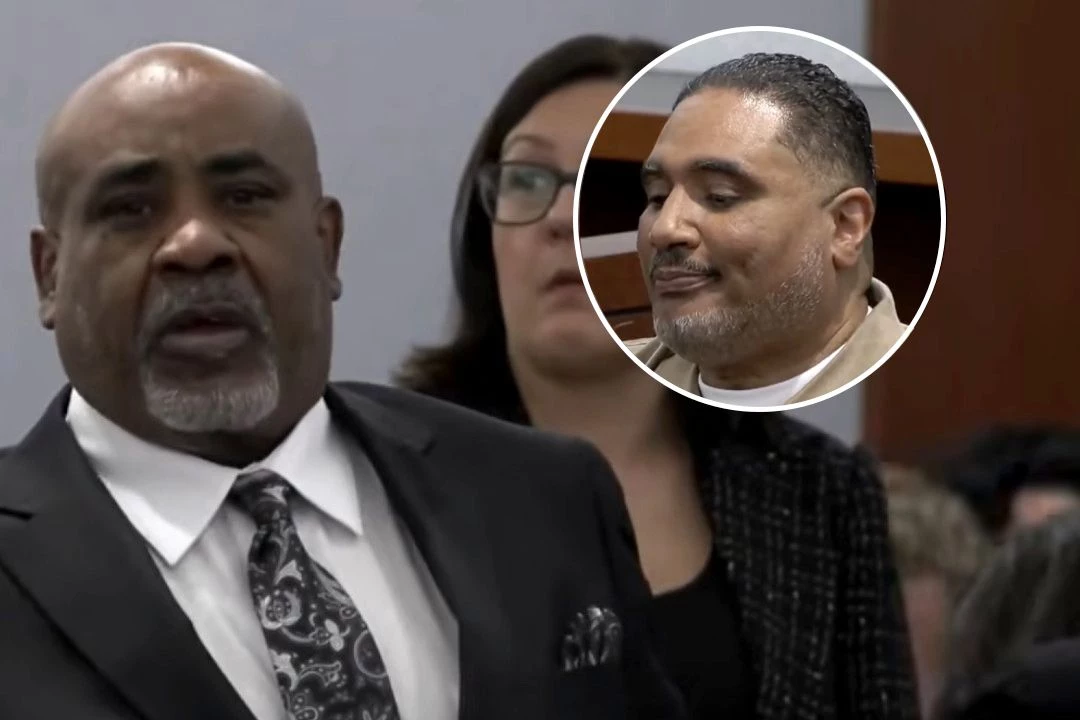
HangupsMusic.com – The Las Vegas courtroom buzzed with palpable tension on the second day of the highly anticipated trial of Duane "Keffe D" Davis, the man accused of orchestrating the 1996 murder of hip-hop icon Tupac Shakur. Amidst a series of testimonies from individuals with deep ties to the era’s notorious Death Row Records, Keffe D’s alleged sotto voce insult directed at a key witness, Reggie Wright Jr., added a dramatic and potentially revealing layer to the unfolding legal proceedings.
Reggie Wright Jr., the former head of security for Death Row Records and a figure who has long been a subject of speculation regarding his knowledge of Tupac’s death, took the stand on Tuesday. His testimony, spanning approximately one hour, delved into his tenure at the influential record label and his perspective on the tumultuous events that plagued it. Wright, a former Compton police officer, has consistently maintained his innocence and denied any involvement in the fatal shooting of the legendary rapper. As he concluded his hour on the witness stand and exited, court cameras captured Keffe D, who was seated and observing the proceedings, appearing to mouth the words "fucking rat." This alleged outburst, captured on video, suggests a potential breakdown in Keffe D’s composure and a possible acknowledgment of Wright’s testimony as being damaging to his defense.
The courtroom atmosphere had already been charged before Wright’s appearance. Earlier in the day, James "MOB James" McDonald, another former security guard for Death Row Records, had taken the stand. McDonald’s demeanor was notably adversarial, indicating a strong reluctance to be present and participate in the trial. He confirmed his presence in Las Vegas on the night Tupac was shot but vehemently asserted that he did not witness the shooting. Throughout his questioning, McDonald expressed increasing frustration as attorneys pressed him on his beliefs regarding responsibility for Tupac’s death. In a direct address to Keffe D, McDonald declared that while his personal animosity towards Davis remained, he had no intention of being the individual to send Keffe D to prison. He emphasized that his testimony was solely compelled by a subpoena, driven by a desire to avoid a contempt of court charge. McDonald reiterated his claim that he was not part of Tupac’s immediate entourage at the time of the shooting before his dismissal from the stand.
The legal battle surrounding Tupac Shakur’s murder is expected to be a protracted one, with the full trial projected to last for approximately six weeks. Keffe D faces the most severe penalty if convicted: a potential life sentence for his alleged role in masterminding the crime. The ongoing testimonies and the visible tensions within the courtroom underscore the gravity of the charges and the enduring impact of Tupac Shakur’s untimely death on the music industry and beyond.

The case hinges on the prosecution’s ability to prove that Keffe D, as a central figure in the events leading up to and following Tupac’s shooting, was indeed the mastermind behind the murder. His alleged involvement has been a topic of discussion and speculation within hip-hop circles for decades, and this trial represents the first time he has faced formal charges. The testimonies of individuals like Reggie Wright Jr. and James McDonald, despite their own complex histories and potential biases, are crucial pieces of evidence that the prosecution aims to leverage. Wright’s deep insight into the inner workings of Death Row Records and his proximity to the events could provide valuable context, while McDonald’s account, however reluctant, might offer corroboration or contradiction to other narratives.
The alleged "rat" comment by Keffe D, if confirmed and interpreted as an admission of guilt or fear, could have significant implications for his defense. Such an outburst suggests a potential unraveling of his carefully constructed facade and a possible recognition of the mounting pressure from the prosecution’s case. Legal analysts will be closely watching how this moment is perceived by the jury and whether it influences their overall assessment of Keffe D’s credibility and culpability.
Beyond the immediate legal proceedings, the trial serves as a stark reminder of the violent realities that shadowed the golden era of West Coast hip-hop. The rivalry between Death Row Records and its East Coast counterparts, characterized by escalating tensions and lyrical warfare, tragically culminated in the loss of two of the genre’s most influential figures, Tupac Shakur and The Notorious B.I.G. While Biggie’s murder remains unsolved, the legal pursuit of justice for Tupac continues, bringing to light long-buried secrets and re-examining the narratives that have shaped the understanding of this pivotal period in music history.
As the trial progresses, the public and the music world will undoubtedly remain captivated by each development, hoping for clarity and closure in a case that has lingered in the shadows for nearly three decades. The courtroom drama, punctuated by moments of alleged animosity and guarded revelations, is far from over, promising further scrutiny of the figures and events that defined an era.
