
 By admin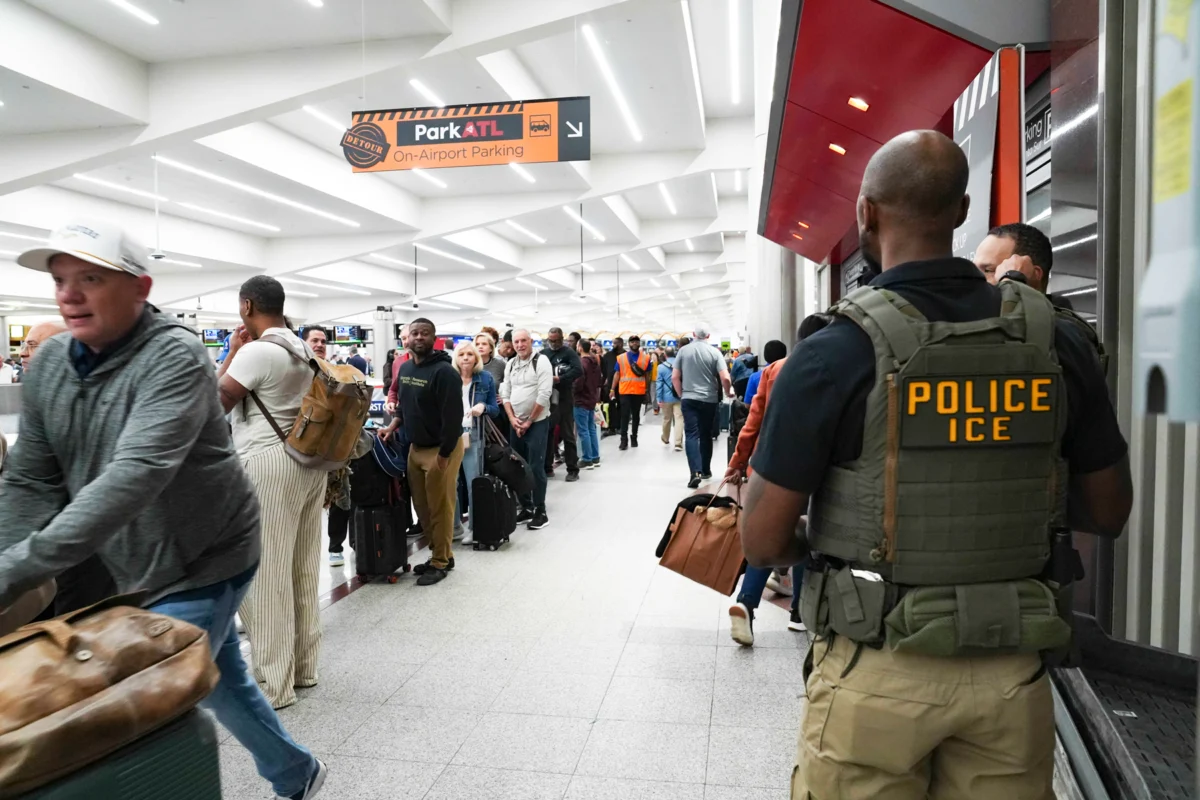
HangupsMusic.com – Across the United States, a deepening crisis at the nation’s airports has left countless travelers in a state of growing frustration and uncertainty, as security checkpoints become scenes of unprecedented delays stretching into multiple hours. This widespread disruption stems from a critical funding impasse within the Department of Homeland Security (DHS), directly impacting the operational capacity of the Transportation Security Administration (TSA). In a controversial move aimed at addressing the mounting chaos, the Trump administration has initiated the deployment of U.S. Immigration and Customs Enforcement (ICE) agents to airports nationwide, a decision that has ignited a fierce debate over national security protocols, immigration policy, and the political machinations underpinning the federal budget stalemate.
The current predicament is a direct consequence of an ongoing federal government shutdown, primarily centered on a contentious battle over funding for the Department of Homeland Security. While various federal agencies have felt the squeeze, the TSA has emerged as a particularly visible casualty. With the legislative branch and the White House locked in a standoff, a significant portion of the federal workforce, including thousands of TSA officers, has been compelled to work without pay. This unprecedented financial strain has led to widespread absenteeism among TSA personnel, who, facing mounting personal economic hardship, have found it increasingly difficult to report for duty. The resulting staff shortages at security checkpoints have cascaded into the agonizingly long lines and operational inefficiencies now plaguing airports from coast to coast, disrupting travel plans for millions and casting a shadow over the nation’s transportation infrastructure.
At the heart of the DHS budget stalemate lies a profound disagreement over immigration enforcement policies. Democratic lawmakers have been adamant in their demands for substantial reforms to the oversight and accountability of immigration enforcement agencies, particularly ICE. Key among their stipulations are requirements for judicial warrants before arrests can be made and prohibitions against agents concealing their identities through masks or other means while on duty. These demands reflect deep-seated concerns over the tactics employed by immigration agents during the initial year of the Trump administration. Conversely, President Trump and his Republican allies have steadfastly refused to concede to these conditions, viewing them as an impediment to effective border security and immigration control. This intractable conflict has transformed the DHS budget into a political football, with the security of the nation’s airports becoming an unexpected, yet critical, collateral damage.
In response to the escalating airport gridlock, President Trump announced over a weekend that ICE agents would be temporarily deployed to airports to bolster security operations. The president conveyed this directive via a social media platform, declaring his intention to dispatch "brilliant and patriotic ICE Agents to the Airports where they will do Security like no one has ever seen before." His message further specified that their duties would involve "the immediate arrest of all Illegal Immigrants who have come into our Country, with heavy emphasis on those from Somalia." This declaration immediately raised questions regarding the mandate and training of ICE agents, whose primary role involves immigration enforcement, not the intricacies of airport security screening. Critics swiftly pointed out the stark difference in specialized training between TSA officers, who undergo months of rigorous instruction in threat detection and passenger screening protocols, and ICE agents, whose expertise lies elsewhere.
The suitability of ICE agents for airport security functions quickly became a contentious point. Tom Homan, a prominent figure in immigration enforcement, notably dismissed concerns about ICE’s lack of TSA-specific training during a televised interview. He rhetorically questioned the complexity of the task, implying that guarding an exit required minimal specialized knowledge. This stance, however, overlooks the multifaceted nature of airport security, which encompasses advanced screening technologies, behavioral detection, hazardous materials identification, and intricate passenger flow management—all areas where TSA personnel receive extensive, specialized education. The deployment therefore ignited a firestorm of debate, prompting questions about the legal parameters of ICE’s presence in airports, the potential for mission creep, and the implications for civil liberties, particularly given the President’s explicit directive to target specific immigrant groups.
Compounding the crisis, President Trump’s engagement with Congressional efforts to resolve the shutdown has been widely scrutinized. Despite previously criticizing his predecessor for golfing during a period of TSA operational challenges in 2016, Trump was reportedly on the golf course during the current airport chaos. More significantly, his administration appears to have rejected a direct legislative pathway to alleviate the TSA’s funding woes. A proposal brought forward by Senate Majority Leader John Thune (R-S.D.) reportedly offered a compromise: Republicans would support a bill to fund all of DHS except ICE, the agency whose controversial tactics were central to the shutdown. Democrats were reportedly on board with this arrangement, which could have swiftly restored full funding to the TSA. However, sources familiar with the discussions indicated that President Trump rejected the deal outright, signaling a strategic decision to prolong the standoff.
The White House’s rationale for refusing a seemingly viable solution appears rooted in a calculated political strategy. The administration seems to believe that by allowing the airport disruptions to persist, they can effectively pin the blame on Democrats, leveraging public frustration to gain political leverage. President Trump openly embraced the decision to deploy ICE agents, likening it to the discovery of the paperclip—an idea so simple and brilliant that everyone wonders why they hadn’t thought of it before. This "paperclip" analogy underscored his personal ownership of the controversial deployment. Furthermore, the President has explicitly tied any resolution of the DHS funding dispute to a broader agenda of legislative demands. He stated that no deal should be made until Congress approves "SAVE America," a proposed election reform package championed by Republicans. This package includes mandates for in-person proof of citizenship for voter registration, alongside demands for photo voter ID, the elimination of most mail-in voting, the exclusive use of paper ballots, and the inclusion of cultural wedge issues such as prohibitions on transgender women in women’s sports and restrictions on gender-affirming care for minors. This expansion of demands effectively transformed a budget negotiation into a high-stakes ideological battle, further entrenching the stalemate.
The President’s uncompromising stance extended to his own party, as he issued thinly veiled threats to any Republican lawmakers considering voting against his preferred legislative agenda. He asserted that any "Republicans" who voted against "AMERICA" (his interpretation of the SAVE Act and related demands) would face severe political repercussions, implying they would not be re-elected. This pressure further complicated Congressional efforts to forge a bipartisan compromise, as members faced the difficult choice between legislative pragmatism and presidential loyalty. Meanwhile, the practical impact of the ICE deployment on airport security remained ambiguous. Initial reports from travelers and airport staff indicated that ICE agents were primarily observed "looming over workers" and "patrolling corridors," rather than actively engaging in the core functions of passenger screening or threat detection. This observation reinforced concerns that the deployment was more a political statement than a practical solution to the TSA’s operational challenges.
The financial disparity between the federal employees caught in the shutdown further highlighted the uneven impact of the crisis. While thousands of dedicated TSA officers were forced to continue working without the assurance of a paycheck, facing mounting bills and financial precarity, ICE agents—who are also federal employees—were notably unaffected by the shutdown in terms of their salaries. This created a peculiar situation where the very agency tasked with solving the security crisis was struggling due to lack of pay, while another agency, deployed to "assist" in a seemingly peripheral role, continued to receive its full compensation. This imbalance underscored the political nature of the deployment and its detachment from a comprehensive, practical resolution to the airport security breakdown.
The ongoing crisis at America’s airports represents a complex interplay of logistical breakdown, political maneuvering, and fundamental questions about governance. It highlights the profound vulnerability of essential public services to partisan gridlock and the far-reaching consequences of political brinkmanship. The deployment of ICE agents, while framed as a solution, has instead amplified concerns over executive overreach, the politicization of federal agencies, and the potential erosion of public trust in airport security protocols. As travelers continue to endure unprecedented delays and federal workers face financial hardship, the nation watches to see whether a path to resolution can be found, or if this unprecedented chapter will set a troubling precedent for future governmental impasses. The long-term implications for national security, the efficiency of federal agencies, and the public’s confidence in the government’s ability to manage critical services remain uncertain, underscoring the urgency of finding a sustainable and responsible solution to this multifaceted crisis.
