
 By Azzam Bilal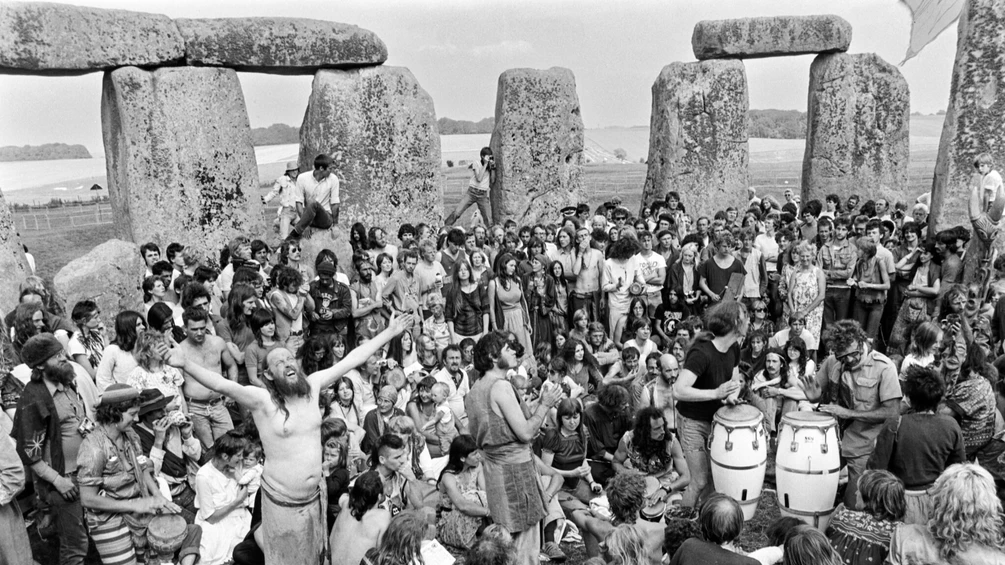
HangupsMusic.com – Nottingham, A profound transformation is set to take over the Bonington Gallery this autumn as it prepares to host a definitive retrospective of one of the UK’s most vital countercultural documentarians. The exhibition, titled Common Grounds – Counterculture & Confrontation Since 1976, will provide an exhaustive look at the career of Alan Lodge, the photographer and activist affectionately known within the scene as "Tash." Opening on September 25th and running through December 12th, the showcase represents the first major survey of Lodge’s expansive archive, offering a rare and intimate lens into the evolution of British protest, the free party movement, and the grassroots activism that shaped a generation.
The exhibition is not merely a collection of photographs but a comprehensive historical record of a nation in flux. Spanning nearly fifty years, the curated selection brings together more than 100 photographs, supplemented by moving images, personal archives, and immersive projections. Perhaps most significantly, the exhibition will unveil previously unseen materials, including Lodge’s personal correspondence with government officials and police authorities. These documents provide a stark, behind-the-scenes look at the friction between the state and the nomadic, DIY communities that Lodge lived within and documented. According to curators, the exhibition is designed to navigate complex themes of collective identity, civil liberties, and the ongoing struggle for environmental responsibility and public space.
Alan Lodge’s journey into the heart of British counterculture is a story of immersion. Unlike many photojournalists who observe from the periphery, Lodge was a participant in the movements he captured. His narrative took a pivotal turn in 1990 when he relocated to Nottingham. It was here that he became deeply entwined with the DiY sound system collective, one of the most influential and politically charged groups in the UK’s electronic music history. By joining forces with DiY, Lodge moved beyond the role of a casual observer; he became the unofficial visual biographer of a movement that sought to reclaim music and dance as acts of political defiance.
The timeline of the exhibition begins in the mid-1970s, a period marked by the burgeoning punk movement and the rise of the "New Age" traveler. However, the heart of the collection beats strongest during the 1980s and 90s, an era defined by the collision of Thatcherite policy and the burgeoning rave scene. Visitors will be guided through defining moments of cultural confrontation, starting with the 1982 Summer Solstice at the Stonehenge Free Festival. These early images capture the utopian spirit of the festival circuit before it was dismantled by legislative crackdowns.
One of the most harrowing segments of the exhibition focuses on the 1985 Battle of the Beanfield. This event remains a dark milestone in British civil rights history, where a convoy of travelers heading to Stonehenge was intercepted and brutally suppressed by police forces in Wiltshire. Lodge’s photography from this period serves as a crucial piece of forensic evidence, documenting the human cost of state intervention. His lens captured the destruction of homes-on-wheels and the physical toll on a community that the government of the day viewed as an existential threat to traditional British values.
As the 1980s gave way to the 1990s, the focus of Lodge’s work shifted toward the explosive growth of the free party scene. This was the era of the "Second Summer of Love," where the rhythmic pulse of acid house merged with the nomadic infrastructure of the traveler community. The exhibition highlights the 1992 Castlemorton Common Festival, an event that changed the trajectory of UK dance music forever. Castlemorton was the largest illegal rave in British history, drawing an estimated 20,000 to 40,000 people to a remote Worcestershire hillside for a week of non-stop music. Lodge was there, capturing the scale of the gathering and the sense of liberation that permeated the air.
However, the legacy of Castlemorton was also one of legislative reaction. The sheer scale of the event prompted the British government to introduce the Criminal Justice and Public Order Act 1994. This controversial legislation specifically targeted "music characterized by the emission of a succession of repetitive beats" and gave police unprecedented powers to shut down gatherings and seize sound equipment. Lodge’s archive from this period documents not just the parties, but the subsequent protests against the Act, where the rave community and political activists found common ground in the fight for the right to gather.
The title of the exhibition, Common Grounds, serves as a double entendre. It refers both to the physical locations—the commons, hillsides, and urban warehouses—where these movements took root, and to the shared ideological foundations of those who participated in them. Lodge’s work highlights the intersectionality of these movements; his photos show that the fight for the right to party was inextricably linked to environmentalism, anti-war sentiment, and the defense of civil liberties. By documenting the DiY sound system’s travels across the UK and Europe, Lodge illustrates how a local Nottingham collective became a global symbol of resistance.
Bonington Gallery’s presentation of Lodge’s work arrives at a time of renewed interest in the "Folk History" of the rave era. Lodge’s photography was recently a cornerstone of Aaron Trinder’s 2025 documentary, Free Party: A Folk History, which sought to celebrate the unifying spirit of the 90s underground. The exhibition in Nottingham serves as a physical extension of this cultural reappraisal. By showcasing original negatives and personal letters alongside high-definition projections, the gallery invites viewers to consider the archival value of countercultural movements. In an age of digital ephemerality, Lodge’s physical record of the analog era provides a tangible link to a past that was often deliberately obscured by mainstream media.
The inclusion of Lodge’s correspondence with state authorities is particularly poignant. These letters reveal the meticulous nature of his activism. Lodge was not merely taking pictures; he was engaging in a sophisticated critique of policing tactics and the surveillance state. His archives include detailed accounts of police interactions, legal challenges, and his efforts to hold authorities accountable for their actions during protests. This aspect of the exhibition elevates Lodge from a photographer to a chronicler of state authority and dissent, providing a blueprint for modern grassroots journalism.
For the Nottingham community, the exhibition is also a homecoming. Lodge’s long-standing connection to the city and the DiY collective means that many of the faces and places featured in the photographs will resonate deeply with local residents. It celebrates Nottingham’s role as a hub of radical thought and creative independence. The DiY sound system, which began as a small group of friends in the East Midlands, eventually became a worldwide phenomenon, and Lodge’s presence ensured that their journey was recorded with honesty and empathy.
As visitors walk through the Bonington Gallery this autumn, they will encounter a narrative that is as much about the present as it is about the past. The themes Lodge explored—the right to public space, the nature of dissent, and the power of collective identity—remain at the forefront of contemporary political discourse. In a world where the right to protest and the freedom to gather are still under scrutiny, Common Grounds serves as a timely reminder of the resilience of the human spirit and the enduring power of the lens to witness and preserve the truth.
The exhibition is expected to draw a wide audience, from veteran ravers and activists who lived through the events to a younger generation seeking to understand the roots of the modern electronic music landscape. By providing a platform for Alan Lodge’s life’s work, the Bonington Gallery is ensuring that the history of the UK’s "invisible" communities is finally given the institutional recognition it deserves. Common Grounds – Counterculture & Confrontation Since 1976 is more than a photography show; it is a testament to a life spent on the front lines of the British underground, documenting the beauty and the struggle of those who chose to live outside the lines.
