
 By admin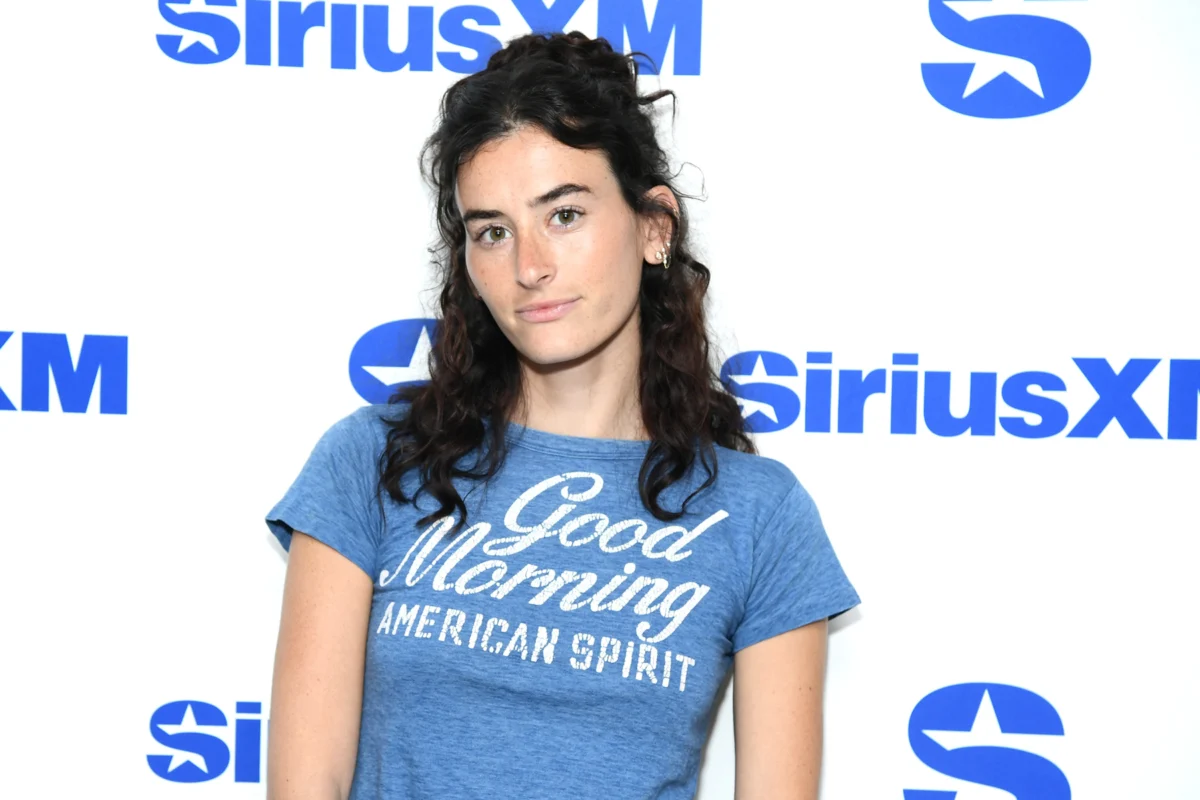
HangupsMusic.com – The highly anticipated debut album, Long Way Home, from rising star Stella Lefty, has ignited a fervent discussion within the music industry and among her rapidly growing fanbase. While largely lauded for its fresh sound and evocative lyricism, one particular track, "Summer You Were Mine," has drawn significant attention for its unmistakable melodic echoes of The Chicks’ iconic 1998 Grammy-winning hit, "There’s Your Trouble." This revelation, initially unearthed by keen-eared listeners, has brought to the forefront the intricate and often misunderstood practice of musical interpolation in the digital age.
Upon the album’s release last Friday, social media platforms buzzed with fans pointing out the striking similarities between Lefty’s new song and The Chicks’ country classic. The immediate concern stemmed from the initial absence of any crediting to the original songwriters, Tia Sillers and Mark Selby, for "There’s Your Trouble" on the streaming platform listings for "Summer You Were Mine." This omission sparked a brief period of confusion and speculation, prompting Rolling Stone to investigate and ultimately confirm the interpolation.
The clarification arrived swiftly on Friday, when a representative for Atlantic Records, Lefty’s label, confirmed to Rolling Stone that the oversight was due to an error on the part of various streaming platforms. The label assured that all proper legal and creative protocols had been observed. Subsequently, the names of Tia Sillers and Mark Selby were promptly added to the credits for "Summer You Were Mine" across all major digital music services. While requests for comment from platforms like Spotify and Apple Music did not receive immediate responses, the swift correction underscored the industry’s increasing vigilance regarding proper attribution.
Further corroborating the label’s statement, internal documents reviewed by Rolling Stone reveal that Lefty’s team secured the necessary clearance for the interpolation from Sony Publishing back in June. Moreover, Sillers and Selby were explicitly noted in the track’s internal label credits by late July, well in advance of Long Way Home‘s official release. This meticulous internal record-keeping highlights the complex web of permissions and acknowledgments required when artists draw inspiration from existing works.
Tia Sillers, a venerable figure in country music songwriting, whose prolific career includes penning chart-topping hits such as Lee Ann Womack’s "I Hope You Dance" and Kenny Wayne Shepherd’s "Blue on Black," expressed her enthusiasm for the interpolation. Speaking to Rolling Stone, Sillers reflected on the creation of "There’s Your Trouble" with her late husband, Mark Selby, who passed away in 2017. "We wrote a bang up, awesome song," she remarked, her voice tinged with pride and nostalgia. Sillers conveyed her hope that Lefty’s contemporary interpretation would serve as a bridge, introducing a new generation of listeners to the original work. "People are gonna fall in love with Stella’s song, but then they’re also gonna hopefully learn that it’s an interpolation of ‘There’s Your Trouble,’ and for a generation that might not know that song, they might go and discover that one too," she articulated, underscoring the potential for cross-generational musical appreciation.
The practice of interpolation, distinct from direct sampling, involves taking an existing melodic phrase, chord progression, or lyrical passage and reinterpreting or altering it within a new musical composition. Unlike sampling, which typically lifts a direct audio segment from a recording, interpolation requires the new artist to perform or re-record the borrowed element, often giving it a fresh context or feel. This technique has witnessed a significant resurgence in popularity in recent years, becoming a sophisticated tool for artists to weave musical heritage into contemporary soundscapes.
Recent high-profile examples abound, illustrating its widespread adoption. Ariana Grande’s global smash "7 Rings" masterfully reimagined Rodgers and Hammerstein’s classic "My Favorite Things" from The Sound of Music into a pulsating, trap-infused pop anthem. Similarly, Taylor Swift’s "Father Figure" drew clear inspiration from George Michael’s iconic song of the same name, demonstrating how artists can pay homage while forging new creative paths. These instances underscore a broader trend where established melodies are recontextualized, offering both a nod to the past and a vision for the future of popular music.
From a strategic perspective, interpolation offers a compelling advantage in an increasingly saturated music market. A music publishing source, speaking anonymously to Rolling Stone, elaborated on this commercial appeal: "A lot of A&Rs will break artists through an interpolation because it’s so familiar. It’s an easy way to get a new song out to a broad audience. People attach themselves to familiarity." This psychological phenomenon, where listeners are subconsciously drawn to sounds they recognize, provides a powerful marketing hook. It allows emerging artists to leverage the emotional resonance and established appeal of a classic tune, granting them an immediate entry point into the listener’s consciousness that purely original material might take longer to achieve. The familiarity acts as a sonic comfort blanket, making a new song instantly accessible and often more memorable.
This is not the first instance where Stella Lefty has navigated the delicate balance between inspiration and originality. Her breakout track, "Boston," which garnered her a substantial following of half a million on social media, also faced comparisons to another contemporary hit: Noah Kahan’s 2024 sensation, "Stick Season." The resemblances were notable enough that Kahan’s team reached out prior to "Boston’s" official release. In a revealing Vanity Fair article, Lefty, 24, candidly addressed the situation, stating that she had no reservations about crediting Kahan as a co-songwriter.
"When I was writing the song, I wasn’t thinking about Noah Kahan," Lefty explained, reflecting on her creative process. "I was literally thinking about nothing at all… I don’t want to step on anybody’s toes, so I’m like, if this sounds like that, whatever, all good." This statement reveals a refreshingly open and collaborative spirit, acknowledging the nebulous nature of musical influence in an interconnected world. Her willingness to attribute and share credit not only diffuses potential disputes but also fosters a culture of mutual respect among artists. It also reinforces the idea that in the vast tapestry of music, threads of inspiration are constantly intertwining, sometimes intentionally, sometimes serendipitously.
The incidents surrounding "Summer You Were Mine" and "Boston" collectively paint a picture of an artist who is not only creatively ambitious but also transparent and ethical in her approach to musical homage. In an era where fan communities are more engaged and scrutinizing than ever, and where the lines between inspiration, influence, and appropriation can often be blurred, Lefty’s proactive stance on crediting serves as a commendable example. It highlights the evolving responsibilities of artists, labels, and digital platforms to ensure that the creative lineage of music is accurately preserved and celebrated. As Stella Lefty continues her journey, her experiences offer valuable insights into the complex dynamics of originality, collaboration, and recognition in the modern music landscape, reminding us that every new sound often carries echoes of the past.
