
 By Azzam Bilal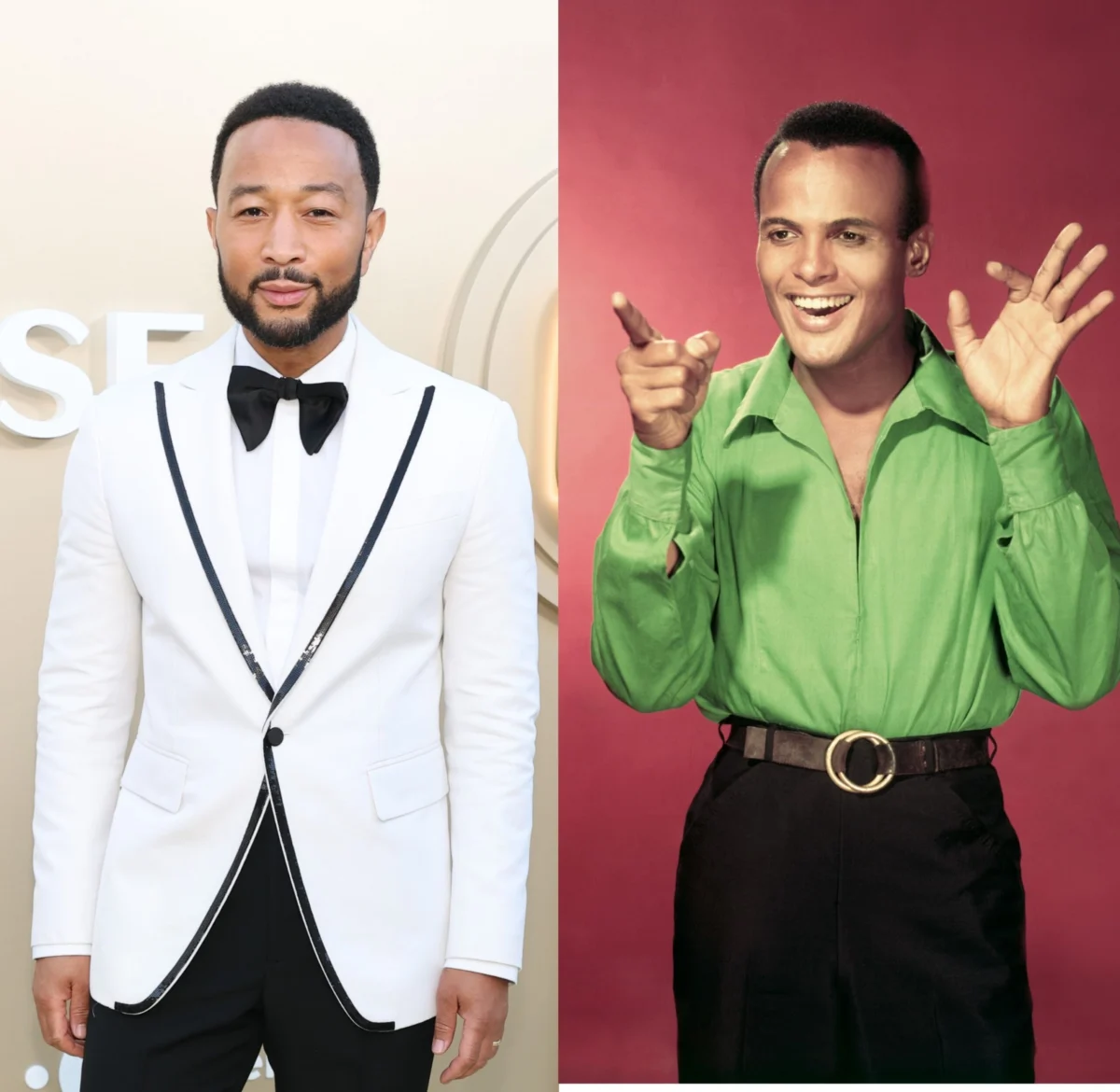
HangupsMusic.com – LOS ANGELES, The intersection of music and political activism has long provided fertile ground for cinematic storytelling, and a major new project is set to explore one of the most contentious and culturally significant eras of the 20th century. John Legend, the multi-platinum singer-songwriter and EGOT recipient, has been tapped to portray the legendary Harry Belafonte in the upcoming film The Road Home. Directed by the acclaimed Bill Condon, the film is currently in production and promises a deep dive into the complex dynamics of the South African anti-Apartheid movement, seen through the lens of a pivotal musical tour that sparked both global celebration and intense political debate.
The narrative of The Road Home centers on two titans of South African music: the "father of South African jazz," Hugh Masekela, and the iconic singer and activist Miriam Makeba, often referred to as "Mama Africa." The film focuses on a specific, high-stakes period in their lives when they joined forces with American singer-songwriter Paul Simon during his controversial Graceland tour. This era was defined by a clash between the desire for artistic collaboration and the strict international cultural boycott intended to isolate the South African Apartheid regime.
John Legend’s casting as Harry Belafonte is perhaps the most poignant element of the production. For Legend, the role is far more than a professional milestone; it is a tribute to a man who served as a personal beacon. Belafonte, who passed away in 2023 at the age of 96, was not only a ground-breaking entertainer but also a central figure in the American Civil Rights Movement and a tireless advocate for justice in South Africa. In a statement regarding his casting, Legend expressed a deep sense of responsibility. He noted that he was honored to have known Belafonte as a friend, mentor, and a "collaborator in the struggle for justice." Legend described the late icon as the epitome of the artist-activist, a revolutionary figure whose life set a standard for all subsequent generations of performers who seek to use their platform for social change.
The film boasts an ensemble cast designed to bring this volatile historical moment to life with authenticity and emotional weight. Thabo Rametsi, known for his powerful performances in South African cinema, will step into the role of Hugh Masekela. Masekela’s story is one of exile and defiance; having left South Africa in the early 1960s, he spent decades using his trumpet as a weapon against the systemic oppression of his homeland. His eventual collaboration with Paul Simon was a moment of profound visibility for the struggle of Black South Africans, though it was not without its critics.
Playing opposite Rametsi is Cynthia Erivo, who will portray Miriam Makeba. Erivo, an actress and singer of immense range, is tasked with capturing the essence of a woman whose voice was once banned in her own country. Makeba’s exile was a direct result of her testimony against Apartheid at the United Nations, and her participation in the Graceland project was a calculated move to bring the sounds of the townships to a global stage, even as she remained persona non grata in her birthplace.
Adding a layer of ideological tension to the film is Guy Pearce, who has been cast as Archbishop Trevor Huddleston. Huddleston was a towering figure in the anti-Apartheid movement, an English Anglican bishop who became a fierce advocate for the oppressed in South Africa. He is famously remembered in the music world for his staunch opposition to Paul Simon’s Graceland project. Huddleston, along with many other leaders of the African National Congress (ANC) and the global boycott movement, argued that Simon’s decision to record in South Africa and tour with South African musicians violated the cultural embargo and inadvertently provided the Apartheid government with a degree of international legitimacy. The film is expected to explore this friction—the "principled boycott" versus the "cultural bridge"—in great detail.
Director Bill Condon is no stranger to the intersection of music and drama. Having directed Dreamgirls and written the screenplay for Chicago, Condon has a proven ability to weave musical performances into the fabric of a narrative without losing the gravity of the underlying story. With The Road Home, he is tackling a subject that is as much about the politics of the recording studio as it is about the politics of the street. The Graceland sessions, while producing one of the most successful albums of the 1980s, were fraught with ethical questions. Simon’s decision to ignore the United Nations’ cultural boycott created a rift in the activist community, and The Road Home looks to examine how Masekela, Makeba, and Belafonte navigated these treacherous waters.
Harry Belafonte’s role in this specific history is crucial. While he was a supporter of the boycott, he was also a bridge-builder who understood the power of the Black diaspora. He was instrumental in organizing the "USA for Africa" initiative and "We Are the World," and he consistently worked to ensure that the struggle of South Africans remained at the forefront of the American consciousness. Legend’s portrayal will likely focus on Belafonte’s role as a strategist and a diplomat within the arts, a man who could command the attention of world leaders just as easily as he could a concert hall.
For John Legend, this role marks a continued evolution in a career that has increasingly leaned into socially conscious storytelling. Legend famously won an Academy Award in 2015 for "Glory," the powerful anthem from the film Selma, which chronicled the 1965 voting rights marches led by James Bevel, Hosea Williams, Martin Luther King Jr., and John Lewis. That song, a collaboration with rapper Common, solidified Legend’s status as a contemporary successor to the activist-musician tradition pioneered by Belafonte.
Interestingly, Legend’s most recent musical endeavor was a departure from the heavy themes of his film work. In 2024, he released a children’s album produced by the indie-folk luminary Sufjan Stevens. The project showcased Legend’s versatility, moving from the grandeur of political anthems to the intimate, playful sounds of family-oriented music. However, the move into the role of Harry Belafonte suggests a return to the "monumental, revolutionary" themes that have defined his most acclaimed work.
The production of The Road Home comes at a time when the film industry is increasingly interested in "musical history" that goes beyond the standard biopic formula. Rather than a cradle-to-grave story of a single artist, Condon appears to be crafting a "moment-in-time" narrative that uses the Graceland tour as a microcosm for larger global shifts. It is a story about the ethics of art in a time of tyranny, and the difficult choices artists must make when their work intersects with a liberation struggle.
As production continues, the anticipation for The Road Home is building not just among film critics, but within the music community. The legacy of Hugh Masekela and Miriam Makeba is sacred in the world of jazz and world music, and the controversy surrounding Paul Simon’s Graceland remains a debated topic in ethnomusicology and political science. By placing John Legend at the center of this story as Harry Belafonte, the film links the past struggles of the 20th century with the contemporary voices of the 21st.
The film is poised to be a major contender during the awards season following its release, given the pedigree of its cast and the enduring relevance of its themes. In a world where the role of the artist in society is constantly being re-evaluated, The Road Home serves as a reminder of a time when music was not just entertainment, but a vital part of a global movement for human rights. For John Legend, stepping into Belafonte’s shoes is more than just acting; it is a continuation of a legacy of "standing on the shoulders" of giants to reach toward a more just future.
