
 By Azzam Bilal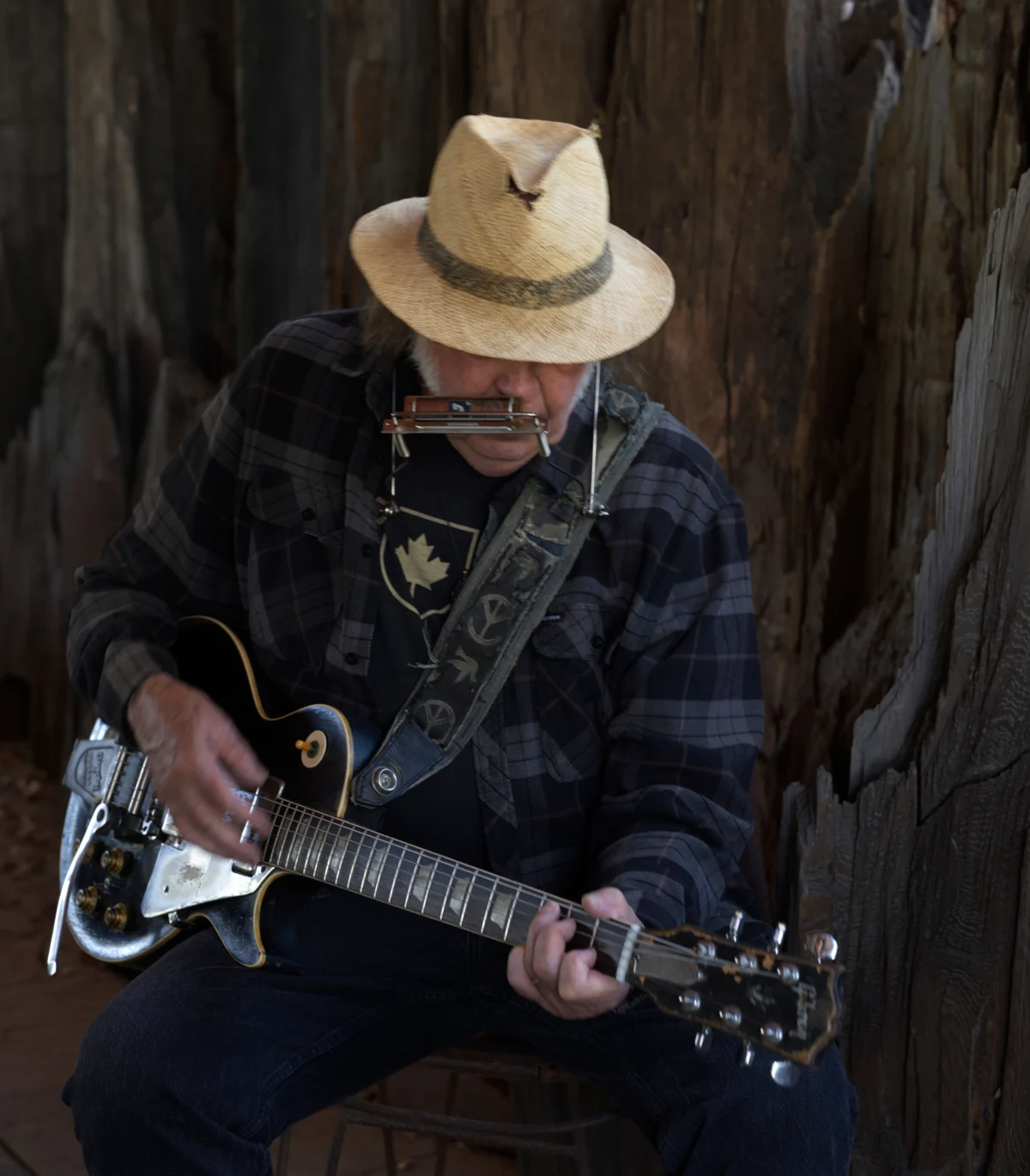
HangupsMusic.com – MALIBU, In a move that reaffirms his status as one of rock’s most tireless and unpredictable icons, Neil Young has officially announced the release of his latest studio effort, Second Song. Recorded alongside his newest collaborative unit, The Chrome Hearts, the album serves as a swift follow-up to their previous creative outing and is scheduled to arrive on September 18 via Reprise Records. To coincide with the announcement, Young has shared the album’s title track, an expansive 11-minute odyssey that showcases the raw, improvisational energy that has defined his career for over six decades.
The arrival of Second Song marks a period of high productivity for the 78-year-old songwriter, who has spent the last several years oscillating between massive archival excavations and the creation of entirely new material. This new collection consists of seven tracks in total, offering a blend of contemporary compositions and long-lost gems. Specifically, the tracklist features five brand-new songs and two previously unreleased compositions that date back to the 1960s, a period often cited as the golden era of Young’s early songwriting development.
The lead single and title track, "Second Song," is a testament to Young’s enduring fascination with long-form musical narratives. Clocking in at over eleven minutes, the track is less a traditional single and more a sonic exploration, characterized by the ragged, emotive guitar work and steady, pocket-driven rhythms that are the hallmark of The Chrome Hearts. The song’s length allows the band to stretch out, creating a hypnotic atmosphere that bridges the gap between the folk-rock sensibilities of his early career and the heavy, distorted "Godfather of Grunge" persona he adopted in the 1990s.
The Chrome Hearts, who made their formal debut with last year’s Talkin to the Trees, have quickly become a vital part of Young’s late-career ecosystem. While Young has spent much of his life tethered to legendary backing bands like Crazy Horse and The Stray Gators, The Chrome Hearts offer a slightly different texture—one that balances technical proficiency with a willingness to follow Young down whatever sonic rabbit hole he chooses to explore. The chemistry between the members was forged during the sessions for their debut, and that rapport is reportedly even more palpable on the new LP.
Recording for Second Song took place at the historic Shangri-La Studios in Malibu, California. Originally built as a ranch house and later converted into a high-end recording facility by members of The Band and producer Rob Fraboni, Shangri-La has a storied history of hosting musical luminaries ranging from Bob Dylan to Eric Clapton. The studio’s minimalist, "vibe-first" atmosphere is perfectly suited for Young’s preferred method of recording: capturing live takes with minimal overdubs to preserve the spontaneity of the moment.
The production credits for the album reveal a familiar and formidable team. Young once again collaborated with the legendary Lou Adler, whose influence on the American music landscape spans from the Monterey Pop Festival to the production of Carole King’s Tapestry. Joining Adler are "the Volume Dealers," a production moniker used by Neil Young himself and his longtime engineering partner Niko Bolas. Bolas has been a fixture in Young’s inner circle since the 1980s, working on landmark albums like Freedom and Ragged Glory. The involvement of Adler and Bolas suggests a production style that is both warm and unflinchingly direct, emphasizing the organic sound of the instruments in the room.
Beyond the musical technicalities, the announcement of Second Song arrives amidst the resolution of a notable legal hurdle. For a period, the project was overshadowed by a trademark infringement claim filed by the luxury clothing brand Chrome Hearts. The fashion label, known for its high-end leather goods and silver jewelry, had raised objections to Young’s use of the name for his band. However, just three months ago, the clothing company dropped the lawsuit, clearing the path for Young to continue using the moniker without further litigation. This legal victory appears to have cleared the air, allowing the focus to return entirely to the music.

One of the most intriguing aspects of Second Song is the inclusion of the two 1960s-era tracks. Young has a well-documented habit of "mining his own history," often reaching back into his massive personal vault to find songs that didn’t fit a previous album’s mood but have since found their "right time." By placing these vintage compositions alongside five new songs, Young creates a dialogue across time, contrasting the perspective of his younger self with the wisdom and weathered tone of his current voice. Fans have long speculated about which specific unreleased tracks might surface, and the inclusion of these rarities adds a layer of historical significance to the release.
The full tracklist for Second Song provides a glimpse into the thematic direction of the album:
- The Foggy Edge Of Time
- Day After Day
- Earth Girl
- Second Song
- Casting Me Away From You
- Soon I Might Be Going
- I’ll Love You Forever
Titles like "The Foggy Edge Of Time" and "Earth Girl" suggest that Young is continuing to grapple with his long-standing interests in environmentalism, the passage of time, and the ethereal nature of memory. Throughout his career, Young has used his platform to advocate for ecological preservation, a theme that was central to his recent albums like World Record and Barn. It is likely that Second Song will continue to explore these existential and terrestrial concerns, wrapped in the rustic Americana that has become his signature.
The release of this album follows the critical success of the Chrome Dreams reissue, which Pitchfork recently highlighted as a "Best New Reissue." Chrome Dreams was famously a "lost" album from 1977 that remained a bootleg legend for decades before finally receiving an official release. The fact that Young is releasing Second Song so soon after such a significant look back suggests that he is not content to simply live in the past. Instead, he is using the momentum of his archival projects to fuel a prolific streak of new creativity.
As the music industry continues to shift toward digital-first strategies and short-form content, Young remains a staunch defender of the album as a cohesive art form. His insistence on high-fidelity sound and his frequent criticisms of low-quality streaming services have made him a polarizing but respected figure in the tech-music crossover space. Second Song will likely be available in various high-resolution formats, catering to the audiophile community that follows his every move on the Neil Young Archives (NYA) website.
The September 18 release date places the album in the heart of the fall music season, a time typically reserved for major releases from industry heavyweights. For Young, however, the timing seems less about market strategy and more about the natural rhythm of his output. Whether he is performing solo acoustic sets, roaring with Crazy Horse, or exploring new textures with The Chrome Hearts, his objective remains the same: the pursuit of "the muse."
With the 11-minute title track now available for public consumption, the countdown to the full LP has begun. It serves as a reminder that even after half a century in the spotlight, Neil Young still possesses the ability to surprise, challenge, and captivate his audience. Second Song is not just another entry in a vast discography; it is a living document of an artist who refuses to slow down, continuing to talk to the trees and the world at large through his guitar strings.
As fans wait for the mid-September arrival of the full seven-track collection, the sprawling nature of the title track provides plenty of material to dissect. It is a song that demands patience, rewarding the listener with a sense of immersion that is rare in the modern pop landscape. If the rest of the album carries the same weight and intentionality, Second Song may well stand as one of the definitive statements of Neil Young’s later years.
