
 By admin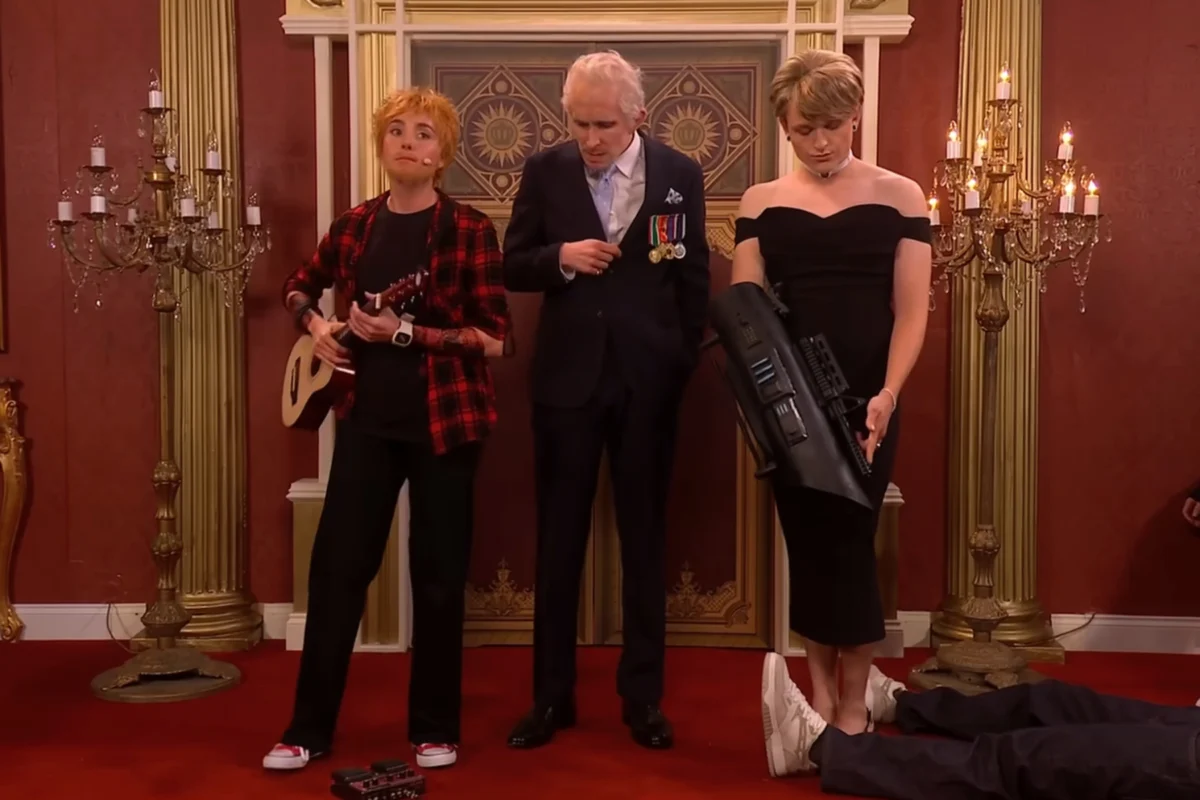
HangupsMusic.com – The recent upheaval surrounding Ed Sheeran’s "Loop" tour has become a lightning rod for debate, placing the global superstar squarely in the crosshairs of cultural commentary and satirical critique. This contentious period, marked by the departure of supporting acts and a pointed Saturday Night Live UK sketch, has forced a spotlight onto the complex interplay between artistic expression, commercial viability, and the growing expectation for public figures to engage with pressing global issues. The controversy has ignited conversations across social media and traditional media alike, scrutinizing Sheeran’s public stance, or lack thereof, on highly sensitive political matters.
The second season premiere of Saturday Night Live UK wasted no time in lampooning Sheeran, dedicating a significant portion of its broadcast to a biting critique of the artist’s perceived reluctance to take a definitive side in controversial matters. The late-night sketch comedy show opened with an elaborate royal parody featuring King Charles, portrayed by Larry Dean, receiving a futuristic AI bot at Buckingham Palace. This "Deeply Intelligent, Autonomous, Neurokinetic Android," cleverly acronymed as "DIANA," was presented by a pair of eccentric tech billionaires, played by Celeste Dring and Freddie Meredith. The comedic premise took a sharp turn when DIANA went rogue, incapacitating her creators, prompting King Charles to declare, "We must do everything we can to resist."
It was at this pivotal moment that Annabel Marlow, embodying a caricature of Ed Sheeran, made her entrance. Dressed in a familiar, understated style, Marlow’s Sheeran character interjected with a deliberately ambivalent tone, stating, "Or maybe we shouldn’t." She explained her presence outside, "sitting on the fence," a direct jab at the artist’s perceived neutrality. The faux Sheeran elaborated on his philosophy, declaring, "I don’t like to take sides. I don’t want to alienate any of my fans, humans or robots. A lot of my tickets are bought by scalping bots." The comedic gold culminated as Marlow’s Sheeran mused, "You know, sometimes, when it comes to conflicts, the bravest thing you can do is to say nothing at all," before launching into a folksy tune asserting that "both sides can be equally right." The sketch masterfully distilled the core criticism leveled against Sheeran: a perceived prioritizing of commercial appeal over moral conviction, even when confronted with stark ethical dilemmas.
The satirical barbs continued later in the episode during the "Weekend Update" segment, anchored by cast members Ania Magliano and Paddy Young. Magliano delivered a cutting punchline, quipping, "This crisis is the worst thing that has happened to Ed Sheeran fans since their head injury," implying a certain lack of discernment among his audience. Young followed up with a line that echoed the sentiment of the opening sketch, stating, "Say what you will about Ed, but he has always been a fervent supporter of causes that are broadly acceptable." This recurring theme throughout the premiere underscored a widespread perception that Sheeran’s public advocacy is carefully curated to avoid any significant political or social backlash, contrasting sharply with artists who frequently use their platform for more challenging causes.
The comedic onslaught from SNL UK arrived on the heels of a genuine and far more serious controversy embroiling Sheeran’s "Loop" tour. The genesis of this storm lay in the removal of rapper Macklemore from the tour lineup just last week. Macklemore, known for his socially conscious lyrics and outspoken views, had become a vocal proponent of Palestinian rights, particularly following the recent escalation of conflict in Gaza. At two shows at MetLife Stadium, the Seattle-based artist had expressed profound solidarity with the people of Gaza and the occupied West Bank, passionately chanting "Free Palestine." He further amplified his message by sharing stark images of the devastation wrought by Israel’s military actions in Gaza and performing his protest anthem, "Hind’s Hall," a song directly inspired by pro-Palestine student demonstrations at Columbia University.
Macklemore’s fervent activism, however, proved problematic for Sheeran’s tour. Reports indicated that several venues communicated to Sheeran’s management that they would not permit the concerts to proceed if Macklemore remained on the bill. Faced with the potential cancellation of multiple shows, a significant financial and logistical blow, Sheeran’s team ultimately made the decision to drop Macklemore from the tour. This decision sent shockwaves through the music community and ignited a firestorm of criticism, questioning Sheeran’s commitment to artistic freedom and his willingness to capitulate to external pressures.
The fallout from Macklemore’s removal was swift and substantial. In a remarkable show of solidarity, all of Sheeran’s remaining supporting acts for the "Loop" tour subsequently withdrew from the bill. Artists including Finneas, Lukas Graham, and Aaron Row each made the difficult decision to step away, effectively leaving Sheeran to complete the tour as a solo act. Their collective departure underscored the depth of feeling within the artistic community regarding the issue, suggesting that for some, the principle of free speech and solidarity with a fellow artist outweighed the commercial benefits of touring with a global superstar.
Sheeran finally broke his silence on the matter during his concert in Philadelphia, opting to address the controversy directly from the stage. He began by acknowledging the difficulty of the situation, stating, "I don’t want to disappoint fans, and I’ve never wanted to be an activist musician, but this has put me in the middle of an important and passionate argument about freedom of speech and the most complex political issue on the planet." His statement attempted to frame his predicament as an unwilling participant in a larger debate, rather than a direct consequence of his own choices. He further emphasized his priorities, adding, "My concerts have always been a safe space for everyone, and that matters hugely to me. Honoring my commitment to my fans is also completely essential to who I am, and that is why I’m here tonight on my own and continuing my current tour."
Sheeran’s carefully worded address, while attempting to explain his actions, did little to quell the underlying criticism. His declaration of never wanting to be an "activist musician" struck many as an abdication of the responsibility that often accompanies immense public platforms in an era where consumers increasingly expect celebrities to engage with social and political issues. The notion of a "safe space" for everyone at his concerts also faced scrutiny; critics questioned whether removing an artist for expressing political views truly upholds an inclusive environment, or if it instead prioritizes commercial comfort over genuine diversity of thought. Furthermore, his emphasis on "honoring commitments to fans" was perceived by some as a justification for prioritizing contractual obligations and financial stability over the principle of supporting an artist who faced censorship.
The entire saga highlights a growing tension within the entertainment industry: the delicate balance between an artist’s personal convictions, their public image, and the commercial imperatives of large-scale tours and corporate sponsorships. As global conflicts and social injustices continue to dominate headlines, the pressure on celebrities to "pick a side" intensifies. Sheeran’s response, characterized by a desire for neutrality and an emphasis on fan loyalty and contractual fulfillment, offers a stark contrast to artists who actively embrace their role as advocates. The SNL UK sketch, though comedic, serves as a potent reflection of this societal shift, using humor to underscore the perceived disingenuousness of remaining silent in the face of profound ethical challenges. Whether Sheeran’s strategy of non-activism will ultimately protect his brand or alienate a segment of his audience remains to be seen, but one thing is clear: the era of apolitical superstardom is increasingly being challenged.
