
 By Azzam Bilal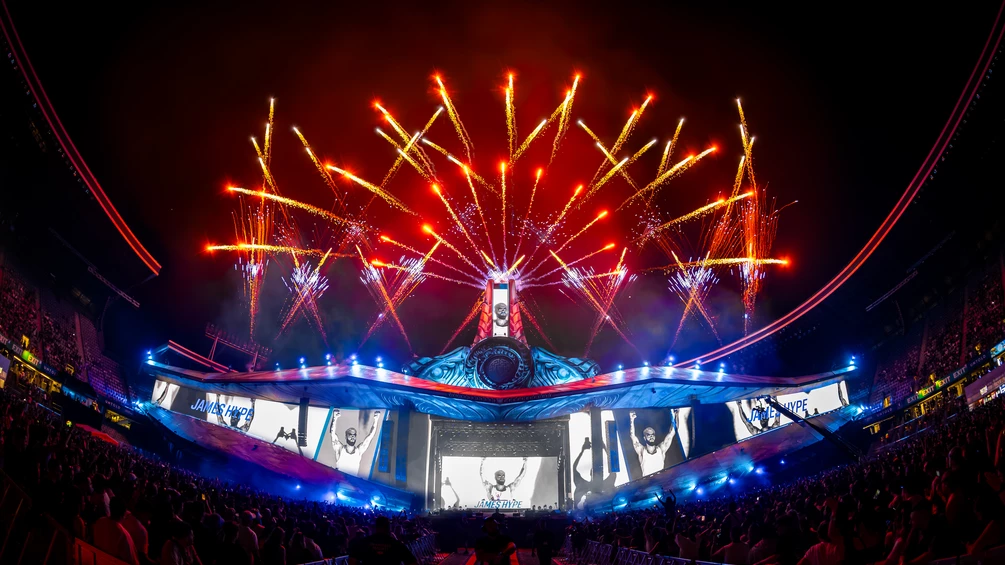
HangupsMusic.com – Cluj-Napoca, Romania. For a decade, the UNTOLD festival was defined by its commitment to the mystical. Nestled in the heart of Transylvania, the event built its reputation on a foundation of folklore, populating the Cluj Arena with towering dragons, ethereal goddesses, and a narrative of escapism that felt like a storybook come to life. However, as the 2025 edition marked the conclusion of "UNTOLD X"—a ten-year odyssey of myth and legend—the festival found itself at a crossroads. For its 2026 iteration, titled UNTOLD 1, the production team chose to abandon the familiar comforts of the past in favor of a radical, future-facing aesthetic. This shift signifies more than just a change in decor; it represents a comprehensive reimagining of how a massive electronic music festival can interact with its audience through abstract design and cutting-edge technology.
The transition from the literal to the abstract is most strikingly evident in the Main Stage, a structure that now stands as the largest and most technically sophisticated installation in the festival’s history. Standing at a staggering 38 meters tall, the stage is a luminescent behemoth that eschews the recognizable beasts of previous years for a concept the design team refers to as a "portal." This year, the arena was transformed by 1,070 intelligent lighting fixtures and a massive 1,250 square meters of LED surfacing. Yet, despite the sheer scale of the hardware, the most intriguing aspect of the design is its ambiguity. Florina Dascăl, UNTOLD’s head of architecture design and experience, notes that the team intentionally moved toward an abstract silhouette. To some fans, the silver-gray curves look like a deep-space vessel; to others, they resemble a pair of giant, metallic lips. This subjectivity is by design, fostering a new kind of storytelling where the attendee’s imagination completes the narrative rather than being told a specific tale by the organizers.
The technical demands of such a stage are immense, requiring a delicate balance between artistic vision and the logistical needs of world-class performers. Radu Rus, the head of production, emphasizes that the Main Stage was built to be a universal platform capable of hosting the diverse needs of rock icons like Sting, pop sensations like Zara Larsson, and high-energy DJs like Martin Garrix and Sebastian Ingrosso. The "portal" concept serves as a bridge between these genres, providing a visual backdrop that feels as appropriate for a rap set by Flo Rida as it does for the pyrotechnics of a closing EDM performance. According to Rus, this year was about testing the limits of what the arena could support, with plans already in motion to make the 2027 stage even more immersive by extending the structures into the crowd and utilizing the second floor of the stadium more dynamically.
While the Main Stage serves as the festival’s high-tech heart, the Galaxy Stage offers a more subterranean, warehouse-inspired experience. Positioned as UNTOLD’s version of a "mega-club," this indoor venue caters to the techno and house purists. The design here is centered around a "monolith"—a massive, block-shaped LED installation suspended above the DJ booth. This central feature is complemented by 24 independent LED elements fixed to the ceiling, creating a synchronized light show that envelops the 9,000-person capacity crowd. The atmosphere inside the Galaxy Stage is one of relentless momentum. Because the venue operates without the traditional "changeover" breaks seen on the Main Stage, the energy remains constant. This was particularly evident during the Friday night marathon, which saw sets from Joseph Capriati, Solomun, and Mau P lead into a high-intensity performance by hard techno specialist Holy Priest. The demand for this immersive environment was so high that even at 5:00 AM, thousands of attendees remained in a record-breaking queue, hoping to catch the final hours of the sonic journey.
In contrast to the high-gloss production of the Main and Galaxy stages, the Alchemy Stage takes a more minimalist, "raw" approach. Dedicated to the sounds of hip-hop, trap, and drum and bass, Alchemy was redesigned to act as a blank canvas. Alexandra Mihali, the staging manager, explains that the team wanted to strip away the clutter to let the music and the individual identities of the artists take center stage. By focusing on a palette of deep blacks, sharp LED lines, and focused lighting, the stage was able to transform instantly to suit the aesthetic of performers as varied as BBNO$ and Denzel Curry. This versatility allowed for unique moments, such as Denzel Curry’s high-voltage cover of "Bulls On Parade" or the local collaboration between BBNO$ and Romanian rapper Azteca, to feel intimate and impactful despite the large crowd. The Alchemy Stage proves that in the world of urban music, sometimes less is more, allowing the raw energy of the performance to dictate the visual atmosphere.
Recognizing that a festival of this magnitude can often become overwhelming, the UNTOLD team also focused on expanding the Soul Circle stage. Originally debuted in 2025, this area was significantly enlarged for 2026 to provide a "conscious" alternative to the sensory assault of the main arena. The architecture of Soul Circle is rooted in the ancient concept of the gathering circle, a design intended to break down the barrier between the performer and the audience. Here, the focus shifts from spectacle to community. The programming includes meditative sound baths, ecstatic dance sessions, and "heartbeat cacao ceremonies" led by artists like DJ Ben Chi and The White Arrow. Mihali describes this space as a necessary counterpoint to the festival’s scale—a place where human connection and introspection are prioritized. It serves as a reminder that even within a futuristic, tech-driven festival, there is a profound need for spaces that feel warm, organic, and grounded.
The theme of organic beauty continues at the Daydreaming Stage, though it approaches the concept through the lens of melodic and progressive house. Tucked away under a canopy of trees, this stage retains some of the floral and nature-inspired elements that defined UNTOLD’s previous decade, but with a refined, "feminine" touch. Adorned with crystals and pastel lighting, the Daydreaming Stage creates a dreamlike realm that feels distinctly separate from the metallic, industrial vibes found elsewhere. Performances from Jan Blomqvist, AWEN, and a rare solo set from Tinlicker flourished in this environment, where the music and the natural surroundings worked in harmony. Florina Dascăl explains that this stage is meant to represent "positive energy," acting as a soft landing for those who want to experience the festival’s spirit without the intensity of the stadium.
As UNTOLD 1 concludes, it is clear that the festival has successfully navigated the difficult transition from a decade-long narrative to a brand-new era. By embracing futuristic themes and abstract architecture, the production team has created a playground that feels both cutting-edge and deeply personal. The shift from "storytelling" to "experience-building" allows the half-million attendees to find their own meaning within the glowing LEDs and massive steel structures. Whether it is the overwhelming scale of the Main Stage "portal," the warehouse grit of the Galaxy monolith, or the communal warmth of the Soul Circle, UNTOLD has proven that its true strength lies in its ability to evolve. As the festival looks toward the future, the foundation laid this year suggests that the next chapter of Transylvania’s premier musical event will be defined by innovation, immersion, and a relentless pursuit of the avant-garde.
