
 By Azzam Bilal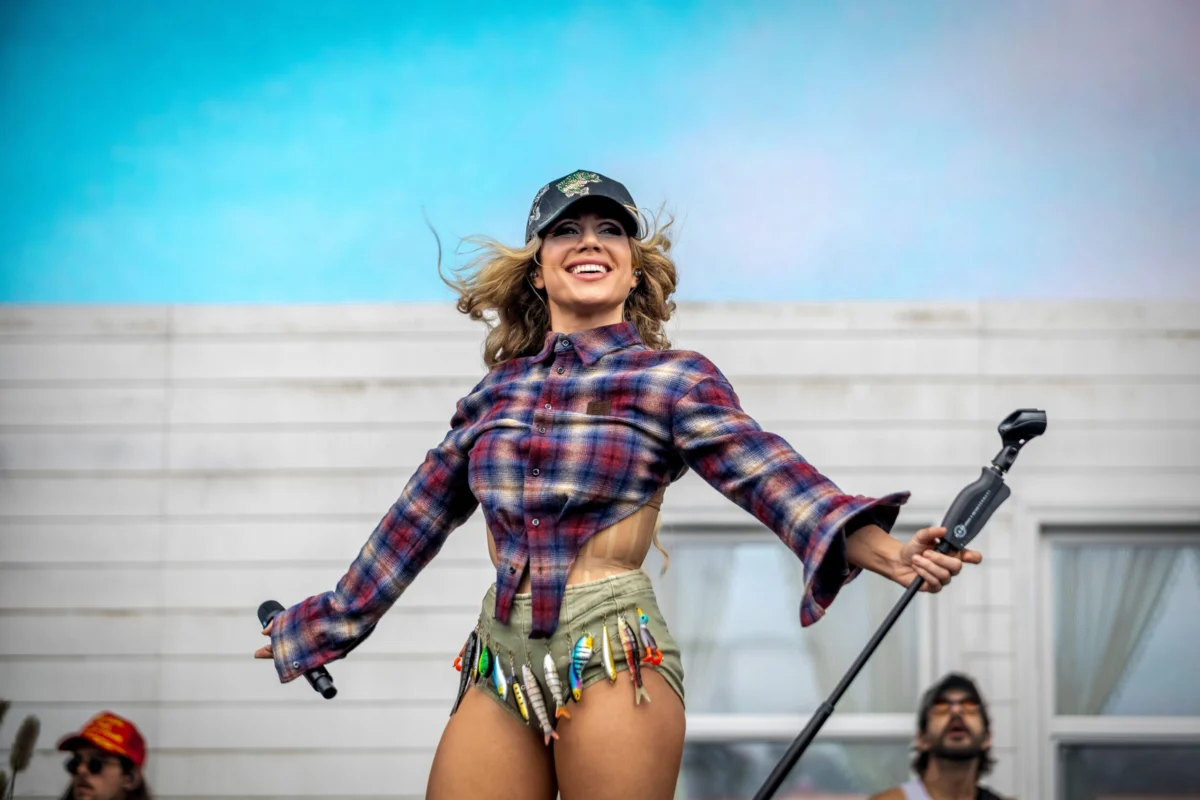
HangupsMusic.com – In the landscape of contemporary pop, few artists have navigated the transition from internet subculture to mainstream visibility with as much calculated chaos and stylistic fluidity as Slayyyter. Recently, the artist took her evolving persona to the global stage via Australia’s esteemed radio station, triple j, participating in the long-running and prestigious "Like A Version" segment. What resulted was not merely a standard cover, but a cross-generational bridge between the gritty angst of the 1990s Pacific Northwest and the neon-soaked provocations of modern electro-pop. By choosing to cover Hole’s seminal 1994 anthem "Violet," Slayyyter didn’t just pay homage to her influences; she secured a rare and enthusiastic seal of approval from the "worst girl" herself, Courtney Love.
The performance, which has since sparked significant conversation across social media and music forums, saw Slayyyter stepping away from the heavy synthesizers and vocal processing that defined her early career. Instead, she leaned into a raw, guitar-driven sound that highlighted the natural grit in her vocal delivery. "Violet," the opening track from Hole’s critically acclaimed album Live Through This, is widely regarded as one of the most potent expressions of female rage in the rock canon. Written in the wake of Courtney Love’s tumultuous relationship with Smashing Pumpkins frontman Billy Corgan, the song demands a level of emotional vulnerability and visceral aggression that many pop vocalists might find daunting. Slayyyter, however, inhabited the track with a natural ease, channeling the song’s themes of exploitation and defiance.
The reaction from the original architect of the song was swift and uncharacteristically warm. Courtney Love, known for her discerning and often protective stance regarding the Hole legacy, took to Instagram to praise the cover. Love’s endorsement—urging Slayyyter to "keep wiping the floors with us"—is a significant milestone for any artist, but particularly for one whose aesthetic often flirts with the same "kinderwhore" and "grunge-glam" tropes that Love pioneered decades ago. This interaction represents more than just a social media moment; it serves as a validation of Slayyyter’s artistic trajectory, moving her beyond the "hyperpop" label and into a space where she is recognized as a formidable interpreter of rock history.
Beyond the cover, Slayyyter used her triple j appearance to showcase the evolution of her original material. She performed "Brand New Chanel$," a track that serves as a spiritual and sonic successor to her earlier work, specifically "Beat Up Chanel$." While the latter was recently honored as one of the greatest electroclash songs of all time, "Brand New Chanel$" demonstrates a more polished, high-fidelity approach to the genre. It maintains the satirical, consumer-driven lyricism that has become her trademark but pairs it with a more sophisticated production palette. This duality—the ability to pivot from the distorted guitars of 90s grunge to the clinical, sharp-edged synths of modern club music—is what distinguishes Slayyyter in an increasingly crowded pop market.
The timing of this performance is particularly strategic. Slayyyter is currently riding the momentum of her latest full-length project, WOR$T GIRL IN AMERICA, which arrived in March to critical acclaim. The album functions as a manifesto of sorts, leaning into the "problematic starlet" archetype that has fascinated the public for decades. It is a record that feels deeply rooted in the celebrity culture of the early 2000s, yet it is delivered with a self-aware, digital-age irony. The album’s themes of excess, fame, and performative femininity are mirrored in her live shows, which have scaled up significantly in both production value and attendance over the last year.

Earlier this spring, Slayyyter marked a major career milestone with her debut performance at Coachella. The set was a triumph of DIY ambition meeting large-scale festival logistics. Performing to a tent that was reportedly at maximum capacity, she proved that her fanbase, which began in the niche corners of SoundCloud and Twitter, had expanded into a massive, dedicated audience. Shortly after her desert debut, she made her first appearance on late-night television, performing on Late Night with Seth Meyers. That performance became a viral talking point not just for the music, but for her bold fashion choice: a bralette constructed entirely from recycled beer cans. It was a visual statement that perfectly encapsulated her brand—trashy yet high-fashion, low-brow yet meticulously curated.
To understand Slayyyter’s current success, one must look at the broader context of the "electroclash" revival. The genre, which originally peaked in the early 2000s with artists like Peaches and Miss Kittin, emphasized a deadpan vocal delivery, DIY electronic beats, and a fixation on fashion and nightlife. Slayyyter has been instrumental in reintroducing these elements to a younger generation, blending them with the maximalist energy of hyperpop. However, as her recent work suggests, she is increasingly interested in the "clash" part of the equation—the friction between pop and rock, between the digital and the analog.
Her journey from St. Louis native Catherine Slater to the persona of Slayyyter is a quintessential modern success story. She bypassed traditional industry gatekeepers by building a direct relationship with her audience online, often sharing demos and interacting with fans in a way that felt authentic and unfiltered. This grassroots foundation has allowed her to maintain a sense of creative autonomy even as she moves into more commercial spaces. Her profile, often described through the lens of a "Saint" or a "Sinner" depending on the day, reflects a multifaceted artist who refuses to be pigeonholed by the very internet culture that birthed her career.
The "Like A Version" performance also highlights the importance of the Australian music market in the global ecosystem. For international artists, a successful turn on triple j can often lead to a significant surge in streaming numbers and touring opportunities in the region. Slayyyter’s ability to command the room with a Hole cover suggests she is looking toward a future where she is viewed as a versatile performer capable of headlining major festivals and commanding respect from industry veterans and peers alike.
As she continues to tour and promote WOR$T GIRL IN AMERICA, the narrative surrounding Slayyyter is shifting. She is no longer just a "niche" artist or an "internet sensation." By tackling a song as sacred as "Violet" and doing so with enough conviction to impress Courtney Love, she has signaled that she is ready for a more permanent seat at the table. Whether she is singing about luxury brands or screaming through a grunge classic, Slayyyter remains an artist who understands the power of the spectacle.
In the end, the "Violet" cover serves as a reminder that the best pop music often has a dark, jagged edge. By embracing the lineage of women in rock who were often dismissed as "difficult" or "messy," Slayyyter is carving out a space for herself that is both nostalgic and forward-thinking. If the "worst girl in America" can win over the queen of the 90s underground, there seem to be few limits to where her career can go from here. As she moves forward, the industry will undoubtedly be watching to see how she continues to "wipe the floor" with the expectations placed upon her.
