
 By Azzam Bilal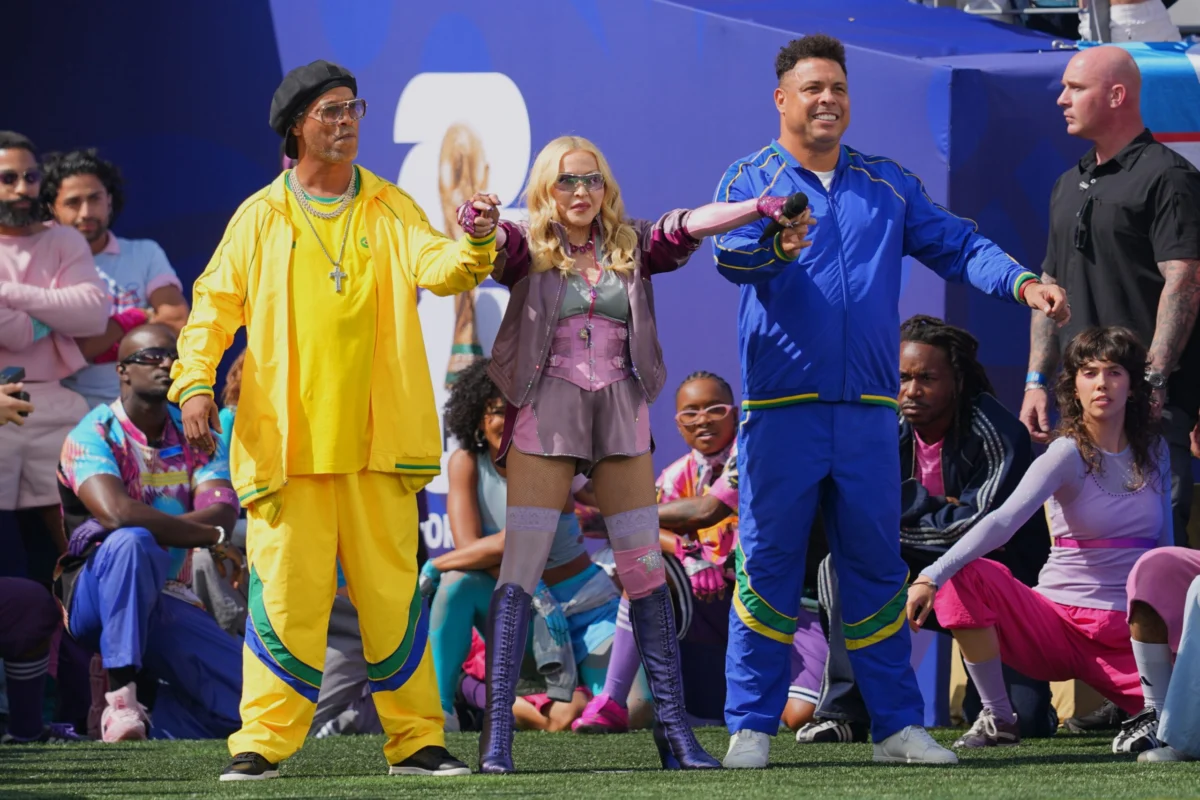
HangupsMusic.com – East Rutherford, The 2026 FIFA World Cup reached its fever-pitch conclusion on July 19, culminating in a high-stakes showdown at MetLife Stadium that saw Spain ascend to the pinnacle of global football. In a grueling contest that pushed both athletes and spectators to their limits, Spain secured a hard-fought victory over the defending champions, Argentina, clinching the title with a decisive goal during a tense overtime period. However, while the athletic prowess on the pitch was the primary draw for the more than 80,000 fans in attendance, the evening was also defined by a historic pivot in the tournament’s presentation. For the first time in the history of the FIFA World Cup, the governing body introduced an official, large-scale halftime show, mirroring the grand entertainment traditions of the American Super Bowl but on a vastly more international scale.
The inaugural World Cup Halftime Show was a sprawling, 11-minute production that sought to bridge the gap between global pop culture and the world’s most popular sport. The lineup was a curated mosaic of musical genres and cultural icons, featuring performances by Madonna, BTS, Shakira, Burna Boy, Justin Bieber, and Chris Martin of Coldplay. In a move that added a touch of surrealist whimsy to the high-pressure environment, the production also integrated the Muppets into the choreography, with Miss Piggy making a notable appearance in a custom pink jersey, signaling the event’s intent to appeal to a broad, multi-generational audience.
The atmosphere inside MetLife Stadium was palpable as the first half concluded in a 0-0 deadlock. With the championship hanging in the balance and the crowd’s anxiety mounting, the transition from sport to spectacle began. The task of setting the tone fell to Madonna, the undisputed Queen of Pop. In a nod to the host nation’s reverence for both music and football history, Madonna was escorted onto the field by two of the sport’s most legendary figures: Brazilian icons and former World Cup winners Ronaldo and Ronaldinho. The choice of her 2000 hit "Music" served as a thematic bridge, emphasizing the unifying power of the medium. Her performance was brief but high-energy, effectively shifting the stadium’s energy from the stress of the match to the celebration of the event.
As Madonna’s set concluded, the production took an unexpected turn toward the theatrical. The Muppets, led by the frenetic energy of Animal on the drums and the cool demeanor of Janice, took center stage to deliver a high-octane cover of the White Stripes’ modern stadium anthem, "Seven Nation Army." The performance was more than just a novelty act; it was anchored by the presence of Gustavo Dudamel, the world-renowned conductor of the Los Angeles Philharmonic. Dudamel’s involvement brought a layer of prestige to the proceedings, as he led a combined ensemble of the LAPhil and the Simón Bolívar Symphony Orchestra of Venezuela through an orchestral interlude that fused classical discipline with rock and roll grit. This segment highlighted the production’s ambition to blend high art with popular entertainment, creating a soundscape that resonated throughout the cavernous stadium.
The momentum continued to build as the K-pop phenomenon BTS took to the field. Representing a massive global demographic, the group performed their record-breaking single "Dynamite." Their synchronized choreography and infectious energy served as a testament to the global reach of the 2026 tournament. Following the K-pop set, the show leaned into its North American setting with a cameo from Jason Sudeikis and Brendan Hunt. Appearing in their beloved personas as Ted Lasso and Coach Beard, the duo provided a comedic introduction for Justin Bieber. In a departure from the high-production dance numbers, Bieber opted for a more intimate moment, appearing with an acoustic guitar. He performed "Everything Hallelujah," a track from his "SWAG" project, but modified the lyrics to "World Cup Hallelujah" to specifically commemorate the final. This acoustic pivot provided a brief moment of reflection before the show’s high-energy finale.
The closing acts of the halftime show focused on the official sounds of the 2026 tournament. Shakira, a veteran of World Cup performances, joined forces with Nigerian Afrobeat sensation Burna Boy to perform "Dai Dai," the official anthem of the 2026 FIFA World Cup. The collaboration highlighted the tournament’s commitment to showcasing the diverse musical landscapes of the competing nations. The grand finale brought together Chris Martin, Shakira, and the Muppets for a collective rendition of "We Believe." Accompanied by a massive children’s chorus, the performers stood as the word "Love" was projected onto the pitch, with the letter "O" stylized as a glowing image of the Earth. It was a calculated moment of sentimentality designed to leave the audience with a message of global unity before the players returned for the second half.
While the halftime show was the centerpiece of the evening’s entertainment, the festivities began long before the initial whistle. The opening ceremony featured a powerhouse vocal performance by Jennifer Hudson, who delivered the National Anthem with the gravitas expected of a championship final. This was followed by a collaborative performance by Robbie Williams, Nicole Scherzinger, and Laura Pausini, who debuted "Desire," another key track from the official tournament soundtrack. Post Malone also made a significant impact during the pre-game window. Known for his eclectic style, he appeared in a t-shirt featuring the lighthearted slogan, "I Just Hope Both Teams Have Fun." His set included the debut of a new track titled "Chrome Heartbreak," alongside his 2018 hit "Wow." He closed his performance by bringing out Swae Lee for a rendition of their Diamond-certified hit "Sunflower," a track that has become a staple of contemporary pop radio.
Despite the massive scale of the production and the star power involved, the introduction of a Super Bowl-style halftime show to the World Cup was not without its detractors. The music world saw a sharp divide in opinion, with some praising the spectacle and others viewing it as an unnecessary commercialization of the sport. Most notably, the legendary rock band The Cure took to social media to express their disdain. In an Instagram post shared shortly before kickoff, the band, led by Robert Smith, criticized the characterization of the event by FIFA President Gianni Infantino. Infantino had previously described the show as a "groundbreaking spectacle" designed to celebrate "shared values" and create a "legacy that transcends the final whistle."
The Cure’s response was characteristically blunt, consisting of a string of exasperated vowels followed by hashtags such as #Breadandcircuses and #MUGWANK. The term "bread and circuses" refers to the Roman practice of providing superficial entertainment to distract the public from more significant issues, suggesting that Smith and his bandmates viewed the glitzy halftime show as a hollow corporate distraction. While the term #MUGWANK left many fans scratching their heads, the overall sentiment of the post was clear: a rejection of the increasingly commercial and Americanized direction of international football entertainment.
As the smoke cleared and the final notes of "We Believe" faded, the focus returned to the game, but the conversation surrounding the halftime show continued long after Spain lifted the trophy. The 2026 World Cup Final will certainly be remembered for the quality of play on the field, but it will also be noted as the moment FIFA fully embraced the entertainment industry’s blueprint for mega-events. Whether this becomes a permanent fixture of future tournaments remains to be seen, but for one night in New Jersey, the worlds of global pop, classical music, and professional football collided in a way that was as polarizing as it was unforgettable.
