
 By admin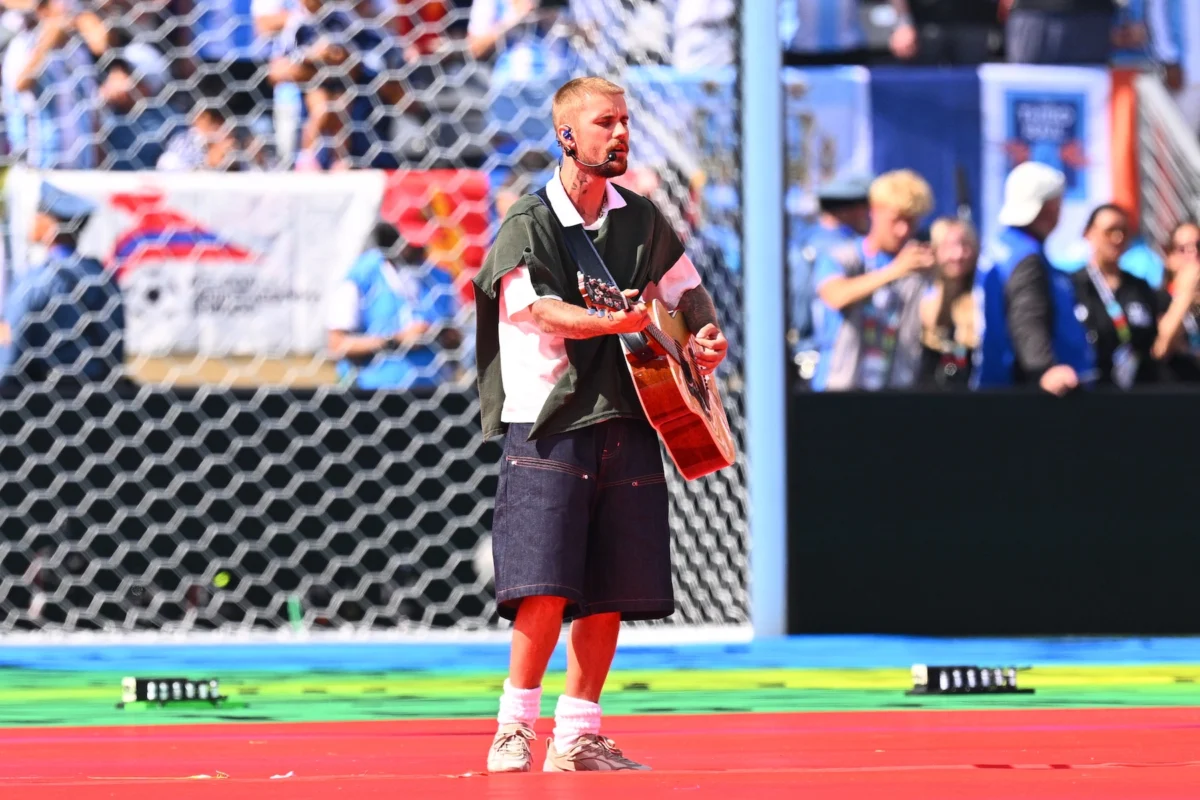
HangupsMusic.com – New York, The roar of anticipation at the New York New Jersey Stadium reached a fever pitch even before a single ball was kicked, as the 2025 FIFA World Cup Final between Spain and Argentina unfolded not just as a sporting spectacle but as an unparalleled global music festival. What commenced with a star-studded pre-game concert culminated in an audacious, record-breaking halftime show that redefined the intersection of sports and entertainment, packing an astonishing array of world-renowned artists into a mere eleven minutes. This historic event solidified the tournament’s ambition to be a cultural phenomenon, leaving an indelible mark on millions of fans worldwide.
The grand finale kicked off with a pre-game ceremony that was a concert in its own right, headlined by the genre-bending sensation Post Malone. The stadium vibrated as Malone delivered a high-energy set, perfectly priming the crowd for the athletic drama to follow. He was joined by a diverse roster of international talent, including Italian pop icon Laura Pausini, the powerhouse vocals of Nicole Scherzinger, internet personality and musician IShowSpeed, and British pop-rock legend Robbie Williams. A surprise appearance by Hollywood titan Tom Cruise added another layer of star power, while Jennifer Hudson delivered a stirring rendition of the U.S. national anthem, her powerful voice resonating through the colossal venue. This prelude set a formidable precedent, signaling that this World Cup Final was destined to transcend traditional sporting events.
Yet, it was the halftime show that truly cemented its place in history. In a move unprecedented for a FIFA World Cup, organizers, in collaboration with Global Citizen, engineered an eleven-minute musical blitz that defied expectations. While Spain and Argentina’s teams retreated to their locker rooms, strategizing for the second half, the pitch transformed into a dynamic stage, hosting a lineup so dense and diverse it felt like a compressed music festival. The challenge of orchestrating such a complex production within minutes, involving multiple stage setups and transitions, was a logistical marvel, executed with military precision by an army of stagehands and technicians.
The spectacle ignited with the Queen of Pop herself, Madonna. Making a grand entrance, she eschewed conventional staging, instead riding through the stadium’s underground tunnels in a golf cart, chauffeured by none other than Brazilian football legends Ronaldo and Ronaldinho. This playful yet iconic moment immediately captured the crowd’s attention. Madonna then burst onto the main stage, delivering a high-octane medley featuring a reimagined version of her 2000 smash hit "Music" and her latest single, "Danceteria," from her critically acclaimed new release, Confessions II. Her signature blend of theatrics and commanding stage presence set an electrifying tone for the rapid-fire performances that followed.
Following Madonna’s dynamic opener, the mood shifted with a powerful orchestral rendition of The White Stripes’ stadium anthem, "Seven Nation Army." Esteemed Venezuelan conductor Gustavo Dudamel led a colossal ensemble, a remarkable fusion featuring members of the New York Philharmonic, Venezuela’s Simón Bolívar Symphony Orchestra, and the exquisite Iranian violinist Bijan Mortazavi. Adding an unexpected touch of whimsical anarchy, The Electric Mayhem, the iconic house band from The Muppets, joined the classical and world music titans, creating a truly unique sonic tapestry that resonated with fans across generations. The sheer scale and genre-blending audacity of this segment underscored the show’s commitment to diverse artistic expression.
The global phenomenon of K-Pop then took center stage, albeit briefly. BTS, fresh off a performance in Paris less than 24 hours prior, made a highly anticipated cameo. Despite their incredibly tight schedule, the group delivered a few electrifying seconds of their chart-topping hit, "Dynamite." Though fleeting, their appearance sent shockwaves of excitement through the stadium and across social media, a testament to their immense global reach and the dedication of their fervent fanbase. The logistical feat of getting them from one continent to another for even a brief moment highlighted the immense drawing power of the World Cup stage.
A distinct nod to burgeoning American soccer culture followed, injecting humor and heart into the proceedings. Actor Jason Sudeikis, in character as the beloved Coach Ted Lasso, accompanied by his loyal assistant Coach Beard (Brendan Hunt), strode onto the pitch. In a charming, motivational interlude, Lasso delivered one of his signature pep talks, not to a football team, but to global pop superstar Justin Bieber. Bieber then captivated the audience with a moving performance of his track "Everything Hallelujah," showcasing his evolved artistry and vocal prowess. This performance came on the heels of his widely acclaimed headlining set at Coachella in April, further cementing his status as a major live act.
The momentum continued with the official song of the tournament, "Dai Dai," performed by Colombian superstar Shakira and Nigerian sensation Burna Boy. Their vibrant, rhythmic collaboration brought a distinct Afro-Latin flair to the show, embodying the global spirit of the World Cup. Shakira, a veteran of World Cup performances, shared her excitement on Instagram beforehand about having Uganda’s Ghetto Kids dance alongside her, adding an element of grassroots talent and cultural exchange to their already electrifying act.
The whirlwind program concluded with a profoundly unifying moment. The PS 22 Chorus, a heartwarming choir comprising fourth and fifth graders from a public elementary school in Staten Island, performed "We Dance," a poignant song penned by Coldplay. The moment became even more special when Coldplay frontman Chris Martin himself joined the young choristers, lending his voice to the uplifting melody. This segment provided a touching, earnest close to the rapid-fire celebrity parade, reminding everyone of the simple, universal power of music and shared humanity.
As the final notes faded, an Argentinian sportscaster’s impassioned shout of "GOLLLLL" echoed through the stadium, perfectly timed with a spectacular fireworks display erupting from its outer rim. In a matter of seconds, an army of volunteers efficiently cleared the field of stage coverings, the smoke dissipated, and the sprinklers began to mist the pitch, preparing it for the return of the true stars of the show: the footballers. The seamless transition from a massive concert venue back to a pristine football field was a breathtaking display of logistical mastery.
Beyond the final, the 2025 FIFA World Cup had been a tapestry woven with memorable musical moments across its various host cities. The opening ceremony in Mexico City had featured Shakira and Burna Boy performing "Dai Dai," setting the precedent for a musically rich tournament. Last weekend, British singer Ellie Goulding had entertained fans at the halftime of the quarterfinal match between England and Norway. The tournament’s opening match in Los Angeles, between the United States and Paraguay, boasted an equally impressive lineup: Katy Perry and 10-year-old Norwegian sensation Tius Luka performed "Wonder," preceded by a high-voltage performance of "Game Time" from Future and Tyla. They were followed by Blackpink’s Lisa, Brazilian icon Anitta, and Nigerian superstar Rema, who delivered the electrifying "Goals." Not to be outdone, Canada’s opening ceremony had showcased local and international talent, including Michael Bublé, Alanis Morissette, Alessia Cara, Eliana, Jessie Reyez, Noah Fatehi, Sanjoy, Vegedream, and William Prince. Each of these performances contributed to the tournament’s vibrant cultural footprint, demonstrating a concerted effort to integrate music as a core component of the World Cup experience.
Crucially, this unprecedented halftime show was not merely for entertainment; it served a vital charitable purpose. The entire event was designed to benefit the FIFA Global Citizen Education Fund, an initiative striving to raise $100 million to expand access to education and football opportunities for children worldwide. The fund had already surpassed half of its ambitious goal, with $1 from every ticket sold throughout the tournament being directly donated to the cause. The seamless integration of world-class entertainment with a profound philanthropic mission underscored the event’s broader impact, demonstrating how global platforms can be leveraged for meaningful social change. The 2025 FIFA World Cup Final thus concluded not just as a sporting contest, but as a testament to the unifying power of music, culture, and collective goodwill on a truly global stage.
