
 By admin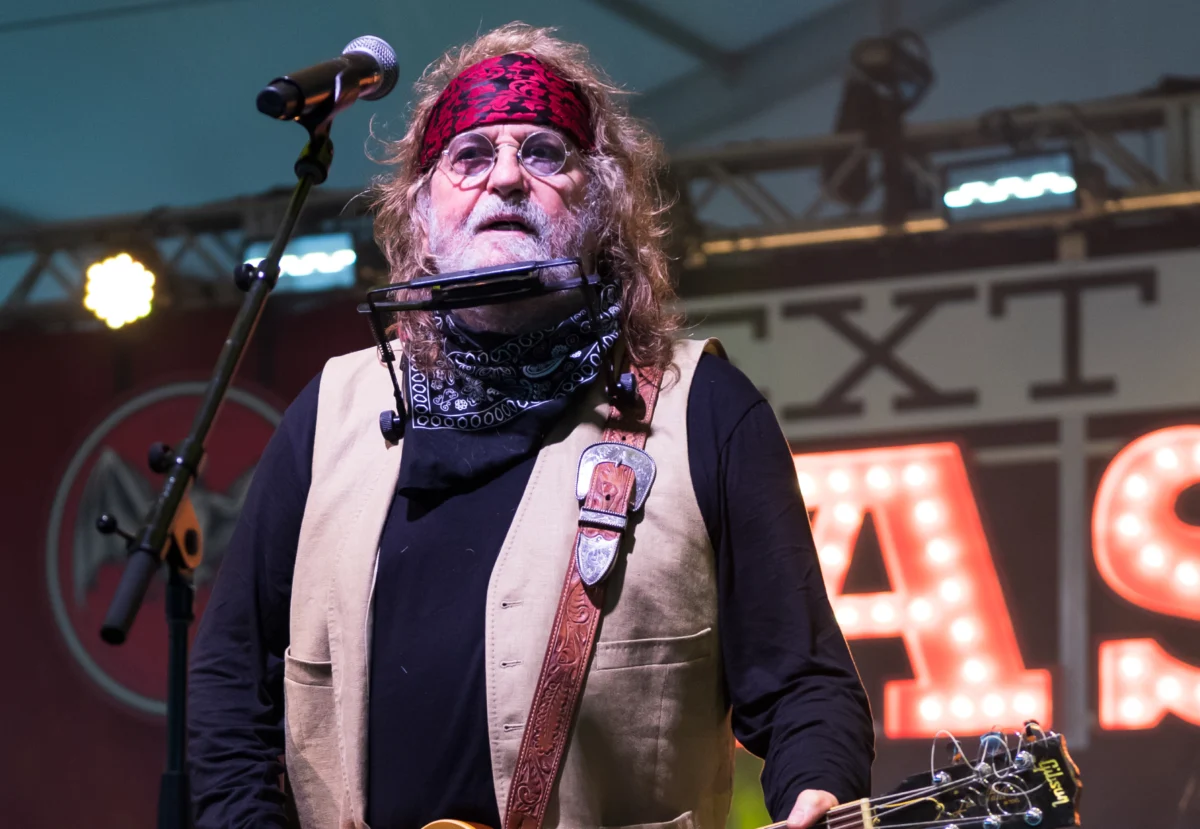
HangupsMusic.com – Veteran musician Ray Wylie Hubbard, an enduring figure in the tapestry of American roots music, has unveiled his 20th studio album, Reel 2 Reel 4 Real, this month. The release marks a potential capstone to a career spanning more than five decades, with the venerable artist, on the cusp of eighty, articulating a desire for the album to capture an unvarnished authenticity, reminiscent of the seminal recordings that shaped his own musical consciousness. His vision for this latest work was clear: to craft a sound where "real guys really playing" takes center stage, evoking the raw energy found in early works by rock and folk pioneers like Buffalo Springfield and The Rolling Stones. This dedication to organic sound defines an album that might be his final studio offering, yet resonates with the timeless spirit of his celebrated career.
Hubbard’s influence stretches wide across the musical landscape, a rare bridge uniting the often disparate worlds of country, rock, and folk. His name has been a touchstone for generations of artists, from the moment Jerry Jeff Walker famously covered his rebellious anthem, "Up Against the Wall, Redneck Mother," over half a century ago. This seminal track cemented Hubbard’s reputation as a quintessential "outlaw" — not in the criminal sense, but as a maverick whose lyrical honesty and gritty sound defied conventional genre boundaries. Today, his impact is evident in the tributes from contemporary stars such as Eric Church and Hayes Carll, and the gritty rock sensibilities of bands like Blackberry Smoke and Cross Canadian Ragweed. The reverence he commands is palpable, even reaching as far as former Beatle Ringo Starr, whom Hubbard counts among his friends. This widespread respect and admiration is a validation Hubbard embraces with characteristic humility.
“It’s gratifying in a way that validates — OK, yeah, I can write these songs,” Hubbard shared with Rolling Stone, reflecting on the profound sense of affirmation that accompanies such a storied career. Occasionally, this admiration materializes in profoundly surreal moments that underscore his unique position in music history. A prime example occurred just last year when Mike Campbell of the Dirty Knobs, a veteran of Tom Petty & The Heartbreakers, expressed his appreciation for Hubbard’s songwriting to Ringo Starr. Without hesitation, Starr provided Campbell with Hubbard’s contact, simply advising, “Call him!” This spontaneous gesture led to an unexpected collaboration that highlights the deep mutual respect within the music community.
By the time Campbell reached out, Hubbard was nearing completion of Reel 2 Reel 4 Real at Johnathan Tyler’s studio in Texas. The recording sessions had already been a family affair, with his son, Lucas, contributing guitar work, alongside a talented circle of friends including keyboardist Bukka Allen and mandolin player Cody Braun. These musicians, steeped in the roots tradition, helped lay the groundwork for the album’s earthy sound. However, the invitation from Campbell to fly to Los Angeles and record a few tracks at his personal studio was an opportunity too significant to pass up. “He says, ‘What are you doing?’ and I tell him I’m making a record,” Hubbard recounted. “He said, ‘Come out here and do a couple!’ So, Lucas and I flew out there, and we cut with Mike. It was really quite a thrill. Those are the last two songs on the album.” This spontaneous addition, a testament to the collaborative spirit that defines much of Hubbard’s work, imbued the album with an extra layer of rock pedigree.
Following these dynamic sessions, Hubbard entrusted the mixing duties to his longtime friend and occasional producer, Gurf Morlix, known for his work with artists like Slaid Cleaves and Robert Earl Keen. Morlix understood implicitly the raw, unpolished aesthetic Hubbard sought for his 20th album. The goal was to encapsulate the very essence of roots-rock, a sound that prioritizes genuine performance over pristine production. “I’ve always liked records where it’s real guys really playing,” Hubbard explained. “Like the first Buffalo Springfield, first Stones, you know? You could hear these guys. So, man, that’s the goal that we set. We wanted it to sound like those kind of old-school roots-rock records.” This philosophy extends to the very texture of the recordings. As Morlix often quips, “the way you make a roots record is, you take out the lip smacks and the coughs, but you leave in the stray noises, pedal squeaks.” It’s a commitment to authenticity that allows the listener to feel present in the room, experiencing the music as it unfolds organically.
Hubbard’s songwriting approach for Reel 2 Reel 4 Real is rooted in keen observation and a seasoned understanding of his craft. “Songwriting, they say, is inspiration plus craft, right?” he mused, articulating a philosophy honed over decades. The tracks on the album spring from unexpected moments and nostalgic reflections. “She Plays Crazy Mama,” for instance, emerged spontaneously after Hubbard found himself listening to J.J. Cale’s classic “Crazy Mama” during his recording sessions with Mike Campbell. The inspiration was so potent that Cale’s widow, Christine Lakeland, was invited to contribute to the track, weaving a direct lineage to the song’s muse. Another standout, “Cassette Mix Tape,” delves into a vivid narrative of teenage rebellion and joyriding, sparked by a simple discovery in a storage closet.
“There was this old box up there, with all these cassettes,” he recalled, detailing the genesis of the song. “And all of a sudden I looked and there were some mix tapes that I’d made — and a cassette mix tape that Bugs Henderson had made for me back in the Seventies, Eighties. I just remembered how important it was at that time to be able to make a cassette mix tape of songs that meant something to you.” This unearthed relic ignited a narrative about a young protagonist, his buddy Jack, and a shared adventure involving a stolen car and a girl who is "not particular with who she gets it on with." It’s a quintessential Hubbard tale, rich in character and authentic detail, born from a profound journey back to his own youth.
As Hubbard navigates his late seventies, moments of nostalgia and reflection are increasingly frequent, often tinged with the bittersweet pang of loss. Earlier this month, the music world, and Hubbard personally, mourned the passing of Terry “Buffalo” Ware, one of his closest friends and most steadfast collaborators, after a battle with lung cancer. Their partnership began in the early 1970s, a chance encounter at a pizza joint where Ware was washing dishes. Hubbard, recognizing a kindred spirit, extended an invitation to play guitar for him. Ware, without a second thought, quit his job on the spot. This impromptu decision blossomed into a three-decade-long musical journey, with Ware touring extensively across the U.S. and Europe by Hubbard’s side, and contributing his guitar prowess to most of Hubbard’s albums. “We had some great adventures,” Hubbard remembered fondly. “He was a stand-up guy, and he had a lot of compassion, you know? He liked to go down to the dog pound and adopt these dogs, just to do it. He was a remarkable friend.” Ware’s passing is a poignant reminder of the enduring bonds forged through shared artistic pursuits and life’s winding roads.
While Hubbard’s expansive catalog boasts a wealth of material, casual fans most readily identify him with “Redneck Mother” and his 2006 cult hit, “Snake Farm.” Both tracks have achieved legendary status, particularly in his adopted home state of Texas, where Hubbard now resides in Austin. They are frequently covered by emerging talents and established artists alike, and remain indispensable staples of his energetic live performances, which he continues to undertake regularly. Though the days of grueling coast-to-coast tours are behind him – a concession to his advancing years – Hubbard maintains a vibrant presence on the road. This fall, he plans an intensive series of shows across Texas, interspersed with special engagements, including a pair of November dates at Nashville’s esteemed 3rd and Lindsley, and a stop in Las Vegas during the National Finals Rodeo.
On stage, he performs “Redneck Mother” and “Snake Farm” with a genuine smile, a marked evolution from earlier times when the former often overshadowed the rest of his work. “’Redneck Mother’ fits in the arsenal now,” he explained, recalling a period when it was his sole recognized song. “For a long period of time, that was the only thing I was known for, because Jerry Jeff did it and put my name on the album. I’d walk onstage, they’d go, ‘Play Redneck Mother!’ and I’d play it. I’d say, ‘Here’s another song I wrote,’ and they’d say, ‘Play ‘Redneck Mother’ again!’” Now, with a rich body of work behind him, he can embrace these crowd-pleasers with newfound levity. “Now, I can have fun with it. With ‘Redneck Mother’ and ‘Snake Farm,’ I don’t have to be sincere about this.” He expresses genuine relief at not being perpetually asked to perform a mournful ballad like “Feelings,” preferring the raucous energy of his signature tunes. Reel 2 Reel 4 Real, with its commitment to raw sound and storytelling, stands as a testament to Hubbard’s enduring spirit and his unwavering dedication to the honest groove.
