
 By Azzam Bilal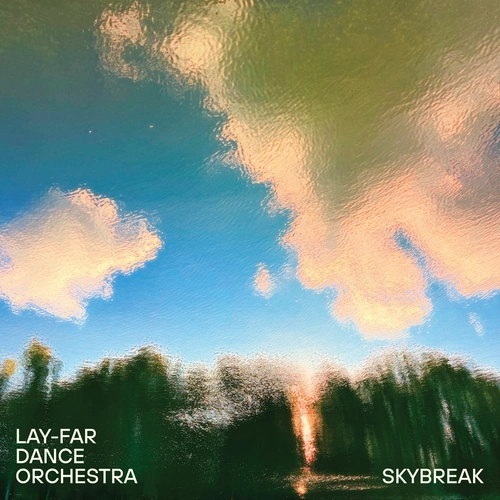
HangupsMusic.com – Moscow, the trajectory of Alexander Leyfa, known globally by his moniker Lay-Far, has always been defined by a restless search for the "soul" within the machine. For over a decade, the Russian producer has been a staple of the international house music scene, delivering tracks that pulsed with a distinct warmth often missing from the sterile world of digital production. However, beneath the four-to-the-floor rhythms and the meticulously chopped samples that characterized his early output, there was always a simmering inclination toward the organic complexities of jazz. While many of his contemporaries were content to loop a dusty piano chord and call it a day, Leyfa’s work—perhaps most notably his 2014 collaboration with Jonny Miller on the track "Going Home"—suggested a deeper understanding of harmonic structure and live instrumentation. It was a hint of a different creative path, one that has finally reached its zenith with the unveiling of the Lay-Far Dance Orchestra and their debut long-player, Skybreak.
The transition from a solo electronic producer to the leader of a full-scale "Dance Orchestra" is a move fraught with potential pitfalls. History is littered with the attempts of house and techno producers who, yearning for the prestige of the "live" sound, ended up producing music that felt academic or, worse, lacked the visceral energy of the club. The "jazz-house" crossover often struggles to balance the improvisational freedom of jazz with the functional requirements of the dancefloor. However, Leyfa avoids these traps entirely, primarily because Skybreak is not a sudden pivot born of a mid-career crisis. Rather, it is the culmination of a project that has been in development for fifteen years. This long-gestating vision allowed the music to mature naturally, shedding the artifice of a "concept" and becoming a lived-in, breathed-in reality.
At the heart of the Lay-Far Dance Orchestra is a high-caliber ensemble of musicians who bring Leyfa’s arrangements to life with a sense of fluid urgency. These are not merely session players executing a script; there is a palpable synergy throughout the album that suggests a collective understanding of the jazz-funk tradition. The arrangements are sophisticated and dense, yet they never feel cluttered. Instead, they provide a rich tapestry of sound that honors the legacies of groups like Atmosfear or the Mizell Brothers while firmly planting its feet in the 21st century. The result is an album that feels timeless—it could have been unearthed from a 1970s vault, yet its rhythmic sensibilities are clearly informed by the broken beat and nu-jazz movements of the modern era.
One of the standout elements of Skybreak is its refusal to be pigeonholed into a single tempo or mood. While the foundational spirit is rooted in jazz-funk, the album traverses a wide variety of sonic landscapes. A prime example of this versatility is "Aquarius Love," which features the distinctive vocal stylings of Seven Davis Jr. Here, the Orchestra explores a drum and bass-influenced rhythm that provides a high-octane backdrop for Seven Davis Jr.’s soulful, idiosyncratic delivery. It is a masterclass in tension and release, blending the frantic energy of jungle-adjacent breakbeats with the smooth, sophisticated chords of contemporary soul. The inclusion of Seven Davis Jr. is a stroke of genius; his ability to bridge the gap between underground house sensibilities and avant-garde R&B makes him the perfect foil for Leyfa’s orchestral ambitions.
The vocal contributions throughout the album are handled with a deft touch, ensuring that the human voice acts as an integrated instrument rather than a mere adornment. The guest vocalists bring a diverse range of textures to the project, but they are all united by a shared sense of groove. It is this "groove" that acts as the connective tissue for Skybreak. Regardless of whether a track leans toward a slow-burning funk crawl or a high-tempo rhythmic workout, the underlying pulse is undeniable. It is clear that Leyfa’s years behind the DJ booth have informed his approach to live composition; he understands how to move a body, even when he is working with a double bass and a brass section instead of a drum machine and a synthesizer.
The title Skybreak itself feels symbolic of the music contained within. It suggests a clearing of the clouds, a moment of sudden clarity and light. There is an inherent optimism to these recordings—a brightness that feels earned. This may be attributed to the long production cycle. By allowing these tracks to evolve over a decade and a half, Leyfa has stripped away the ephemeral trends that might have dated the music had it been released sooner. Instead, what remains is the essence of the songs. The musicianship is top-tier, but it is never flashy for the sake of being flashy. The solos are purposeful, the percussion is intricate but grounded, and the melodic hooks are designed to linger in the mind long after the record has stopped spinning.
Furthermore, the technical execution of the album deserves significant praise. Balancing a large ensemble in a recording environment is a difficult task, particularly when trying to maintain the "punch" required for dance music. The mix on Skybreak is spacious and warm, allowing each instrument to occupy its own frequency without stepping on the toes of the others. The low end is rich and foundational, providing the necessary weight for the club, while the higher frequencies—the shimmering cymbals and the bright horn stabs—are crisp and clear. This sonic clarity ensures that the listener can appreciate the nuances of the performances, from the subtle ghost notes on the snare drum to the complex harmonic interplay of the keys.
In the broader context of the current global music scene, the Lay-Far Dance Orchestra arrives at a time when the lines between electronic and acoustic music are increasingly blurred. We are seeing a resurgence of interest in live instrumentation within the dance music community, fueled by a desire for authenticity and human connection in an era of AI-generated loops and formulaic arrangements. Leyfa is at the forefront of this movement, demonstrating that one can remain a "dance" artist while embracing the full spectrum of musical theory and live performance. He has successfully translated his identity as a house producer into a new language, one that is more complex and expressive but no less accessible.
Ultimately, Skybreak is a testament to the power of patience and the importance of artistic evolution. It would have been easy for Alexander Leyfa to continue releasing high-quality house EPs for the rest of his career, and his fanbase would have been perfectly satisfied. However, by taking the difficult path—by assembling an orchestra, by spending fifteen years refining his vision, and by stepping outside the comfort zone of the DJ booth—he has created something truly substantial. The Lay-Far Dance Orchestra is not a side project or a temporary diversion; it feels like the definitive statement of an artist who has finally found the perfect medium for his message.
As the final notes of the album fade, the listener is left with a sense of fulfillment. Skybreak is a dense, rewarding experience that demands multiple listens to fully grasp its many layers. It is an album that honors the past without being beholden to it, and it looks toward the future with a sense of unbridled creativity. For those who have followed Leyfa’s career from his early days in the Moscow underground, this album feels like a homecoming—a realization of the potential that was always hidden between the beats of his house records. For new listeners, it serves as a stunning introduction to a composer and bandleader who is operating at the peak of his powers. In a world of fleeting digital singles, Skybreak stands as a monument to the enduring power of the groove.
