
 By admin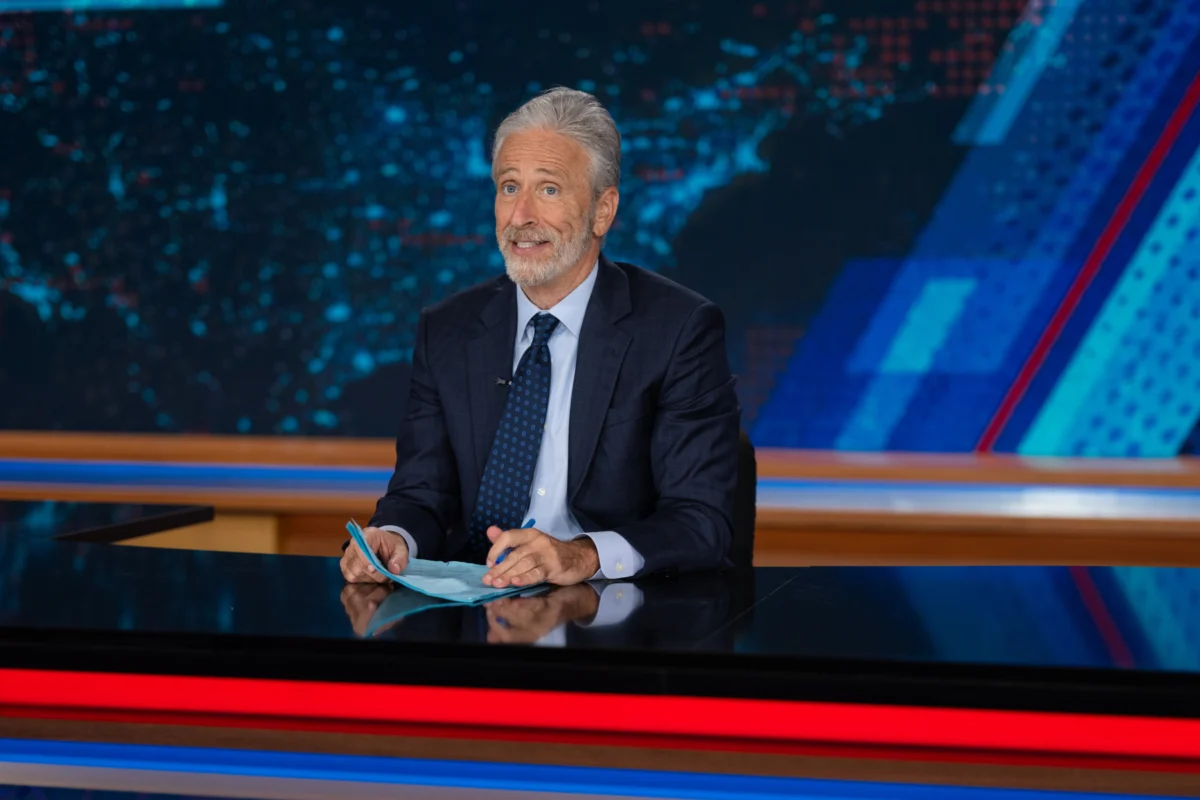
HangupsMusic.com – New York, NY – Veteran satirist Jon Stewart, in his characteristic return to the helm of The Daily Show, recently delivered a piercing monologue dissecting the latest actions and pronouncements of former President Donald Trump. With his signature blend of sharp wit and incisive political commentary, Stewart honed in on a seemingly minor but symbolically potent incident at a global sporting event before expanding his critique to broader questions of governmental competence and accountability under the former administration. The segment underscored Stewart’s enduring role as a critical voice in American political discourse, unafraid to challenge authority with humor and meticulous observation.
The immediate catalyst for Stewart’s ire was an unexpected appearance by Donald Trump at the conclusion of a significant international football match, the World Cup final, where Spain emerged victorious. The event, a spectacle of global unity and athletic prowess, traditionally culminates in a deeply personal and sacred moment for the winning team: the hoisting of the championship trophy. This cherished ritual, reserved solely for the players who have poured their sweat and soul into the competition, was, according to Stewart, abruptly interrupted by Trump’s presence on stage. The host, known for his ability to translate public sentiment into comedic gold, painted a vivid picture of the scene, mocking the perceived incongruity of a former head of state inserting himself into such an intimate athletic celebration.
Stewart commenced his segment with a humorous take on the international final itself, quipping, "The Spain-Argentina final was like a reverse Super Bowl where the players spoke Spanish and the halftime show was in English." He then playfully imagined an unlikely and eclectic halftime entertainment lineup, including pop icons Madonna and Justin Bieber alongside the whimsical Muppets, a testament to the global appeal and cultural mishmash that often accompanies such mega-events. However, the tone swiftly shifted as Stewart introduced the footage of the trophy ceremony. He emphasized the profound significance of the moment for the athletes, describing it as "a special moment that is only for the players, that is really, just…" His voice trailed off, replaced by a clip showing Trump, who had reportedly been met with a chorus of boos earlier in the day at the same event, joining the jubilant Spanish squad.
Stewart’s frustration was palpable as he erupted, "What the f*** are you doing on the stage? It’s for the players. God damn! Why must everything be tainted by the overinflated ego of Cankles Muldoon? Why? Why?" The use of the derogatory moniker, delivered with Stewart’s characteristic blend of exasperation and comedic outrage, highlighted his belief that Trump’s actions were driven by a pervasive self-aggrandizement, overshadowing the genuine achievements of others. This intrusion, Stewart argued, was not merely a breach of protocol but a symbolic act of appropriation, diverting attention from the true heroes of the day.
The critique didn’t end with the trophy hoist. Stewart then turned his attention to Trump’s post-game commentary, which, true to form, was marked by grandiosity and a loose grasp of sporting terminology. Stewart sarcastically offered, "I will admit this. Afterwards, Trump had some really insightful post-game analysis." He then played a clip of Trump declaring the event "four times greater than any FIFA ever held." Stewart immediately seized on the statement, dissecting its linguistic and logical flaws. "What’s a FIFA? How do you hold a FIFA?" he questioned, mimicking Trump’s phrasing with feigned bewilderment. "How could our FIFA be four times greater than any other FIFA?" This comedic deconstruction served to underscore what Stewart often portrays as Trump’s tendency to speak in superlatives without a clear understanding of the underlying facts or definitions.
Trump’s subsequent doubling down on his claim, stating, "And it’s probably about five times, actually, they’re telling me today," provided Stewart with further ammunition. The host retorted, "Is that what they told you? You know, they’re telling you that because everyone around you lies to you, because you’re a little baby." This scathing indictment went beyond mere mockery of Trump’s vocabulary; it implied a deeper critique of his leadership style, suggesting an environment where truth is malleable and subordinates cater to his ego, insulating him from objective reality. Stewart painted a picture of a leader surrounded by sycophants, leading to a distorted perception of both his own accomplishments and the state of affairs.
Beyond the immediate spectacle of the World Cup, Stewart’s monologue broadened into a more comprehensive assessment of the Trump administration’s performance and broken promises. He pivoted to discuss ongoing geopolitical tensions, specifically referencing the "current state of the Iran war" (likely referring to continuous tensions or ongoing military engagements under Trump’s presidency, not a declared full-scale war), and Trump’s persistent "fixation on the 2020 election," long after its conclusion. These elements served as a backdrop for Stewart’s central argument: the administration’s alleged lack of competence, despite its rhetoric.
Stewart particularly targeted the unfulfilled promise of a "meritocracy," a concept frequently championed by the former president as an antidote to perceived "woke bullshit" and a guarantee of superior governance. A meritocracy, by definition, is a system where advancement is based on individual ability or achievement rather than wealth or social standing. Trump had often asserted that his administration would usher in an era where only the most qualified individuals would hold positions of power, leading to unparalleled efficiency and prosperity. Stewart meticulously dismantled this narrative by citing a series of administrative missteps and policy failures that, in his view, contradicted the meritocratic ideal.
He recounted issues with crucial government agencies, such as the Food and Drug Administration (FDA), implying regulatory inefficiencies or controversial decisions that undermined public trust. While not specifying particular incidents, Stewart’s implication was clear: an administration built on merit would not allow such significant bodies to falter. He also alluded to problems with a specific public works project, the "reflecting pool," presenting it as a minor yet symbolic indicator of broader operational shortcomings. These seemingly disparate issues, from critical regulatory bodies to the maintenance of national landmarks, collectively painted a picture of an administration struggling with basic operational effectiveness. "I’m starting to get the sense that this administration is not as competent as we’ve been led to believe," Stewart remarked, adding, "And it’s not just the pool or the diarrhea," a crude but effective way to highlight the perceived pervasive nature of the issues.
Stewart then systematically listed several key promises made by Trump during his campaigns and contrasted them with the observable outcomes. "Trump said he was going to cut our energy bills in half. Electricity is up 18 percent," Stewart stated, presenting a direct contradiction between the promise and economic reality. He continued, "He said gas prices would go below $2 a gallon. It’s up to $4 a gallon." These economic indicators, which directly impact the daily lives of millions, served as potent examples of unfulfilled pledges.
The host also challenged Trump’s foreign policy claims. "He said he was going to stop new wars. He’s bombed at least seven other countries," Stewart asserted, drawing a stark contrast between isolationist rhetoric and the realities of military engagements. This point aimed to expose a perceived hypocrisy in the administration’s approach to global conflicts. Domestically, Stewart highlighted economic disappointments: "He said he was going to lead a boom in manufacturing jobs. We’ve lost tens of thousands of manufacturing jobs." This directly countered one of Trump’s central economic pillars, which promised a revitalization of American industry and a surge in employment.
Stewart concluded this segment with a rhetorical flourish, echoing the administration’s own words: "This country was going to enter a golden age because only qualified people would be in charge now. They promised. No more of the woke bullshit that had held this country down for so long." He then played a clip of Trump himself promising a meritocracy, a stark reminder of the high expectations set. Stewart’s final, exasperated question resonated with many viewers: "Where is this meritocracy? We have seen no evidence of it. None! It’s just another word." This powerful summation encapsulated his argument that the administration’s actions and outcomes consistently failed to align with its lofty promises and self-proclaimed superiority, reducing foundational concepts like meritocracy to mere political slogans devoid of substance.
Jon Stewart’s latest turn on The Daily Show serves as a powerful reminder of the role of satire in holding power to account. By meticulously dissecting presidential actions and statements, from a seemingly trivial World Cup incident to significant policy failures, Stewart not only provided comedic relief but also offered a critical lens through which to examine the efficacy and integrity of leadership. His ability to connect specific instances of perceived incompetence to a broader narrative of unfulfilled promises and administrative disarray reinforces his enduring relevance as a commentator in an often-turbulent political landscape. The episode ultimately solidified Stewart’s position as a voice that challenges audiences to look beyond rhetoric and demand tangible results from those in power.
