
 By Azzam Bilal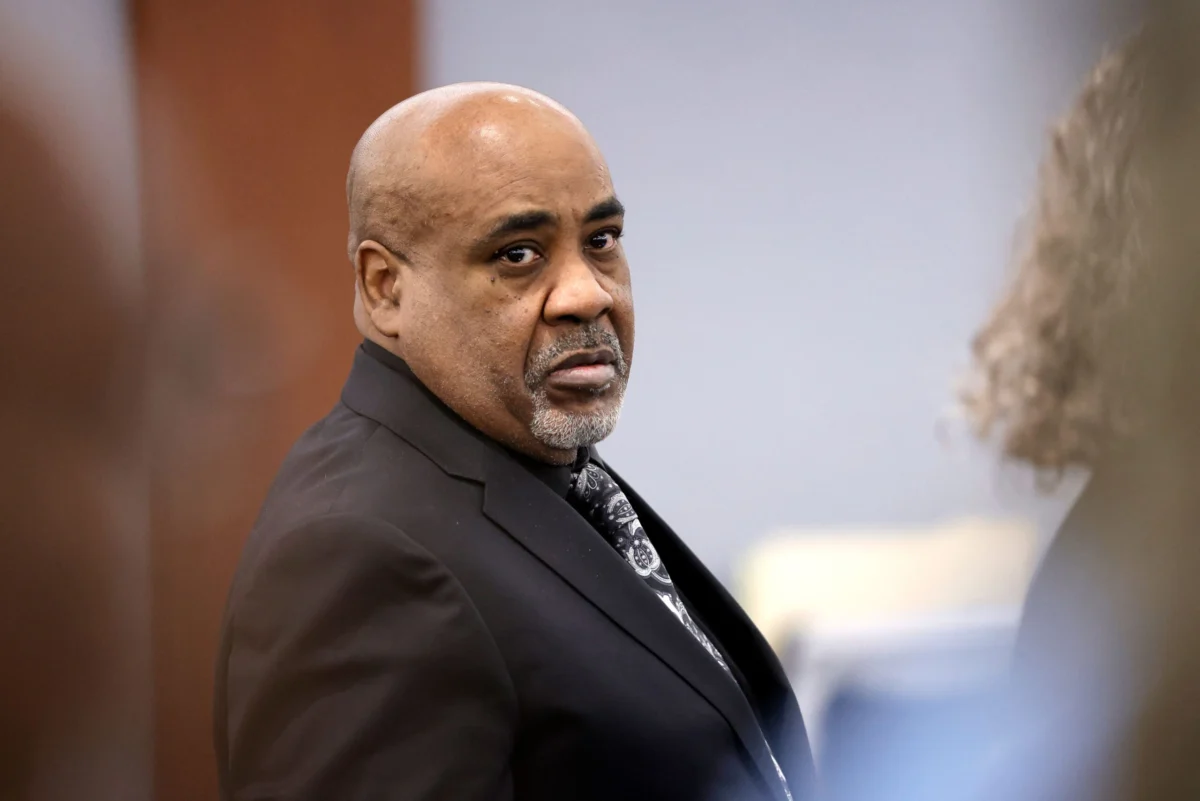
HangupsMusic.com – LAS VEGAS, Nevada, In a courtroom just miles from where the neon lights of the Las Vegas Strip give way to the somber realities of the legal system, a chapter of music history that remained open for nearly three decades has finally reached its judicial conclusion. A Clark County jury has delivered a guilty verdict against Duane “Keffe D” Davis, 63, for his pivotal role in the 1996 slaying of hip-hop icon Tupac Shakur. The decision, reached after less than three hours of deliberation, marks the first and only conviction ever secured in a case that has fueled countless documentaries, conspiracy theories, and a lingering sense of injustice within the global music community.
The conviction of Davis represents a watershed moment for law enforcement and the Shakur estate alike. For twenty-seven years, the question of who killed the 25-year-old rapper remained one of the most enduring mysteries in American pop culture. While the streets of Compton and the corridors of the music industry often whispered names and motives, the legal system remained paralyzed until a combination of Davis’s own public admissions and a renewed investigative push by Las Vegas Metropolitan Police Department detectives finally bridged the gap between rumor and evidence.
The roots of the fatal encounter on September 7, 1996, stretch back months prior to a seemingly minor altercation in a California mall. Prosecutors successfully argued that the murder was the culmination of a violent rivalry between the South Side Compton Crips, led by Davis, and the Mob Piru Bloods, a gang closely affiliated with Marion “Suge” Knight’s Death Row Records. In May 1996, Davis’s nephew, Orlando “Baby Lane” Anderson, was involved in a scuffle with Trevon “Tray” Lane, a Death Row associate, at a Foot Locker in the Lakewood Center Mall. During this encounter, Lane’s "Death Row" medallion was snatched, an act of disrespect that set the stage for a deadly retaliation.
The tension reached a breaking point on the night of the Bruce Seldon vs. Mike Tyson heavyweight championship fight at the MGM Grand. Following Tyson’s victory, the atmosphere in the casino was electric but volatile. As Shakur and Knight made their way through the lobby, Lane spotted Anderson and pointed him out to Shakur. Security cameras famously captured the ensuing chaos: Shakur, followed by Knight and their entourage, lunged at Anderson, kicking and punching him in a brief but brutal assault. This act of violence, meant to defend the honor of Death Row Records, instead served as the catalyst for the rapper’s demise.
Driven by a desire for retribution and a need to maintain the reputation of his organization, Duane Davis began what prosecutors described as a “hunt.” The trial revealed a calculated effort by Davis to locate Shakur and Knight later that evening. Davis admitted in various media appearances and in his 2019 memoir, Compton Street Legend, that he procured a .40-caliber Glock handgun and coordinated a group of four men—himself, his nephew Orlando Anderson, Terrence “Bubble Up” Brown, and DeAndre “Dre” Smith—to cruise the streets of Las Vegas in a white Cadillac.
The fatal moment occurred at approximately 11:15 p.m. at the intersection of Flamingo Road and Koval Lane. As Shakur’s BMW 750iL sat at a red light, the white Cadillac pulled alongside. Within seconds, a volley of gunfire erupted from the rear of the Cadillac, striking Shakur four times and grazing Knight’s head with a bullet fragment. While Shakur was rushed to the University Medical Center of Southern Nevada, where he would fight for his life for six days before succumbing to internal bleeding, the Cadillac vanished into the desert night.
For years, the investigation into Shakur’s death was criticized for being lackluster or hindered by a "wall of silence." However, the narrative shifted significantly when Davis began to speak publicly about his involvement. Facing a federal investigation into unrelated drug charges in 2008, Davis entered into a "proffer" agreement with authorities, providing details about the shooting under the impression that his statements could not be used against him. He later leveraged this story for profit, appearing in numerous interviews and writing a book that detailed his presence in the "death car."
During the trial, Deputy District Attorney Binu Palal emphasized that Davis’s own words were his undoing. Palal argued that Davis was the "on-site commander" who orchestrated the hit, even if he was not the one who pulled the trigger. Under Nevada law, an individual can be charged and convicted of murder if they are found to have aided or abetted the crime. The prosecution presented Davis as the mastermind who provided the weapon and directed the shooters to their target, making him just as responsible as the person who fired the shots.
The defense, led by attorney Carl Johnson, attempted to paint Davis as a storyteller who embellished his role in the murder to gain notoriety and financial reward. They argued that there was no physical evidence—no gun, no DNA, no vehicle—linking Davis to the crime scene other than his own tall tales. Davis himself eventually recanted his previous admissions, claiming he made the stories up to capitalize on the public’s obsession with the Shakur case. However, the jury found the consistency of his earlier accounts and the corroborating testimony from former associates more compelling than his recent denials.
The verdict brings a sense of finality to a saga that has seen all other primary suspects pass away. Orlando Anderson, long suspected of being the gunman, was killed in an unrelated gang shooting in 1998. Terrence Brown and DeAndre Smith have also since died, leaving Davis as the sole survivor of the four men in the Cadillac. His conviction ensures that at least one person is held legally accountable for the violence that claimed the life of one of the most influential artists of the 20th century.
The impact of Tupac Shakur on the music world cannot be overstated. Even decades after his death, his poetry, social commentary, and raw honesty continue to resonate with new generations of listeners. His albums, such as All Eyez on Me and The Don Killuminati: The 7 Day Theory, remain benchmarks of the genre. The lack of a conviction in his murder case had long been a sore spot for fans, symbolizing a perceived indifference toward the lives of Black artists and the violence that plagued the rap industry during the 1990s.
As the news of the verdict spread, reaction from the hip-hop community was swift. While some expressed relief that "the truth" had finally been acknowledged in a court of law, others noted the bittersweet nature of the moment, coming so long after the artist’s passing. The conviction does not bring Shakur back, but it does dismantle the aura of untouchability that had surrounded the perpetrators of the crime for nearly thirty years.
Duane Davis is currently scheduled for sentencing on October 13. Given the severity of the charge—first-degree murder with the use of a deadly weapon—he faces the very real possibility of spending the remainder of his life behind bars. For a man who spent years boasting of his survival and his role in the underworld of Compton, the quiet finality of a prison cell serves as a stark conclusion to a life defined by conflict.
In the end, the trial of Duane "Keffe D" Davis was as much about the history of Las Vegas and the evolution of the West Coast rap scene as it was about a single act of violence. It exposed the deep-seated tensions of the era and the tragic consequences of a cycle of retaliation that claimed one of music’s brightest stars. As the legal proceedings wind down, the focus returns to the legacy of Tupac Shakur—a legacy that can now be viewed through the lens of a case finally closed, allowing the music, rather than the mystery, to take center stage once again.
