
 By Azzam Bilal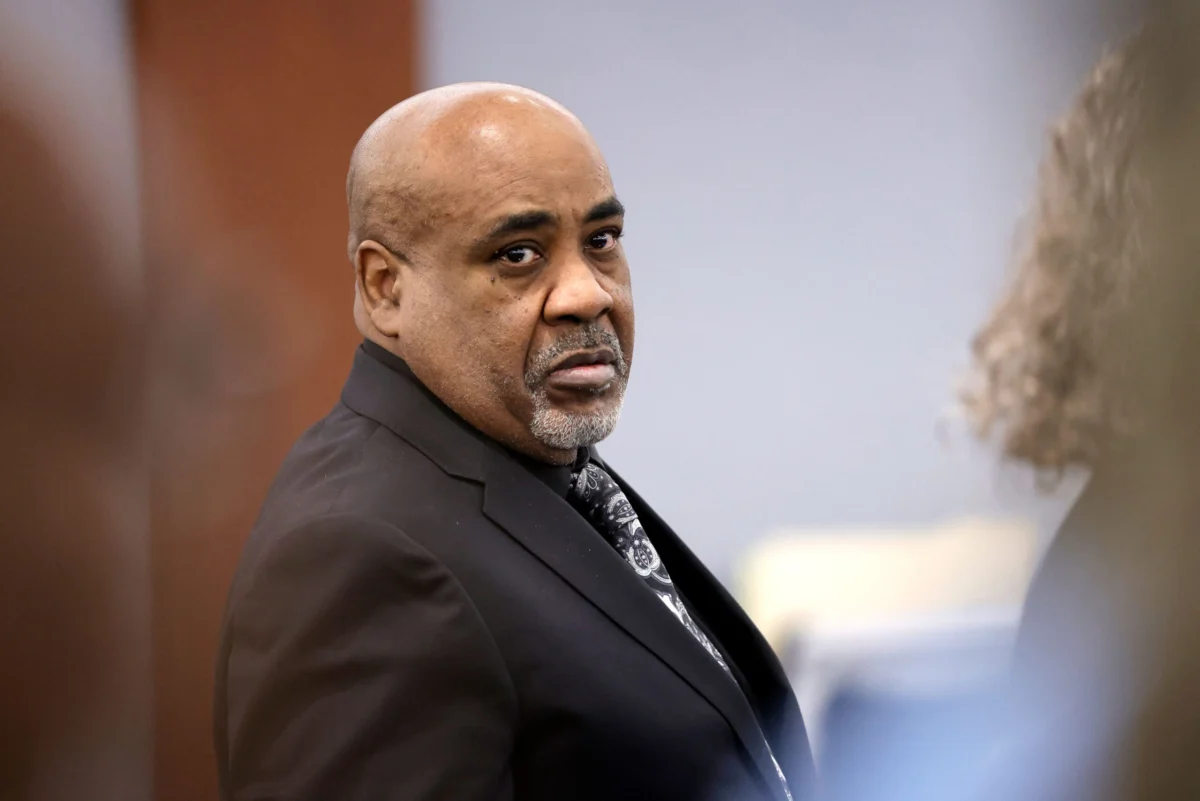
HangupsMusic.com – Las Vegas, In a courtroom just miles from the neon-soaked strip where the course of music history was forever altered nearly thirty years ago, a sense of grim finality has finally arrived. A Las Vegas jury has delivered a guilty verdict against 63-year-old Duane “Keffe D” Davis, convicting him for his role in the 1996 slaying of hip-hop luminary Tupac Shakur. The decision, reached after less than three hours of deliberation, marks the first time anyone has been held legally accountable for a crime that had long been relegated to the realm of urban legend, conspiracy theories, and cold-case documentaries. Davis, who now faces the prospect of spending the remainder of his life behind bars, is scheduled for sentencing on October 13. While his legal team has already signaled an intent to appeal, the verdict stands as a seismic shift in one of the most scrutinized criminal investigations in American history.
The atmosphere surrounding the trial was heavy with the weight of three decades of unanswered questions. For the family of Tupac Shakur, the news brought a complex mixture of grief and vindication. In a formal statement released following the reading of the verdict, the Shakur estate expressed a profound sense of relief, though they noted that the victory was bittersweet. They specifically highlighted the late Afeni Shakur, the rapper’s mother, who passed away in 2016 without seeing this day. The family remarked that her unwavering faith in her son’s truth was the catalyst for the decades of pressure that eventually forced the hand of law enforcement. For them, the conviction of Davis is a significant milestone, yet they emphasized that Shakur’s global influence and cultural resonance continue to transcend the circumstances of his death.
To understand the conviction of Duane Davis, one must look back at the volatile landscape of the mid-1990s, a period defined by the meteoric rise of West Coast gangsta rap and a brewing territorial conflict between rival factions. The seeds of the murder were planted months before the fatal night in Las Vegas. In May 1996, a confrontation occurred at a retail footwear store involving Orlando “Baby Lane” Anderson—Davis’s nephew—and Trevon “Tray” Lane, an associate of Death Row Records and its formidable CEO, Marion “Suge” Knight. This seemingly minor altercation served as the spark for a deadly chain of events.
On the night of September 7, 1996, the tensions reached a breaking point. Following the Mike Tyson versus Bruce Seldon heavyweight boxing match at the MGM Grand, Shakur and his entourage spotted Anderson in the casino lobby. In a moment captured on grainy surveillance footage that has since become historical record, Shakur initiated a physical assault on Anderson. After the scuffle was broken up by security, Shakur and Knight departed the hotel, heading toward Club 662 in a black BMW 750iL. They were unaware that a retaliatory strike was being organized almost immediately.
The prosecution’s case against Davis hinged on the narrative that he was the "shot caller" of the operation. Deputy District Attorney Binu Palal argued during closing statements that Davis, fueled by a desire for retribution on behalf of his nephew and his gang, the South Side Compton Crips, began a systematic "hunt" for Shakur and Knight. The state presented evidence that Davis secured a firearm and coordinated the occupants of a white Cadillac that began prowling the streets of Las Vegas in search of the Death Row convoy.
The climax of this hunt occurred at the intersection of Flamingo Road and Koval Lane. As the BMW carrying Shakur and Knight sat idling at a red light, the white Cadillac pulled alongside the passenger side. A rear window was lowered, and a .40 S&W Glock 22 was discharged multiple times into the vehicle. Shakur, who was standing through the sunroof or leaning toward the window, was struck four times. One bullet pierced his right lung, leading to a desperate six-day struggle for life at University Medical Center. Despite multiple surgeries, including the removal of his lung, Shakur succumbed to respiratory failure and cardiac arrest on September 13, 1996. He was only 25 years old, a young man at the absolute zenith of his creative and commercial powers.
For years, the investigation into the shooting appeared to be at a standstill. While Orlando Anderson was long considered the primary suspect, he was killed in an unrelated shooting in 1998, leaving the case without a living target for prosecution. However, the silence was eventually broken by Davis himself. In 2008, facing significant federal drug trafficking charges, Davis entered into a proffer agreement with law enforcement. Under the impression that his statements could not be used against him in a future murder trial—a legal misunderstanding that would eventually prove fatal to his freedom—Davis began detailing his involvement in the Shakur killing.
Over the next decade, Davis became increasingly emboldened. He sat for numerous televised interviews and collaborated on a 2019 memoir titled Compton Street Legend. In these accounts, Davis admitted to being in the Cadillac on the night of the murder, positioned in the front passenger seat while his nephew and others sat in the back. While he stopped short of admitting to pulling the trigger, his descriptions were vivid. He spoke of the adrenaline of the hunt and the cold efficiency of the shooting. In one particularly damning interview from 2008, which was played for the jury, Davis noted that if the BMW had been on his side of the car, he would have been the one to "pop" them.
The transition from a "confidential informant" to a defendant began in earnest in 2023. Las Vegas Metro Police, revitalized by new leadership and the public admissions made in Davis’s book, executed a search warrant at his home in Henderson, Nevada. The evidence gathered, combined with the hours of recorded admissions, led to his arrest in September 2023. Throughout the trial, Davis’s defense team attempted to frame his previous confessions as works of fiction—tall tales spun by a man looking to profit from his proximity to a legendary crime. They argued that there was no physical evidence, such as DNA or the murder weapon, linking Davis to the scene. However, the prosecution successfully argued that Davis’s own words, corroborated by the testimony of former gang associates and the timeline of the 1996 events, were sufficient for a conviction under Nevada’s "aid and abet" laws.
The conviction of Davis serves as a final, somber coda to the era of the "East Coast-West Coast" rivalry. At the time of his death, Shakur was the face of Death Row Records, a label that had come to symbolize the raw, unfiltered reality of urban life. His album All Eyez on Me was a massive success, blending themes of paranoia, celebration, and social critique. His death, followed six months later by the murder of his rival Christopher "The Notorious B.I.G." Wallace, left a void in the genre that many feel has never been truly filled.
Tupac Shakur’s legacy has only grown in the decades since his passing. He has been inducted into the Rock & Roll Hall of Fame, honored with a star on the Hollywood Walk of Fame, and his writings are studied in universities across the globe. He was a poet, an actor, and a revolutionary who spoke for a generation of marginalized youth. The fact that it took 27 years to bring one of the architects of his death to justice speaks to the complexities of gang culture, the failures of early investigative efforts, and the power of a story that refused to die.
As the legal proceedings move toward the sentencing phase in October, the music world reflects on what this verdict means. For some, it is a long-overdue act of accountability. For others, it is a reminder of the senseless violence that robbed the world of a singular talent. While Duane Davis prepares for a life behind bars, the image of Tupac Shakur—the "Rose That Grew from Concrete"—remains untouched by the passage of time, his voice still echoing through the speakers of millions, a permanent fixture in the pantheon of cultural icons. The trial may be over, and a guilty man may be heading to prison, but the story of Tupac Shakur continues to be written in the lives of those he inspired.
