
 By Azzam Bilal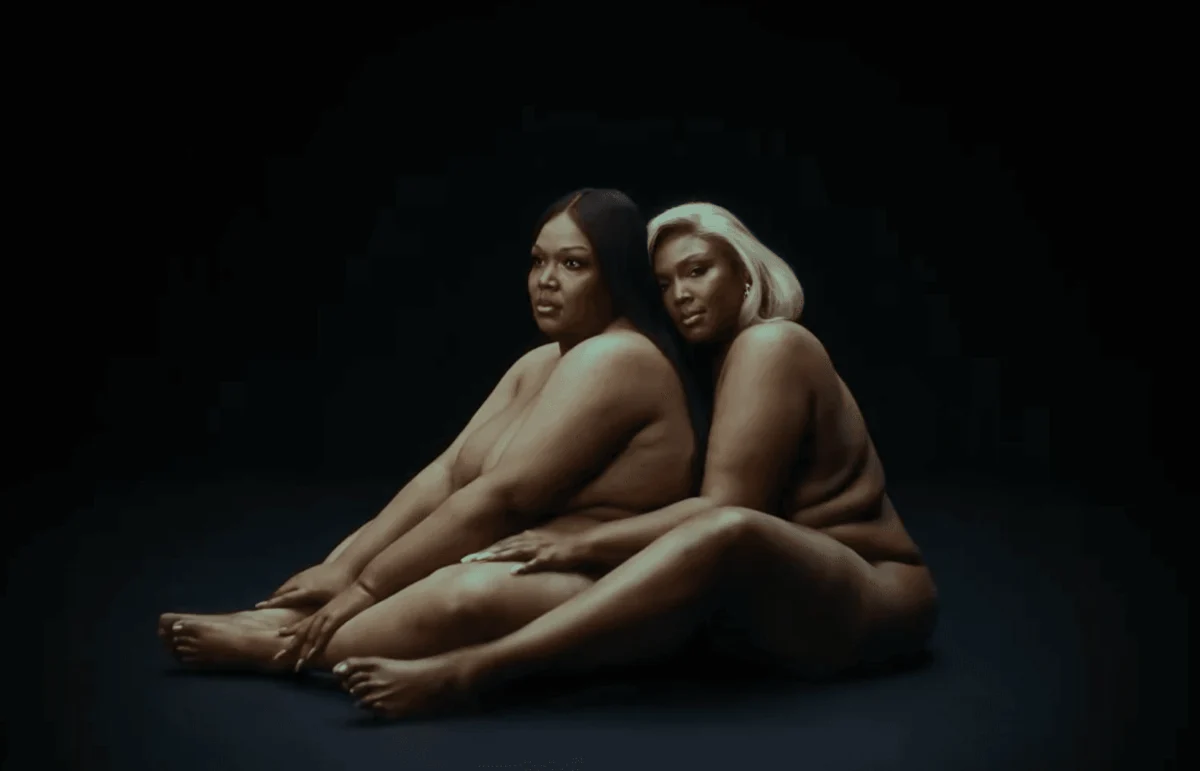
HangupsMusic.com – Los Angeles, Lizzo has officially broken her silence for the year 2026, marking a significant return to the spotlight with the release of her latest single, “Don’t Make Me Love U.” The track serves as a poignant reminder of the artist’s ability to blend high-energy pop sensibilities with deep, introspective lyricism. Accompanied by a visually arresting music video, the release finds the Grammy-winning superstar literally coming face-to-face with her past, specifically the version of herself that dominated the global cultural zeitgeist during the Cuz I Love You era of 2019. This cinematic encounter triggers a wave of raw emotion, suggesting that the singer is currently in a period of intense reflection regarding her rapid ascent to fame and the personal toll of public life.
The production of “Don’t Make Me Love U” sees Lizzo reuniting with a familiar and trusted creative circle. Longtime collaborator Ricky Reed, who was instrumental in crafting the signature sound that defined her early success, returns to the helm alongside producer Cheche Alara. Together, they have fashioned a soundscape that feels both nostalgic and forward-thinking. The track retains the soulful, brassy foundations that fans have come to expect from Lizzo, yet there is a tempered maturity in the arrangement that reflects the artist’s evolution over the last several years. As her first official release of 2026, the song is being viewed by industry insiders as the opening salvo for a much larger campaign, potentially leading toward the long-awaited arrival of her next full-length studio project.
The narrative arc of the music video is particularly striking. By utilizing visual effects to place the current-day Lizzo in the same room as her 2019 persona—complete with the iconic aesthetic of the Cuz I Love You album cycle—the video serves as a dialogue between two different versions of the same woman. The 2019 version represents a time of unbridled optimism and the explosive beginning of her mainstream superstardom, while the 2026 version appears more grounded, perhaps weathered by the complexities of the industry. The "big emotions" mentioned by early viewers refer to the visible vulnerability on screen, as the two versions of the artist navigate the distance between who she was and who she has become.
To understand the weight of this new release, one must look at the tumultuous journey Lizzo has navigated since her 2022-2023 Special era. Following the massive success of her fourth studio album, the singer found herself at the center of a series of high-profile legal disputes. In 2023, former dancers filed a lawsuit alleging sexual harassment and the creation of a hostile work environment, allegations that Lizzo vehemently denied. While some of these legal hurdles have since been cleared—including the dismissal of a harassment lawsuit from a former tour employee—the period was undoubtedly one of the most challenging in her career. It forced a pause in her output and led to a shift in her public persona, moving away from the purely celebratory "self-love" messaging toward something more defensive and, eventually, more reflective.
During this transitional period, Lizzo did not remain entirely silent. She released singles such as “Love in Real Life” and “Still Down Bad,” tracks that hinted at a shift in her songwriting toward themes of resilience and the realities of navigating fame under a microscope. Last year, she teased the title of an upcoming album, Love in Real Life, which many expected to drop shortly thereafter. However, the project has remained without a firm release date, leaving fans to wonder if "Don’t Make Me Love U" is the final piece of the puzzle or a sign that the album has undergone a creative transformation.
Beyond the recording studio, Lizzo has been aggressively expanding her footprint in other sectors of the entertainment industry. In 2025, she secured a career-defining role as Sister Rosetta Tharpe in an upcoming biopic. Tharpe, often referred to as the "Godmother of Rock and Roll," was a queer Black woman whose pioneering electric guitar playing and gospel-infused rock influenced legends like Elvis Presley and Chuck Berry. For Lizzo, a classically trained flautist and a vocal advocate for Black women’s contributions to music history, the role is a natural fit. She is not merely starring in the film but is also serving as a co-producer alongside Academy Award winner Forest Whitaker. This move into prestige cinema suggests that Lizzo is looking to cement her legacy as a multi-hyphenate talent whose influence extends far beyond the Billboard charts.
In addition to her film work, Lizzo is set to make her debut in the world of literature this coming September. Her first children’s book tells the story of a young girl who forms a magical bond with a flute. Given Lizzo’s own lifelong relationship with her instrument, "Sasha Flute," the book is expected to be a semi-autobiographical tale of empowerment and the importance of finding one’s voice through art. This venture into children’s media aligns with her longstanding commitment to education and body positivity, aiming to inspire the next generation of musicians and creatives.
The industry’s fascination with Lizzo remains rooted in her historical impact on the pop landscape. It has been several years since her breakout hit “Juice” was ranked among the top songs of 2019, a year that saw her transform from an indie darling into a household name. At that time, she was praised for her ability to synthesize funk, R&B, and pop into a cohesive and infectious brand. Today, the stakes are different. The pop world has shifted, and the conversation surrounding Lizzo has become more nuanced. She is no longer just a purveyor of "feel-good" anthems; she is an artist grappling with the responsibilities and the scrutiny that come with being a global icon.
"Don’t Make Me Love U" appears to be a bridge between these two eras. The song’s title itself suggests a hesitancy—a protective stance toward the heart and the ego. It explores the tension between the desire for connection and the fear of the vulnerability that such connection requires. In the context of her career, it could be interpreted as a commentary on her relationship with the public: a fanbase that has offered immense love, but also a media cycle that has been quick to judge.
As 2026 unfolds, the focus will remain on whether Lizzo can translate this newfound introspective energy into a commercially successful and critically acclaimed album. With Ricky Reed and Cheche Alara behind the boards, the sonic quality is guaranteed to be top-tier. However, the true test will be in the storytelling. Lizzo has always been at her best when she is honest, whether she is celebrating her body or mourning a heartbreak. If “Don’t Make Me Love U” is any indication, her upcoming work will be her most personal and perhaps her most challenging to date.
For now, the music video stands as a powerful testament to her resilience. Seeing the Lizzo of today look into the eyes of the Lizzo from the Cuz I Love You era is a meta-commentary on the nature of fame in the digital age. It acknowledges the past without being trapped by it, and it sets the stage for a future where Lizzo defines herself on her own terms, free from the expectations of her earlier career. Whether through film, literature, or her signature brand of soul-stirring pop, she continues to prove that she is an indispensable force in modern culture. As the world waits for more news on the Love in Real Life album, “Don’t Make Me Love U” provides plenty of emotional and musical depth to keep the conversation going.
