
 By Azzam Bilal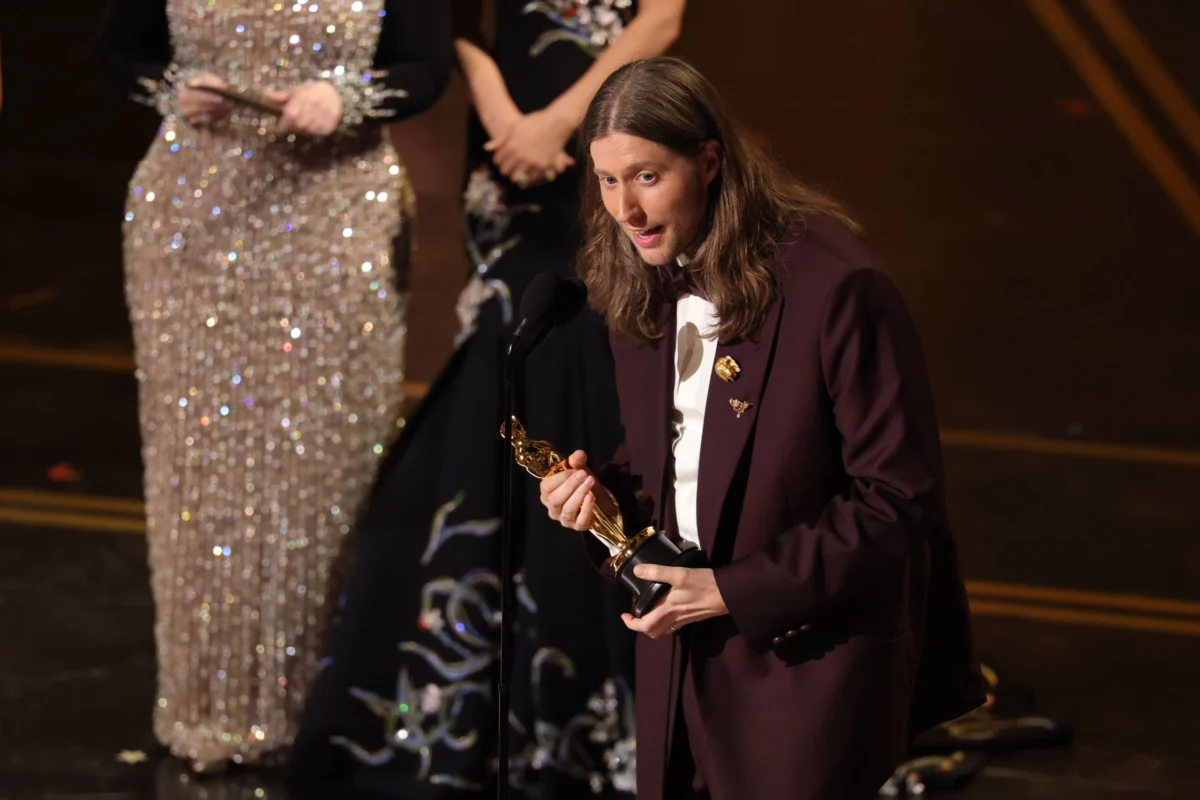
HangupsMusic.com – Los Angeles, The 98th Academy Awards will be remembered as the night that solidified a new titan in the pantheon of film composition. As the curtains rose at the iconic Dolby Theatre in Hollywood for the 2026 ceremony, the atmosphere was thick with anticipation, particularly for the Best Original Score category. When the envelope was opened, it was Ludwig Göransson who emerged victorious for his haunting and evocative work on Ryan Coogler’s Sinners. This win marks a staggering milestone for the Swedish composer, representing his third Oscar win out of five total nominations, an achievement that places him among the most elite musical minds in the history of the Academy.
The presentation of the award added a layer of levity and nostalgia to the evening. The cast of the 2011 comedy classic Bridesmaids reunited on stage, bringing a sense of celebratory chaos before transitioning into the gravity of the musical achievement at hand. As Göransson took the stage, the applause reflected not just the success of Sinners, but the industry’s profound respect for a composer who has consistently pushed the boundaries of what a film score can be. From the tribal, percussion-heavy rhythms of Black Panther to the ticking-clock tension of Oppenheimer, Göransson has proven himself to be a chameleon of sound, and Sinners is perhaps his most personal and textured work to date.
In an acceptance speech that resonated with both the audience in the room and viewers worldwide, Göransson pivoted away from technical jargon to offer a moving tribute to his roots. He credited his father for instilling a lifelong passion for music, recounting a story that spanned decades and continents. He spoke of his father purchasing a John Lee Hooker blues album in Sweden in 1964—a record that originated from a culture and a place entirely alien to a young man in Scandinavia. Yet, as Göransson noted, the power of that music was so transformative that it redirected the course of his father’s life, eventually leading to a seven-year-old Ludwig receiving his first guitar.
This instrument, Göransson explained, was the catalyst for his entire career. It was the medium through which he explored the world and the vehicle that eventually brought him to the United States. Most importantly, he noted that the guitar was the bridge that connected him to Ryan Coogler, the filmmaker with whom he has shared a career-defining partnership. His gratitude toward Coogler was palpable, as he thanked the director for his singular vision and for creating a cinematic experience in Sinners that managed to find a universal resonance.
The victory for Sinners comes amidst a field of incredibly stiff competition, highlighting the current golden age of film scoring. Göransson’s win saw him edge out some of the most respected names in the business. Among the nominees was the legendary Alexandre Desplat, whose work on Frankenstein provided a lush, gothic backdrop to the reimagined horror tale. Also in the running was Jerskin Fendrix, the avant-garde composer who followed up his breakout success with Poor Things by delivering a dissonant and captivating score for Bugonia. The field was rounded out by the perennial innovator Jonny Greenwood, nominated for the percussive and nerve-racking soundscape of One Battle After Another, and Max Richter, whose minimalist, deeply emotional work on Hamnet was a favorite among critics. That Göransson emerged on top in such a prestigious group speaks volumes about the impact Sinners has had on the cultural zeitgeist.
Sinners itself arrived at the 2026 Oscars as a juggernaut. The film shattered long-standing records by securing 16 Academy Award nominations, the most ever for a single motion picture. While it faced intense competition in several categories, it ultimately walked away with four major trophies. Michael B. Jordan secured the Best Actor award for a performance that many have called the pinnacle of his career, while Ryan Coogler earned the Best Original Screenplay Oscar, further cementing his status as one of the premier storytellers of his generation. The film’s visual language was also honored, with Autumn Durald Arkapaw taking home the award for Best Cinematography. Göransson’s win for Best Original Score served as the sonic heartbeat of the film’s success, providing the emotional glue that bound the narrative and visual elements together.
To understand the significance of Göransson’s win, one must look at the trajectory of the Best Original Score category over the last few years. In 2025, the honor went to Daniel Blumberg for his work on The Brutalist, Brady Corbet’s sprawling, four-hour epic. Blumberg’s win was a significant moment for the indie music community, as he had previously gained fame as a member of the influential indie rock band Yuck. His transition from the lo-fi aesthetics of the early 2010s indie scene to the grand, architectural scoring of The Brutalist signaled a shift in the Academy’s willingness to embrace unconventional musical backgrounds. Göransson, though now a mainstay of the Hollywood establishment, shares this DNA of cross-genre experimentation. His background in pop production and his ability to weave modern recording techniques into traditional orchestral frameworks have made him the definitive composer for the 2020s.
The score for Sinners is a masterclass in thematic development. Reports from the scoring sessions suggested that Göransson spent months researching the historical and regional music that informed the film’s setting, ultimately blending those influences with his own unique contemporary sensibilities. The result is a soundtrack that feels both timeless and urgent. It utilizes the guitar—the instrument Göransson praised so highly in his speech—not just as a lead instrument, but as a source of atmospheric texture, manipulated through various pedals and processing to create a sound that is often difficult to categorize. It is this refusal to stay within the lines of traditional film scoring that has made him such a favorite of both directors and the Academy.
The partnership between Göransson and Coogler is often compared to the legendary collaborations of the past, such as Steven Spielberg and John Williams or Alfred Hitchcock and Bernard Herrmann. There is a shorthand between the two that allows the music to act as a character within the film rather than a mere accompaniment. In Sinners, the music does not just underscore the action; it provides the psychological landscape for the characters’ journeys. This synergy was a primary reason why the film was able to capture the imagination of voters across so many different branches of the Academy.
As the 2026 awards season draws to a close, the conversation surrounding the legacy of Sinners is only beginning. While the film’s record-breaking nomination count will be a footnote in history books, the music will likely endure in the concert halls and playlists of film music aficionados for decades. For Ludwig Göransson, this third Oscar is more than just a trophy; it is a validation of a journey that began with a Swedish man buying a blues record in the 1960s. It is a reminder that music is a global language, capable of bridging the gap between a small town in Sweden and the bright lights of Hollywood.
Looking forward, the industry eagerly awaits Göransson’s next move. With three Oscars under his belt before the age of 45, he is on a trajectory that could see him becoming one of the most decorated composers in history. Whether he continues his partnership with Coogler or explores new collaborations with other visionary directors, his influence on the sound of modern cinema is undeniable. For now, he stands at the pinnacle of his profession, a guitarist from Sweden who turned a childhood love for the blues into a legendary career. The 2026 Academy Awards belonged to many people, but the soul of the night belonged to the music of Sinners and the man who dreamt it into existence.
