
 By Azzam Bilal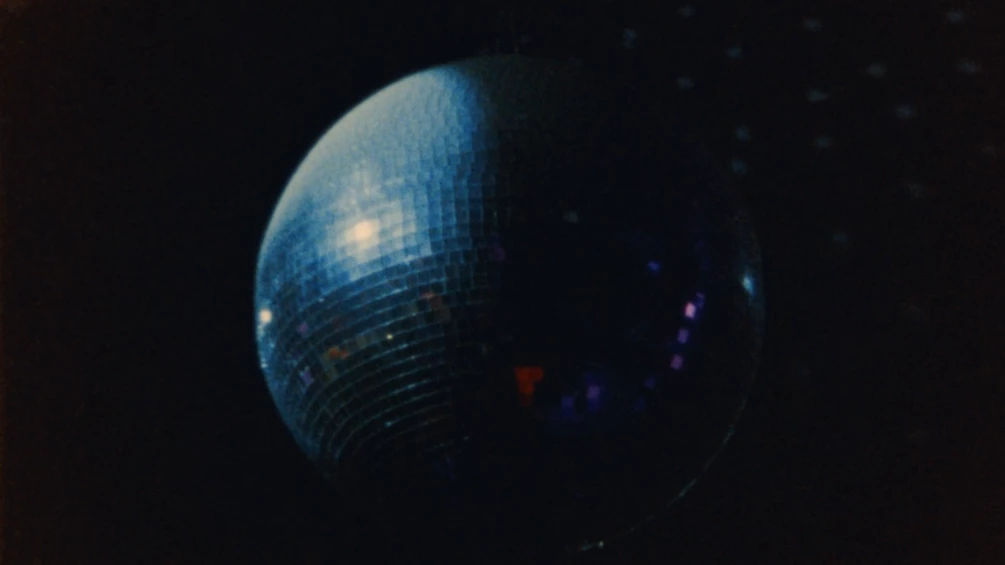
HangupsMusic.com – San Francisco, there is a specific, grainy image from the turn of the millennium that remains etched in the collective memory of electronic music culture. It features Guy Pritchkin, a character from the 2000 cult classic film Groove, clutching a massive, unwieldy mirrorball on a San Francisco train. For many who came of age during the late-90s rave explosion, that image represented more than just a prop; it was a totem of authenticity. Dmitri Ponce, the actor and DJ who portrayed Pritchkin, notes that the character became a spiritual avatar for the underground, a symbol of a "House Nation" that existed far outside the reach of commercial streaming metrics and corporate sponsorships. Even today, the mirrorball serves as a bridge between the analog past and the digital present, proving that while lighting technology has evolved toward high-definition LED arrays, nothing captures the kinetic energy of a dancefloor quite like a rotating sphere of glass.
The history of the mirrorball is far older than the polyester-clad 1970s era that gave it its most famous nickname. Its origins can be traced back to the late 19th century, long before the advent of electronic dance music. The first recorded instance of such a device appeared in an 1897 publication of the Massachusetts Electrical Worker, describing a spectacular light show at an electrician’s ball in Boston. However, it wasn’t until 1916 that the object was formalized through the patent office. Louis Bernard Woeste, an inventor based in Cincinnati, filed a patent for what he called a "myriad reflector." This device was described as a polyhedron covered in mirrors, designed to cast "dancing fireflies of a thousand hues" across a room. During the 1920s, these reflectors became staples of the Jazz Age. They were seen in the smoky interiors of clubs like those frequented by the Louisiana Five and were even captured in the avant-garde cinema of the time, such as the 1927 silent film Berlin: Symphony of a Metropolis.
The manufacturing of these orbs took a industrial turn during the 1940s. Omega National, a US-based furniture manufacturer, found a new use for the flexible mirrored sheeting they had originally developed for flamboyant applications—most notably, the glass-covered grand pianos used by Liberace. As the demand for entertainment grew in the post-war era, Omega National began producing mirrorballs for amusement parks, dance halls, and jukebox joints. During World War II, the production line was largely staffed by women due to the military draft. At its peak, the company was responsible for nearly 90% of the world’s mirrorball production. These were not cheap trinkets; a large-scale ball in the mid-20th century could cost the equivalent of $20,000 in today’s currency. Today, that legacy continues through master craftspeople like Yolanda Baker, who has provided custom spheres for global icons including Madonna and Beyoncé.
As the 1960s ushered in the era of psychedelia, the mirrorball was adopted by the avant-garde art world. Andy Warhol’s "Exploding Plastic Inevitable" shows, which featured the Velvet Underground, utilized the mirrorball as part of a multi-sensory assault. By combining the spinning reflectors with slide projections, film loops, and strobe lights, Warhol transformed the mirrorball from a simple ballroom decoration into a tool for hallucinogenic immersion. This experimental phase laid the groundwork for the disco explosion of the 1970s, where the object became the definitive icon of the era. In New York City, legendary venues like David Mancuso’s Loft and Nicky Siano’s Gallery used the mirrorball to create a sense of sanctuary for Black, Brown, and queer communities. It was a symbol of a utopia where the outside world’s prejudices were refracted into harmless points of light.
The technical evolution of the mirrorball has been kept alive by modern artisans like "Mirrorball Paul," a UK-based specialist who has spent decades refining the engineering behind the sparkle. Paul’s journey into the craft began with a chance discovery of a massive, weathered mirrorball from a defunct Glasgow ballroom. He famously repaired the sphere—which was tarnished by what he calls "rave sweat"—and began renting it out to iconic London parties like Secretsundaze. Paul’s work highlights the nuance of the medium; he emphasizes that the speed of rotation is the most critical factor. Slow, deliberate rotations create an atmospheric, celestial effect used by artists like David Gilmour and Adele, while high-speed, DMX-controlled systems are utilized for the high-octane visual sets of The Chemical Brothers and Radiohead. His innovations have even included housing battery-powered lasers inside the balls to project 360-degree light tunnels.
The scale of the mirrorball has also reached monumental proportions in the 21st century. In 2014, the festival Bestival claimed a Guinness World Record with an inflatable mirrorball measuring over 10 meters in diameter, created for a performance by Nile Rodgers and Chic. Even more ambitious was "The ORB," a 25-meter-diameter reflective installation that debuted at Burning Man in 2018. Designed by architects Bjarke Ingels and Jakob Lange, this massive sphere was intended as a "mirror for Earth lovers," reflecting the desert landscape and the ecstatic crowds below. However, perhaps the most culturally significant monument is Michael Trainor’s They Shoot Horses, Don’t They? sculpture in Blackpool. Installed in 2000, this six-ton, six-meter-wide sphere is covered in 45,000 pieces of glass. It stands as a tribute to Blackpool’s history as a hub for Northern Soul and rave culture, serving as a permanent reminder of the region’s industrial and entertainment heritage.
The mirrorball’s influence has even permeated the digital landscape, though the transition was not easy. The existence of the disco ball emoji is largely thanks to Gero Simone, a German radio host who spent four years navigating the bureaucratic labyrinth of the Unicode Consortium. Simone’s quest was fueled by the realization that while there were gendered emojis for "dancer," there was no universal symbol for the spirit of nightlife. Working with the grassroots group Emojination, Simone successfully argued that the mirrorball was a non-gendered, globally recognized icon of joy and inclusivity. Since its approval, the emoji has become a ubiquitous shorthand for celebration across every social media platform, proving that the object’s symbolic power remains potent even when reduced to a few dozen pixels.
In the realm of interior design, the mirrorball has found a new life through "disco therapy." Designers like San Diego-based Sofie Berarducci have moved beyond the sphere, applying mirror tiles to everything from 3D-printed mushrooms to croissants and cowboy hats. Her studio, Sofiest Designs, caters to a generation that wants to bring the energy of the dancefloor into the domestic space. Berarducci notes that when sunlight hits a mirrored object in a home, it fundamentally alters the "vibe" of the room, providing a mental health boost and a connection to the communal euphoria of clubbing. This democratization of the mirrorball’s aesthetic suggests that its appeal is not just about nostalgia, but about a fundamental human attraction to light and reflection.
As we look toward the future of nightlife, the mirrorball remains one of the few analog technologies that has not been rendered obsolete by the digital revolution. While LED screens and augmented reality offer complex visual narratives, they lack the organic, unpredictable shimmer of a physical mirrorball. It is a device that requires no software updates and no high-speed internet connection; it simply requires a light source and a reason to dance. From the electrical balls of the 1890s to the massive art installations of the Nevada desert, the mirrorball has survived every shift in musical taste and technology. It continues to hang at the center of the room, a silent witness to the history of human movement, reflecting the light of a thousand different eras back onto the people who keep the rhythm alive.
