
 By Azzam Bilal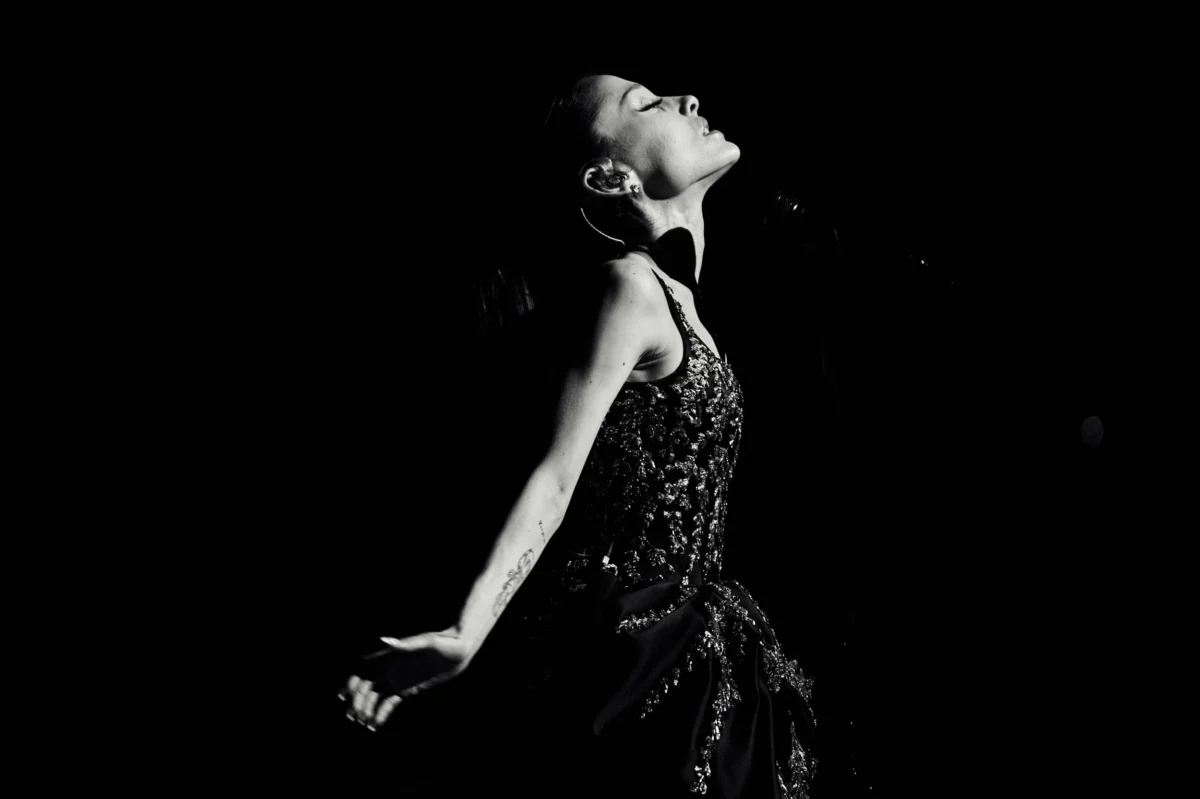
HangupsMusic.com – New York, the landscape of contemporary music is often defined by its sheer volume, a relentless tide of digital uploads that can make the discovery of truly substantive work feel like a Herculean task. However, this week represents a rare alignment of the stars, where global superstars and avant-garde pioneers release projects that demand more than a casual glance. From the high-gloss pop resilience of Ariana Grande to the long-awaited resurrection of Manchester’s post-punk experimentalists, the current release slate offers a panoramic view of where music stands in the mid-2020s. It is a week defined by "resurgence"—not just in terms of artists returning from hiatus, but in the thematic exploration of growth, survival, and the intersection of the human spirit with the technologies that now broadcast it.

Ariana Grande’s latest offering, Petal, arrives at a curious juncture in her career. For much of the past two years, it appeared that the Florida-born vocalist was transitioning away from the traditional pop-star cycle. Immersed in the high-stakes world of cinema with the upcoming Wicked film adaptation and a move toward the West End stage, Grande’s musical output seemed to be taking a backseat. Yet, Petal proves that her creative engine is far from dormant. Serving as a companion of sorts to 2024’s Eternal Sunshine, this new record finds Grande leaning into a more somber, reflective palette. The lead single, "Hate That I Made You Love Me," sets a complex tone. The accompanying visual, featuring actor Justin Long in a macabre burial scene, serves as a metaphor for the self-inflicted wounds of a failing relationship. Grande has described the album’s title as a representation of life "growing through the cracks of something cold and hard," a sentiment that suggests Petal is less about the bloom and more about the struggle to break through the surface. It is a sophisticated, mournful collection that reinforces her status as a premier architect of modern R&B-pop.
While Grande navigates the peaks of fame, Vini Reilly of The Durutti Column returns from a much longer silence. Renascent is the group’s first full-length album in sixteen years, a milestone that feels particularly poignant given Reilly’s survival of two major strokes in 2010. The Durutti Column has always occupied a singular space in the annals of independent music—pioneers of the "Factory Records" sound who favored delicate, crystalline guitar work over the aggressive tropes of punk. Interestingly, Reilly has found a modern champion in Harry Styles, who cited the group as an unlikely touchstone for his own recent work. On Renascent, Reilly reunites with his core collaborators, Bruce Mitchell and Keir Stewart, to craft a record that feels like a haunting echo of their past greatness. The track "Liars" is a standout, featuring the signature delay-drenched guitar refractions that Reilly invented. His vocals, often whispered and buried under layers of shimmering keys, create an atmosphere of fading memory and quiet apology. It is a triumphant return for a musician who has spent decades proving that silence and subtlety can be louder than any distortion pedal.
.jpg)
The theme of the "technological soul" is explored with visceral intensity on Arca’s new LP, XXXXX. After a decade of pushing the boundaries of club music and electronic performance art, the Venezuelan producer returns with a project that seeks to dissolve the boundary between the biological and the digital. The album opens with the provocative declaration of "Diva as technology," a thesis statement that governs the following sixteen tracks. While Arca has always flirted with pop structures, XXXXX represents a dive into much darker, more abstract waters. Moving away from the high-energy reggaeton influences of her KiCk series, this record embraces the glitches and stutters of IDM (Intelligent Dance Music). Arca has described the creative process as one of "losing control," an attempt to collaborate with the subconscious mind to avoid the inertia of her own success. The result is a challenging, often beautiful soundscape that feels less like a collection of songs and more like a living, breathing software update for the human heart.
Shifting from the digital to the cultural, Davido’s Oriadé marks a celebratory fifteen-year milestone for the Afrobeats titan. The title, derived from the Yoruba words for "destiny" and "crown," is a fitting descriptor for an artist who has spent over a decade at the forefront of the global African music explosion. Davido has always been a master of collaboration, and Oriadé is no exception, featuring contributions from the likes of Leon Thomas and Aya Nakamura. The album’s heartbeat is the amapiano-fusion track "Gimme Dat Ting," a song that showcases Davido’s ability to take the South African house subgenre and mold it into something uniquely his own. Produced by JJay and featuring the ethereal vocals of NO11, the track meanders through a darkly rhythmic underworld, proving that even after fifteen years, Davido is still finding new ways to innovate within the genre he helped define.

In the realm of indie-rock, the Trashcan Sinatras continue to uphold the tradition of Scottish jangle-pop with Ever the Optimist. Despite a decade passing since their last full-length effort, the band’s knack for the "sweet-spot anthem" remains remarkably intact. Produced by Paul Savage of The Delgados, the album is a masterclass in melodic craftsmanship. The inclusion of Green Gartside from Scritti Politti on "Hold on to Today" highlights the band’s deep roots in the intellectual indie scene of the 1980s and 90s. The Trashcan Sinatras have always been a "cult band" in the truest sense—beloved by a dedicated following for their witty lyricism and agile arrangements. Ever the Optimist doesn’t try to reinvent the wheel; instead, it polishes it to a brilliant shine, offering a sense of rapture on tracks like "The Associated Funk" that feels both nostalgic and vital.
Similarly rooted in a specific sense of place, Shannon Lay’s Past the Veil offers a tranquil, folk-driven antidote to the frenetic pace of modern life. Based in Los Angeles, Lay has spent years honing a sound that feels both sparse and deeply rich. Her latest project expands her folk foundations with jazz-inspired accompaniments and trip-hop rhythms, creating what she describes as an elixir for "late-summer lounging." However, beneath the laid-back arrangements lies a sharp lyrical edge. Lay questions the very nature of modern productivity, wondering aloud if "success" might simply be the ability to sit in the shade for days. It is a record that rewards patient listening, revealing the immense work and technical skill required to make something sound this effortless.

The intersection of art and natural science is explored on Shearwater’s The New World. Frontman Jonathan Meiburg, who is also an accomplished ornithologist and researcher, has crafted an album that incorporates field recordings from his expeditions to Antarctica. This is the band’s first self-released effort, and that independence is reflected in the expansive, meditative nature of the compositions. Meiburg’s goal with The New World was to create a visceral sense of place, a reminder of the beauty and strangeness of the physical world that exists outside the confines of the internet. The result is an album that feels like an environmental document as much as a musical one, traversing sonic territories that are as unpredictable as the ocean floor.
Finally, the Manchester producer Leo brings a physical, percussive weight to the week’s releases with Cicada Burnt. As a trained drummer, Leo’s approach to electronic music is fundamentally rhythmic, blending elements of techno, dubstep, dembow, and industrial noise into a cohesive whole. His debut for the Peak Oil label is a testament to the "bass music" umbrella, showcasing a capacity for constant change. Leo’s footsteps are heavy and deliberate; he moves through genres with the confidence of someone who understands the architecture of a groove. Whether he is exploring the ambient fringes of a track or leaning into a punishing industrial beat, the mark of his percussion is always felt.

Collectively, these releases represent a vibrant cross-section of the current musical landscape. They remind us that whether an artist is playing to millions in a stadium or recording the sounds of the Antarctic ice, the impulse remains the same: to grow through the cracks, to crown one’s own destiny, and to find the humanity hidden within the machine.
