
 By Azzam Bilal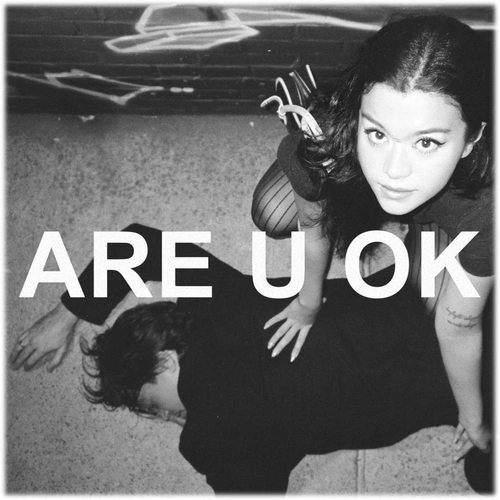
HangupsMusic.com – New York City, the landscape of electronic music is often defined by its cycles of complexity and its eventual returns to the fundamental basics of the groove. In the sprawling, neon-lit history of the New York underground, few figures have navigated these cycles with as much quiet authority as Teddy Stuart. For decades, Stuart has been a foundational pillar of the city’s nightlife architecture, a producer whose fingerprints can be found on some of the most influential fringe releases of the last twenty years. Now, in a collaborative effort that bridges the gap between veteran experience and contemporary vocal stylings, Stuart has partnered with Magali van Caloen to form Salt Queen. Their debut offering, the hauntingly rhythmic "Are U OK?", serves as a masterclass in hardware-driven funk and minimalist restraint, proving that the most powerful statements in the club are often the ones that refuse to shout.
To understand the weight of Salt Queen, one must first understand the lineage of Teddy Stuart. For those who spent the formative years of the 2010s digging through the crates of boutiques or scouring the digital archives of labels like UNO, the name Eddie Mars carries significant weight. As Eddie Mars, Stuart became synonymous with a specific brand of left-field house and techno that eschewed the polished sheen of the mainstream in favor of something grittier and more cerebral. His associations with legendary figures like Justin Strauss—a man whose career spans from the Mudd Club to the modern day—cemented Stuart’s reputation as a "producer’s producer." This pedigree is essential context for "Are U OK?". It is not a record born from a laptop preset; it is a record born from the physical manipulation of circuitry, a testament to the tactile relationship between an artist and their machines.
The A-side of the release is a hypnotic dive into the world of the Roland TB-303, the "silver box" that accidentally birthed acid house in the mid-1980s. In the hands of Salt Queen, the 303 is not used for the aggressive, distorted "braindance" often found in modern industrial techno. Instead, Stuart coaxes out a series of pitch-perfect squelches that feel elastic and organic. These synth lines dart in and out of the frequency spectrum, providing a rhythmic counterpoint to the steady, driving percussion. It is "hardware funk" in its purest form—music that relies on the swing of the sequencer and the resonance of the filter to create movement. There is a specific warmth to this analog approach, a subtle instability that gives the track a breathing, human quality despite its robotic origins.
The sonic landscape provided by Stuart is perfectly complemented by the vocal contributions of Magali van Caloen. In an era where many dance tracks rely on over-processed, euphoric divas or aggressive shouted commands, van Caloen opts for a refreshing sense of detachment. Her delivery is coolly deadpan, a stylistic choice that anchors the track in a sense of gritty realism. The lyrics center on a narrative that is intimately familiar to anyone who has spent their weekends under the flicker of a strobe light: a night out that has pushed past the point of enjoyment into something more disorienting. The titular question, "Are U OK?", acts as a recurring mantra—a check-in between friends, a self-interrogation, or perhaps a concerned query from a stranger in a dark corner.
This thematic focus on the "messy" side of nightlife gives the record a psychological depth that elevates it above standard club fare. Van Caloen’s words describe the blurred edges of a long evening, the sensory overload of the dance floor, and the social anxiety that can bubble up when the music stops making sense. By delivering these lines with such a level-headed, almost clinical tone, she creates a fascinating juxtaposition with the bubbling, erratic acid lines beneath her. The music represents the chaos of the party, while the vocals represent the internal monologue trying to make sense of it all. It is a sophisticated piece of storytelling that captures the duality of the club experience: the tension between total abandon and the lingering need for self-preservation.
The flip side of the record offers a slightly different perspective on the Salt Queen sound. While the core DNA remains rooted in minimalism, the B-side expands the sonic palette with a few key additions. The inclusion of sirens and more complex drum fills adds a layer of urgency and tension. The sirens, in particular, evoke the late-night atmosphere of a New York street, grounding the music in the urban environment that birthed it. These elements are used sparingly, maintaining the record’s commitment to "less is more," but they provide enough variation to ensure the track functions as a versatile tool for DJs. The drum fills break up the hypnotic repetition, offering moments of release that are perfectly timed for a peak-time set.
Despite its nods to the past—the "old school" hardware, the acid house tropes, and the classic NYC underground aesthetic—"Are U OK?" feels remarkably contemporary. This is largely due to the production’s clarity and the duo’s refusal to lean on nostalgia as a crutch. Salt Queen is not trying to recreate 1988; they are using the tools of that era to speak to the anxieties of 2024. The minimalism found here is not a lack of ideas, but a deliberate stripping away of the unnecessary. In a digital age where producers have access to infinite tracks and sounds, the discipline required to make a compelling record with just a few elements is a rare and valuable skill. Salt Queen demonstrates this discipline in spades, allowing the space between the notes to be just as important as the notes themselves.
The release also highlights the enduring relevance of the New York underground as a creative hub. While other cities may dominate the headlines with massive festivals and commercial spectacles, New York continues to foster a community of artists who are more interested in the craft of the groove than the size of the stage. Salt Queen represents a bridge between generations in this community. Stuart brings the historical knowledge and technical expertise of a veteran, while the collaboration with van Caloen injects a fresh perspective and a modern narrative voice. Together, they have created a project that feels both timeless and urgent.
Furthermore, the record’s success lies in its "club minimalism" that, as the original review suggests, never goes out of style. Trends in electronic music come and go with dizzying speed—genres like dubstep, tropical house, and hard techno rise and fall in popularity—but the fundamental appeal of a well-crafted hardware groove is eternal. There is something primal about the way a 303 interacts with a 909 kick drum that transcends the fickle nature of fashion. Salt Queen understands this fundamental truth. By focusing on texture, rhythm, and mood rather than flashy production tricks, they have produced a record that will likely sound just as effective in a decade as it does today.
As listeners dig deeper into the world of Salt Queen, it becomes clear that "Are U OK?" is more than just a dance floor filler; it is an exploration of the human condition within the context of electronic subculture. It asks questions about our relationship with our environment, our substances, and each other. It challenges the listener to find the funk within the friction and the beauty within the breakdown. With Teddy Stuart’s seasoned hand at the controls and Magali van Caloen’s compelling presence at the microphone, Salt Queen has established itself as one of the most exciting new projects to emerge from the New York scene in recent memory. If this debut is any indication of what is to come, the underground is in very capable hands. The question "Are U OK?" might be a simple one, but the answer provided by this record is complex, rhythmic, and utterly captivating.
