
 By Azzam Bilal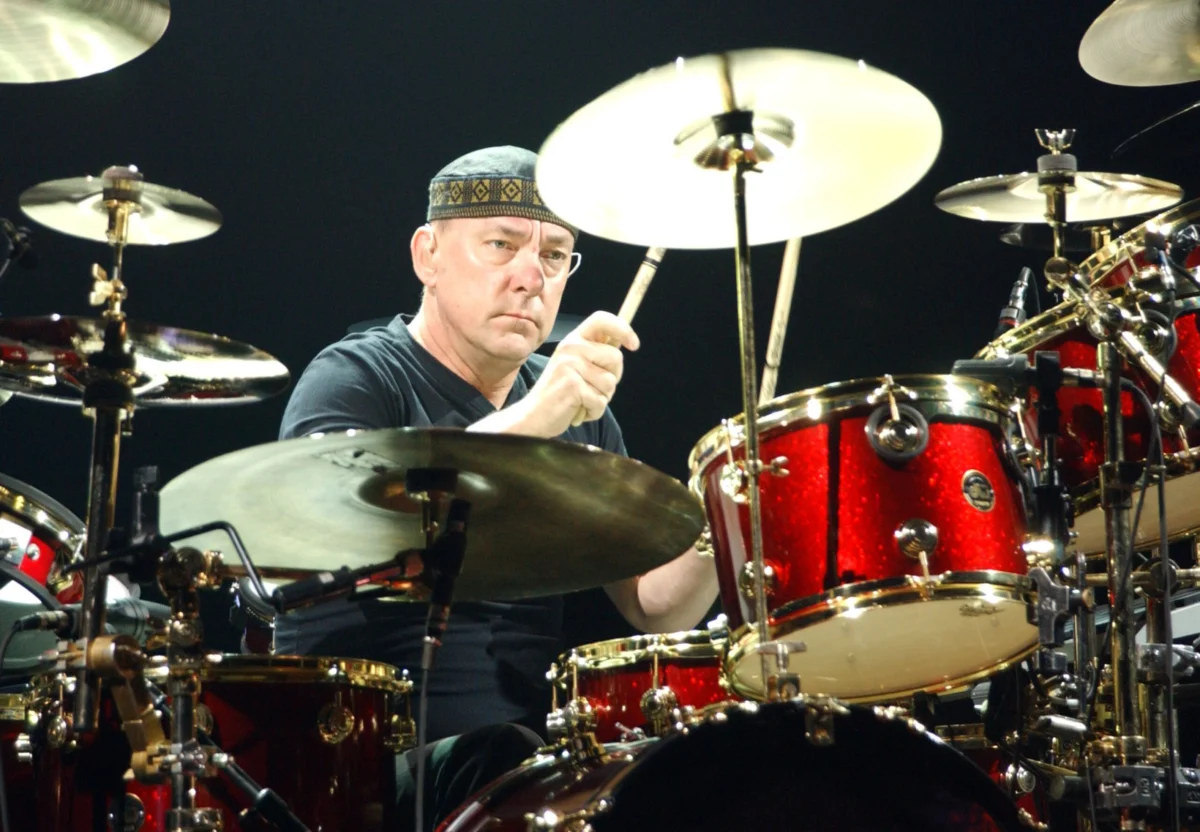
HangupsMusic.com – Toronto, The Canadian Broadcasting Corporation (CBC) has officially pulled back the curtain on one of the most anticipated musical retrospectives of the decade. The first trailer for No One’s Disciple, a comprehensive documentary centered on the life, artistry, and enduring influence of the late Neil Peart, has been released to the public. As the legendary drummer and primary lyricist for the progressive rock powerhouse Rush, Peart’s impact on the landscape of modern music is nearly impossible to quantify. This new cinematic endeavor aims to capture the essence of a man who was often described as "The Professor"—not just for his academic approach to the drum kit, but for his intellectual curiosity and the philosophical depth he brought to the band’s discography.
The documentary is scheduled to make its high-profile debut at the Toronto International Film Festival (TIFF) on September 16. The choice of Toronto as a premiere location is deeply symbolic, as the city served as the home base for Rush throughout their half-century career. While a specific date for a wide theatrical or streaming release has yet to be finalized, the buzz surrounding the TIFF premiere suggests that No One’s Disciple will be a cornerstone of the fall’s cultural calendar.
Directed by the seasoned filmmaking duo of Scot McFadyen and Sam Dunn, the project carries a significant pedigree. McFadyen and Dunn, the creative forces behind Banger Films, are no strangers to the world of Rush. They previously helmed the critically acclaimed 2010 documentary Rush: Beyond the Lighted Stage, which provided an intimate look at the band’s rise from suburban Ontario to global superstardom. Their return to the subject matter indicates a deep level of trust between the filmmakers and the surviving members of the band, as well as the Peart estate. Where their previous film focused on the trio as a unit, No One’s Disciple shifts the lens specifically toward the man behind the drums, exploring the complexities of a private individual who became a public icon.
One of the most striking elements revealed in the trailer is the emotional vulnerability of Peart’s longtime bandmates, Geddy Lee and Alex Lifeson. For over forty years, the three men shared a bond that was frequently described as more of a brotherhood than a professional partnership. In a particularly moving segment of the preview, Lee reflects on the period following Peart’s passing in January 2020. He admits that the inability to properly honor his friend in the immediate aftermath of his death—due in part to the global circumstances of the time and the band’s own need for private grieving—left him with a lingering sense of incompletion. "After Neil passed away, we never really were able to pay tribute to him," Lee shares. "And that weighed on me a lot."
This sentiment of "weight" seems to be a driving force behind the documentary. It functions not just as a biographical record, but as a formal act of remembrance. The film provides a platform for those who knew Peart best to process their loss while celebrating his contributions. The trailer also features insights from other heavyweights in the percussion world, including Stewart Copeland of The Police and Chad Smith of the Red Hot Chili Peppers. Both drummers offer a peer-level perspective on Peart’s technical mastery. Peart was famous for his massive, 360-degree drum kits and his ability to weave complex, mathematical time signatures into cohesive musical narratives. Having figures like Copeland and Smith discuss his work elevates the film from a standard fan piece to a serious study of musical craft.
However, the most poignant voice in the documentary is that of Peart himself. No One’s Disciple utilizes a wealth of archival interview footage, allowing the late musician to narrate portions of his own story. In one archival clip, Peart recalls his earliest inclinations toward percussion with a touch of dry humor. He describes how, around the age of 11 or 12, he would "bang around the house" and "smash up pots and pans." It was this domestic cacophony that eventually led his parents to the realization that their son possessed a natural inclination for hitting things with sticks. From these humble, noisy beginnings in St. Catharines, Ontario, the film traces his evolution into a musician who would redefine the boundaries of rock drumming.
Peart’s journey was not without its profound tragedies, a subject the documentary is expected to handle with sensitivity. The loss of his daughter and his first wife in the late 1990s led to a five-year hiatus from the band and a solitary motorcycle journey across North America—a period he famously chronicled in his book Ghost Rider: Travels on the Healing Road. This aspect of his life cemented his reputation as a "loner" and a seeker, qualities that are reflected in the title No One’s Disciple. He was a man who followed his own intellectual and rhythmic compass, refusing to adhere to the traditional trappings of rock stardom.
The timing of the documentary’s premiere coincides with a new chapter for the surviving members of Rush. Geddy Lee and Alex Lifeson are currently in the midst of their "Fifty Something World Tour," a celebration of the band’s five-decade legacy. While the absence of Peart is felt by every fan in attendance, the duo has found a way to move forward while keeping his memory central to the performance. For this tour, they have enlisted the talents of Anika Nilles, an acclaimed German drummer known for her incredible technical proficiency and modern style. Nilles’ presence on the tour is not an attempt to "replace" Peart—an impossible task by any standard—but rather to honor the music they created together with a musician who possesses the skill set required to navigate his intricate compositions.
The documentary also promises to delve into Peart’s role as the band’s primary lyricist. While Lee and Lifeson handled the melodic and harmonic structures, Peart was the architect of the band’s conceptual world. His lyrics touched on themes of individualism, science fiction, classical literature, and the human condition. Songs like "Tom Sawyer," "The Spirit of Radio," and "Subdivisions" became anthems for the "misfits" and the "dreamers," providing a sophisticated alternative to the more hedonistic themes prevalent in 1970s and 80s rock. By exploring his literary influences and his tireless work ethic, No One’s Disciple aims to show that Peart’s drumming was merely one extension of a deeply creative and disciplined mind.
As the music industry continues to grapple with the loss of its foundational legends, films like No One’s Disciple serve an essential purpose. They bridge the gap between the myth of the rock star and the reality of the artist. For the "Rush faithful," the documentary is a long-awaited opportunity to say a collective goodbye to a man who preferred to stay out of the limelight, even as he stood at the center of the stage. The film’s inclusion in the TIFF lineup ensures that it will receive the critical attention it deserves, positioning Peart’s life story as a significant piece of Canadian cultural history.
Ultimately, No One’s Disciple appears to be a study in excellence. It is a story about a boy who broke pots and pans and grew up to become a figure of reverence for millions. Whether through his meticulously constructed drum solos or his evocative prose, Neil Peart lived a life defined by the pursuit of mastery. As the trailer concludes and the screen fades to black, the resonance of his rhythm remains, proving that while the man may be gone, the beat he established continues to pulse through the heart of rock and roll. Fans across the globe now wait for the September premiere, eager to see the "Professor" take his final, cinematic bow.
