
 By Azzam Bilal
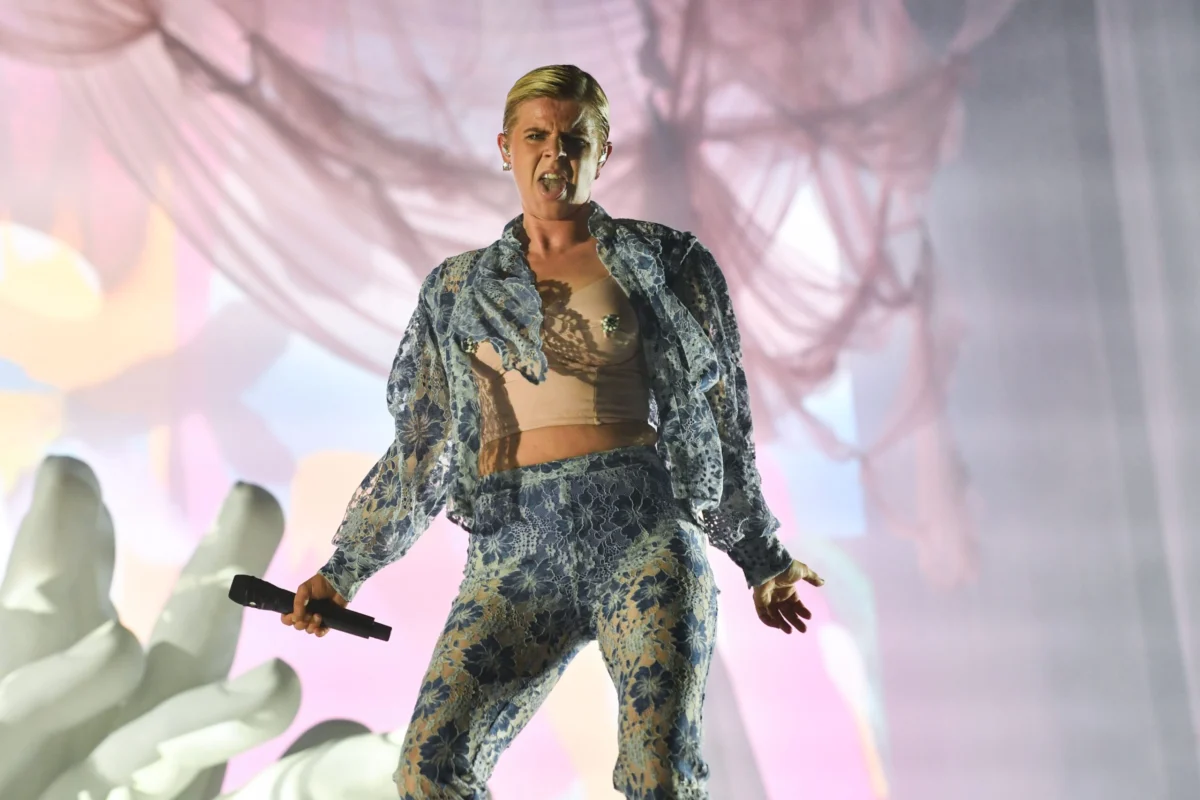
HangupsMusic.com – London, The landscape of contemporary pop music is often defined by its transience, yet few artists have navigated its shifting tides with the grace and enduring relevance of Robyn. Recently, the Swedish icon returned to the spotlight with a performance that served as both a masterclass in curation and a testament to her unique position in the musical firmament. Appearing on the prestigious BBC Radio 1 Live Lounge, Robyn delivered a breathtaking mashup that seamlessly fused the grit of the early 2000s Swedish underground with the sleek, independent spirit of modern R&B. By blending Teddybears’ classic "Punkrocker" with Tinashe’s assertive "Popstar," Robyn did more than just cover two songs; she created a narrative arc that explored the very identity of the modern musical celebrity.
The BBC Live Lounge has long been a hallowed ground for artists seeking to showcase their versatility. The format—typically involving a stripped-back version of an artist’s own hit followed by a reimagined cover—requires a level of vulnerability and musicality that studio recordings can sometimes mask. For Robyn, a veteran of the industry who has evolved from a teen-pop prodigy into the high priestess of emotional synth-pop, the setting was a natural fit. She arrived not just to perform, but to reinterpret, bringing a level of intentionality to the session that few of her peers can match.
The centerpiece of the session was a clever, pulsating medley. Robyn began with the skeletal, driving rhythm of "Punkrocker." Originally released by the Swedish band Teddybears and famously featuring the gravelly vocals of Iggy Pop, "Punkrocker" is a track steeped in a specific kind of nihilistic cool. It is a song about identity, belonging, and the friction between the individual and the mainstream. However, in Robyn’s hands, the song underwent a subtle but profound transformation. As she approached the iconic hook, she swapped the titular "punkrocker" for "pop star," a lyrical pivot that felt less like a simple edit and more like a manifesto.
This choice was particularly resonant given Robyn’s own history. Having famously broken away from the traditional label system in the mid-2000s to form her own imprint, Konichiwa Records, Robyn redefined what it meant to be a "pop star." She proved that one could achieve global success without sacrificing artistic autonomy or emotional complexity. By singing "I’m a pop star" over the gritty, industrial-tinged foundations of a Teddybears track, she bridged the gap between the rebellious spirit of punk and the polished artifice of pop, suggesting that in the modern era, the most "punk" thing an artist can do is maintain control over their own pop narrative.
The transition into Tinashe’s "Popstar" was executed with the kind of seamless precision that has become Robyn’s trademark. Tinashe, much like Robyn, is an artist who has navigated the complexities of the music industry with a fierce commitment to her vision. Her track "Popstar," taken from her recent acclaimed work, is a celebratory, self-assured anthem that rejects the limitations placed upon Black women in the industry. It is a song about excellence, agency, and the thrill of the craft.
When Robyn’s band shifted the tempo and the textures of the Teddybears track into the atmospheric, bass-heavy groove of Tinashe’s hit, the room’s energy shifted. Robyn’s vocal delivery, which can oscillate between a fragile whisper and a commanding belt, found a perfect middle ground. She approached Tinashe’s lyrics with a sense of shared sisterhood, honoring the original’s swagger while infusing it with her own Swedish-electronic sensibilities. The result was a cross-continental, cross-generational dialogue between two artists who have both, in their own ways, been labeled "underrated" or "cult favorites" despite their massive influence on the sound of modern music.
To understand the weight of this performance, one must look at the history of the songs involved. Teddybears, a group that emerged from the Stockholm scene in the 1990s, were instrumental in blending electronic music with rock and hip-hop, creating a blueprint that many Swedish producers would follow for decades. "Punkrocker" remains their most enduring contribution to the global zeitgeist, a track that captured the "dirty-electro" aesthetic of the early millennium. By reaching back to this specific moment in Swedish music history, Robyn paid homage to her roots and the experimental environment that allowed her to flourish after her initial 90s success.

Conversely, Tinashe represents the vanguard of independent R&B. After parting ways with a major label, Tinashe entered a period of immense creative fertility, releasing projects like 333 and BB/ANG3L that pushed the boundaries of the genre. "Popstar" is a standout from this era, a track that emphasizes her technical skill as a singer and songwriter. For Robyn to select this song for the Live Lounge speaks volumes about her taste and her awareness of the current musical landscape. It highlights a mutual respect between artists who prioritize the "art" in "pop art."
The arrangement used in the Live Lounge was notably sophisticated. Eschewing the literal interpretations of either song, Robyn’s band utilized a palette of analog synths and crisp, live percussion. This created a cohesive soundscape that allowed the two disparate songs to inhabit the same world. The transition point—where the brooding bassline of "Punkrocker" gave way to the more rhythmic, syncopated demands of "Popstar"—was a highlight of the set, showcasing the telepathic connection between Robyn and her long-time musical collaborators.
Furthermore, the performance served as a reminder of Robyn’s vocal prowess. While she is often celebrated for her songwriting and her ability to curate a specific "sad-disco" aesthetic, her live vocals are frequently overlooked. In the Live Lounge, without the benefit of heavy studio processing, her voice was clear, emotive, and remarkably steady. She navigated the staccato delivery of the Tinashe verses with ease, proving that her rhythmic sensibilities are as sharp as ever.
As the performance concluded, the significance of the mashup lingered. In an era where the term "pop star" is often used as a pejorative or associated with manufactured personalities, Robyn and Tinashe stand as counterpoints. They are architects of their own sound. By mashing these songs together, Robyn effectively argued that the "pop star" of today is the spiritual successor to the "punkrocker" of yesterday—someone who disrupts the status quo, operates on their own terms, and uses the machinery of the mainstream to deliver something deeply personal.
The reaction to the performance has been overwhelmingly positive, with fans and critics alike praising Robyn’s ability to find common ground between two seemingly different worlds. It has sparked renewed interest in Tinashe’s discography and reminded audiences of the raw power of the Teddybears’ catalog. More importantly, it has reaffirmed Robyn’s status as a visionary. She does not just exist within the pop world; she observes it, deconstructs it, and rebuilds it in her own image.
In the grander context of Robyn’s career, this Live Lounge appearance feels like a bridge between her Honey era—an album that explored themes of grief, sensuality, and club culture—and whatever lies next. It shows an artist who is comfortable in her legacy but remains hungry for new sounds and new ways to tell her story. By choosing to highlight Tinashe, she also signaled a continued commitment to championing independent spirits in an industry that often favors the predictable.
Ultimately, Robyn’s "Punkrocker/Popstar" mashup was more than just a clever bit of programming for a radio show. It was a cultural statement. It was a celebration of the Swedish electronic lineage, a nod to the resilience of the independent artist, and a reminder that at the heart of every great pop song is a bit of punk-rock defiance. As Robyn stood in the BBC studios, her voice ringing out with clarity and conviction, she made it clear that while the definitions of "punk" and "pop" may change, the power of a true artist to transcend those labels remains constant. Through this performance, she didn’t just sing about being a pop star; she defined what a pop star should be in the 21st century: autonomous, adventurous, and eternally authentic.
