
 By Azzam Bilal
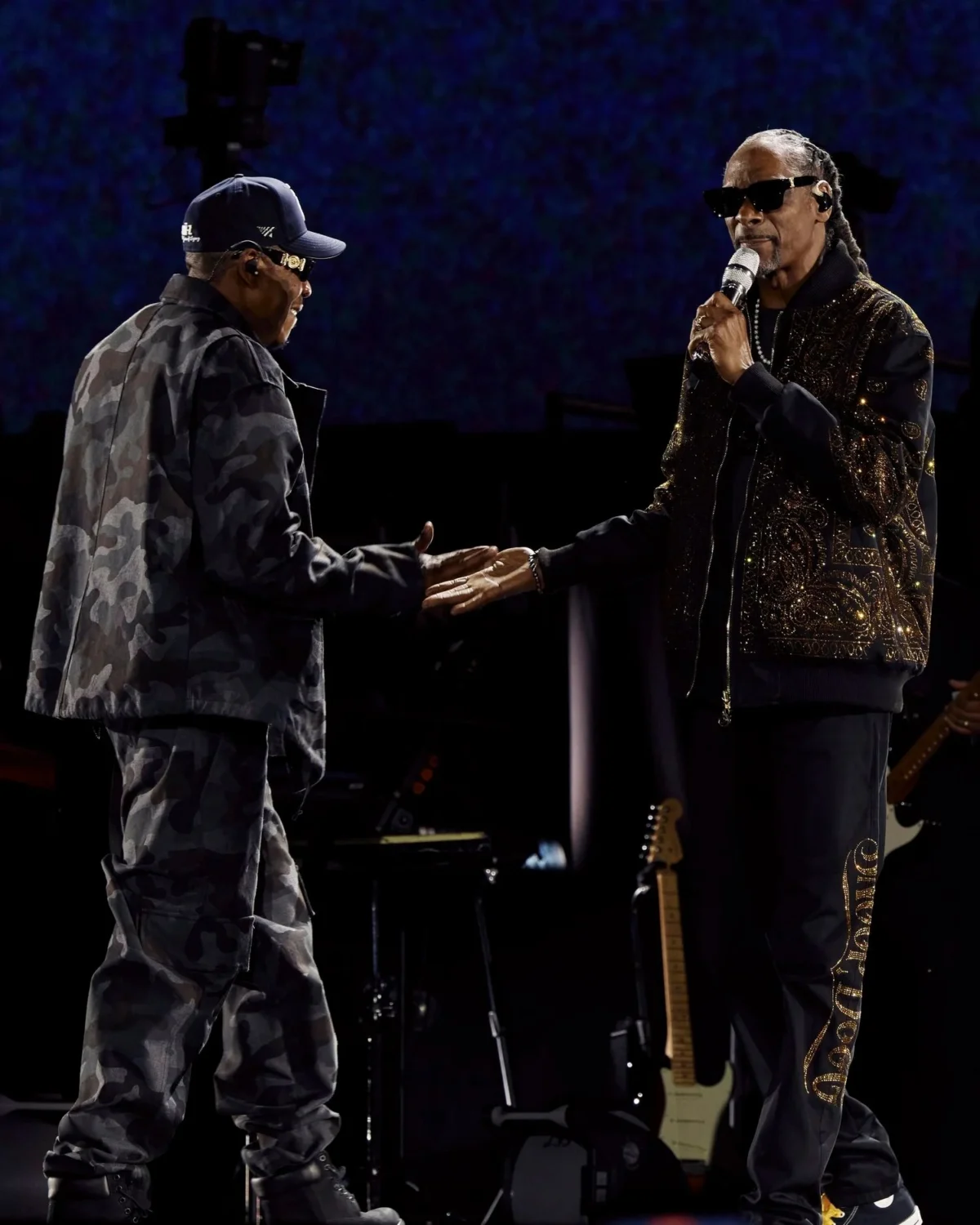
HangupsMusic.com – Los Angeles, The curtains have officially closed on one of the most ambitious victory laps in hip-hop history. This past weekend, Shawn "Jay-Z" Carter brought his "Jay-Z 30" tour to a thunderous conclusion at SoFi Stadium in Inglewood, California. The two-night residency served as the final chapter of a headlining run that did more than just celebrate a career; it reasserted Jay-Z’s standing as a singular force in global entertainment. Launched earlier this year with a high-profile appearance at Philadelphia’s Roots Picnic, the tour was primarily designed to commemorate the 30th anniversary of his 1996 debut masterpiece, Reasonable Doubt. Along the way, the trek shattered attendance records, most notably at New York’s Yankee Stadium, and became a revolving door for the genre’s most elite talent.
The atmosphere inside SoFi Stadium was one of reverence and high-stakes showmanship. As the tour reached its West Coast climax, the Brooklyn-born mogul leaned heavily into the cultural synergy between New York’s lyrical tradition and California’s G-funk legacy. The finale was not merely a concert but a curated museum of hip-hop’s evolution over the last three decades, told through the lens of a man who has remained at the forefront of the industry through multiple eras of transition.
Friday night’s performance, the first of the two-night stand, set a high bar for guest appearances and emotional resonance. Early in the set, Jay-Z signaled that the evening would be a deep dive into the roots of his artistry. He surprised the capacity crowd by bringing out Houston legend Scarface. The two titans of the "Golden Era" revisited their collaborative history, performing the somber and reflective "This Can’t Be Life." The chemistry between the two remained palpable, a reminder of the era when Jay-Z was still establishing his "Roc-A-Fella" empire. Scarface also treated the audience to a rendition of the Geto Boys’ classic "Mind Playing Tricks on Me," a moment that grounded the stadium show in the foundational sounds of Southern rap.
However, the most poignant moments of the first night came from within the Carter family. Continuing a tradition established earlier in the tour, Jay-Z’s daughter, Blue Ivy Carter, joined her father on stage. Rather than the choreographed dance routines seen during her mother’s Renaissance tour, Blue Ivy took a more instrumental role, accompanying her father on the piano. Her melodic contributions during the introspective "The Story of O.J." and the seminal "Dead Presidents / Dead Presidents II" added a layer of generational continuity to the performance. Seeing the billionaire mogul share the stage with his eldest daughter while performing songs that detail the struggle and financial literacy of his early life provided a stark, powerful contrast that resonated with the multi-generational audience.
The first night concluded with a high-octane encore that shifted the mood from nostalgic to triumphal. After seemingly ending his set with the anthemic "Public Service Announcement," Jay-Z returned to the stage flanked by John Legend and DJ Khaled. Together, they delivered a sprawling, eight-minute performance of "God Did." The track, known for Jay-Z’s virtuosic, four-minute continuous verse, served as a masterclass in breath control and lyrical complexity, proving that even thirty years into his career, his technical prowess remains unmatched.
If Friday was about the foundation, Saturday night was a full-scale celebration of the West Coast’s contribution to the culture. The second and final night of the tour saw Jay-Z leaning into the geography of the venue. The evening took an energetic turn when Oakland’s own Too $hort joined Jay-Z on stage. The duo performed a medley that bridged the gap between regions, featuring the "Blow the Whistle Freestyle" and the original 2006 hit "Blow the Whistle." The inclusion of Too $hort underscored the tour’s theme of mutual respect among hip-hop’s elder statesmen.
The definitive highlight of the night—and perhaps the entire tour—arrived when the lights dimmed and the unmistakable chords of Dr. Dre’s production filled the stadium. In a massive show of force, Jay-Z was joined by Dr. Dre and Snoop Dogg. The trio, representing the absolute pinnacle of hip-hop royalty, launched into a medley of hits that defined the California sound. The setlist included "The Next Episode," "Still D.R.E.," and "Nuthin’ But a G Thang." The energy reached a fever pitch when the opening notes of "California Love" played, a tribute to the late Tupac Shakur that felt particularly resonant in the heart of Los Angeles. This segment of the show highlighted the long-standing professional bond between Jay-Z and Dr. Dre, the latter of whom famously collaborated with Jay-Z on the writing of "Still D.R.E." in the late 90s.
Beyond the spectacle of guest stars, Jay-Z used the final night to pay a somber tribute to a fallen local hero. The rapper took a moment to honor Nipsey Hussle, the Los Angeles native and community activist who was tragically killed in 2019. As a black-and-white portrait of Hussle was projected onto the massive stadium screens, the opening of "Hussle & Motivate" echoed through the arena. In a seamless transition, Jay-Z then integrated Hussle’s "Last Time That I Checc’d" into his own performance of "On to the Next One." The tribute was a nod to the deep respect Jay-Z held for Hussle’s independent business model and "marathon" philosophy, a mirror to Jay-Z’s own career trajectory.
Despite the celebratory nature of the tour, Jay-Z did not shy away from addressing the modern challenges of fame and the digital landscape. During the closing moments of the final show, he took a direct aim at online critics and the spread of misinformation. Reports had circulated on social media throughout the tour’s final leg alleging that tickets were being resold for nominal prices and that the venues were not at capacity. Jay-Z addressed these claims with a mix of defiance and philosophical observation.
"Y’all gotta be very aware of what’s going on in the world, right?" he told the crowd, gesturing toward the packed rows of SoFi Stadium. "People will tell you that nobody was in here tonight, but you got eyes, you can see. People will tell you that the music wasn’t great, but you got ears." He went on to caution the audience about the era of artificial intelligence and the ease with which false narratives can be manufactured. "You gotta understand, you gotta question everything in this world of AI," he added, suggesting that the "Jay-Z 30" tour had become a target for those looking to undermine his enduring relevance.
The setlists for both nights were a sprawling journey through a massive discography. From the gritty street tales of Reasonable Doubt songs like "Can I Live" and "D’Evils" to the stadium-filling pop-rap of "Empire State of Mind" and "Big Pimpin’," the performances captured the evolution of Shawn Carter from a Marcy Projects hustler to a global icon. The inclusion of deep cuts like "Marcy Me" and "Beach Is Better" alongside radio staples ensured that both hardcore fans and casual listeners were catered to.
As the final notes of "Public Service Announcement" faded on Saturday night, the significance of the "Jay-Z 30" tour became clear. It was more than a series of concerts; it was a definitive statement on the longevity of hip-hop as a genre. While many of his peers have faded from the spotlight or relegated themselves to smaller "legacy" circuits, Jay-Z proved he can still command the world’s largest stages. By breaking ticket records at Yankee Stadium and closing with a star-studded residency at SoFi, he has set a new benchmark for what a veteran artist can achieve.
The tour’s conclusion marks the end of a specific chapter, but it leaves behind a legacy of high-concept performance and cultural bridge-building. From Philadelphia to New York to Los Angeles, Jay-Z used his 30th anniversary to remind the world that while the industry may change and technology may evolve, the power of a well-crafted verse and a legendary career remains undeniable. As the "Jay-Z 30" era ends, the music world is left to wonder what the next decade holds for a man who has already conquered every peak available to him. For now, the echoes of the West Coast medley and the image of a father and daughter performing together at the piano will serve as the lasting memories of a tour that was, in every sense, a historic achievement.
