
 By Azzam Bilal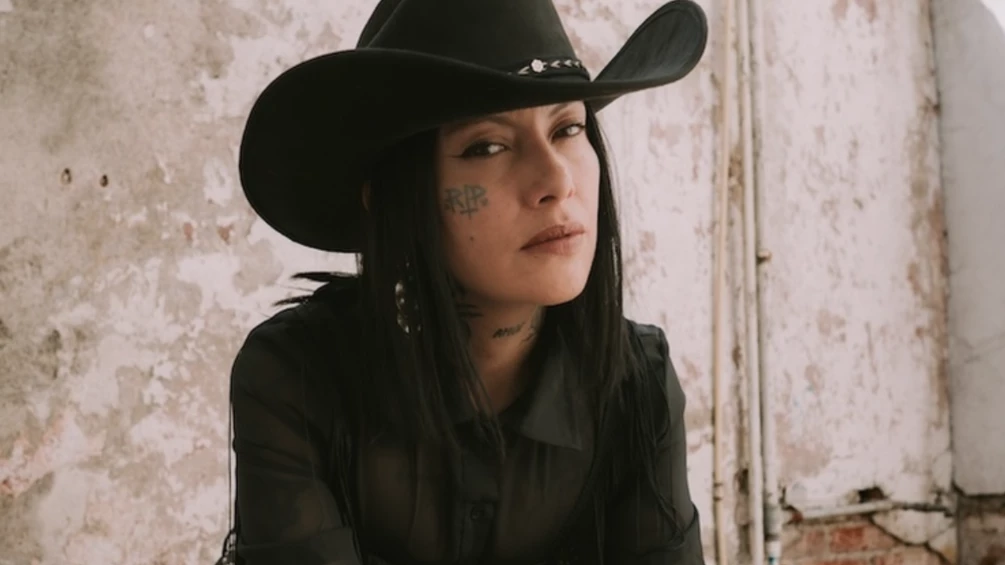
HangupsMusic.com – Mexico City, The landscape of contemporary electronic music is frequently defined by its ability to look backward and forward simultaneously, but few artists navigate this temporal duality with as much conviction as Rosa Pistola. The Colombia-born, Mexico City-based DJ and producer, a central figure in the evolution of the global underground, has officially announced the upcoming release of her new studio album, Incorregible. Scheduled to arrive on April 10th via the adventurous Colombian imprint Eck Echo, the record represents a profound shift in Pistola’s creative trajectory, moving beyond the high-energy club environments she is known for to explore the deep, resonant roots of ancestral American sounds.
Spanning eight tracks, Incorregible is far more than a standard electronic LP; it is a meticulously crafted component of Pistola’s broader "Tribal Sound System" project. This initiative seeks to decolonize the dancefloor by reintroducing the organic textures and spiritual weight of indigenous folklore into the context of modern synthesis and digital rhythm. The album serves as a sonic bridge, connecting the pre-Hispanic traditions of the Americas with the bass-heavy, industrial-leaning aesthetics of the 21st-century Latin American metropolis. By synthesizing these disparate eras, Pistola challenges the listener to reconsider the origins of rhythm and the endurance of cultural identity through sound.
The technical composition of Incorregible highlights a dedication to acoustic authenticity. Throughout the eight tracks, Pistola integrates a diverse array of traditional instrumentation that reflects the geographical breadth of her influences. Listeners will encounter the breathy, ethereal tones of Andean flutes and the percussive, woody resonance of the marimba—an instrument deeply tied to the Afro-Colombian and Central American coasts. These are complemented by the rhythmic scrapings of the güiro and the immersive, atmospheric textures of rain sticks. Rather than using these instruments as mere "world music" samples, Pistola treats them as foundational elements, allowing their natural timbres to dictate the movement and mood of the electronic arrangements.
Central to the album’s thematic depth is its engagement with the Náhuatl language, the primary tongue of the Aztec Empire and a living language still spoken by millions in modern Mexico. The record features the contributions of Maribel Galicia, a member of the Nahua people born in the historic region of Teotihuacán. Galicia provides Náhuatl chants that are woven into the fabric of the tracks, offering a poetic and linguistic connection to the land’s history. Her recitations are not just vocal layers but are intended to act as spiritual anchors, grounding the experimental electronic beats in a narrative that predates the colonial era. This collaboration underscores Pistola’s commitment to honoring the specific cultures from which she draws inspiration, ensuring that the "ancestral" element of the album is represented with genuine human agency and cultural authority.
The announcement of Incorregible arrives on the heels of the lead single, "Conejo y Luna" (Rabbit and Moon). The track serves as a perfect microcosm of the album’s mission statement, blending regional Mexican sensibilities with a dark, hypnotic electronic pulse. Accompanied by a visually striking music video, the single highlights the duality of Pistola’s artistry: her ability to maintain a foot in the gritty, DIY world of the "perreo" underground while expanding her reach into high-concept, avant-garde production. The title itself alludes to Mesoamerican mythology, specifically the legend of the rabbit in the moon, further cementing the record’s ties to ancient folklore.
For Rosa Pistola, whose birth name is Laura Ramírez, this album marks a significant maturation in her discography. Since moving from Colombia to Mexico over a decade ago, she has become an indispensable architect of the Mexico City scene. While she first gained international acclaim for her work in the reggaeton and neoperreo movements—championing a raw, unfiltered version of the genre that focused on its Caribbean and urban roots—her recent work has shown an increasing interest in experimentalism. Incorregible follows her Dance All Night EP, which was released just last month and offered a more direct, club-focused energy. However, where the EP was designed for the immediate heat of the dancefloor, Incorregible appears designed for a more immersive, contemplative listening experience, one that rewards attention to detail and an appreciation for cultural synthesis.
The choice of Eck Echo as the releasing label is also significant. The Colombian label has built a reputation for supporting artists who push the boundaries of Latin American electronic music, often focusing on projects that blend folklore with futuristic soundscapes. By partnering with Eck Echo, Pistola aligns herself with a movement of South and Central American producers who are reclaiming their heritage through technology, creating a genre-defying sound that is often referred to as "Andean Bass" or "Experimental Tribal."
The title of the album, Incorregible (Incorrigible), serves as a manifesto for Pistola’s career. Throughout her time in the spotlight, she has remained fiercely independent, often pushing back against the commercialization of Latin music and the sanitization of underground culture. To be incorrigible is to be beyond correction or reform; in Pistola’s case, it signifies a refusal to adhere to the rigid expectations of the music industry. She continues to operate on her own terms, whether she is digging through crates of forgotten reggaeton tapes or collaborating with indigenous poets to create a new form of electronic ritual.
As the global music community increasingly looks toward Latin America for innovation, Incorregible stands as a vital contribution to the conversation. It addresses the complexities of identity in a globalized world, asking how one can remain connected to their ancestors while living in a hyper-digital present. The inclusion of Andean flutes alongside synthesized sub-bass is not just an aesthetic choice; it is a political statement about the continuity of indigenous presence and the power of music to act as a vessel for history.
The "Tribal Sound System" project, of which this album is a cornerstone, suggests that Rosa Pistola is looking toward a future where the distinction between "traditional" and "modern" music is entirely erased. By bringing the sounds of the rain stick and the marimba into the same space as the drum machine and the sequencer, she creates a unified sonic language that transcends borders and eras. The eight tracks of Incorregible are poised to offer a journey through this new landscape, guided by the rhythms of the past and the technology of the future.
With the release date of April 10th approaching, anticipation is building for how both long-time fans of Pistola’s club sets and newcomers to the experimental scene will receive this ambitious work. The album promises to be a challenging, beautiful, and ultimately rewarding exploration of what it means to be an artist in the modern Americas. Through the chants of Maribel Galicia and the intricate production of Rosa Pistola, Incorregible seeks to prove that the most forward-thinking music is often that which remembers where it came from.
As the "Conejo y Luna" video continues to garner attention for its evocative imagery and unique sound, the stage is set for a release that could redefine the boundaries of contemporary electronic music. Rosa Pistola has long been a pioneer, but with Incorregible, she moves into the role of a sonic historian, weaving the threads of the past into a vibrant, unruly tapestry of the present. The album is not just a collection of songs; it is a testament to the enduring power of the "Tribal Sound System" and a bold declaration of artistic independence.
