
 By admin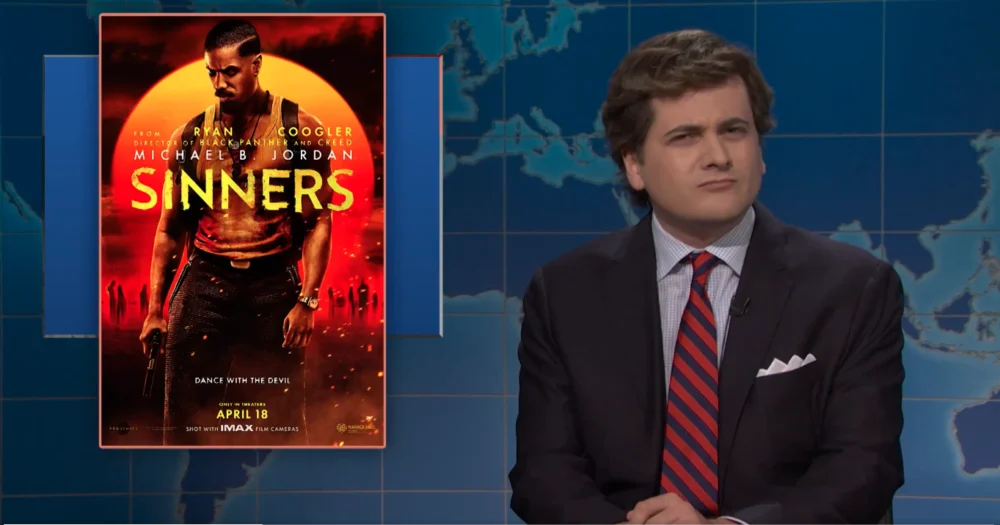
HangupsMusic.com – New York, NY – As Hollywood prepared for its most prestigious night, the Academy Awards, the iconic sketch comedy program Saturday Night Live offered a biting satirical commentary on the cultural anxieties often associated with the event. In a recent episode, the show’s "Weekend Update" segment featured an impersonation of former cable news host Tucker Carlson, portrayed by Jeremy Culhane, who unleashed a torrent of critiques against the perceived decay of American values, using the Oscar-nominated films as his primary targets. The sketch brilliantly encapsulated the culture war rhetoric that frequently frames discussions around contemporary media and entertainment, particularly from a conservative viewpoint.
Culhane’s portrayal of Carlson was meticulous, capturing the pundit’s distinctive blend of rhetorical questioning, wide-eyed bewilderment, and thinly veiled outrage. Seated opposite "Weekend Update" co-anchor Colin Jost, the character launched into a familiar lament about the state of the nation. "Let’s all go to the movies," he began, dripping with sarcastic incredulity. "Really? Yes, why don’t we grab some popcorn and watch American culture collapse. What are we doing? What’s going on?" These rhetorical queries, a hallmark of Carlson’s on-air persona, immediately set the tone for a segment designed to lampoon the anxieties of cultural conservatives grappling with an evolving media landscape. The underlying premise was clear: for this fictionalized Carlson, the cinematic offerings of the year were not merely entertainment but symptoms of a deeper societal malaise.
The central thrust of the character’s argument revolved around the notion that Hollywood, and by extension the Oscars, has become a bastion of progressive ideology, actively undermining traditional American values. This perspective is a common refrain in contemporary cultural debates, where entertainment industry output is often scrutinized for its alignment with or deviation from specific political and social agendas. The sketch amplified this sentiment to comedic effect, turning every film into a symbol of a grander, more insidious cultural shift. The choice of the Oscars as a backdrop for this critique was deliberate, as the annual awards ceremony often serves as a lightning rod for discussions about representation, artistic merit, and the industry’s perceived political leanings.
The first film to fall under Culhane’s Carlson’s scrutiny was a hypothetical picture titled Sinners. With a theatrical gasp, the character questioned the very premise of such a title being celebrated. "Why don’t we talk about Sinners. That’s right, Sinners. Because of course, leftist woke America’s favorite movie this year is about sinning. Huh. Really?" he exclaimed. This critique played on the common conservative concern about secularization and moral relativism, portraying a society that, in his view, no longer distinguishes between right and wrong but instead embraces transgression. "No, sorry kids, we don’t go to church anymore. We go to Sinners. That’s the rule. That’s the goal now. What are we doing? What’s going on?" This segment highlighted the satirical point that for some cultural critics, the mere acknowledgment or exploration of morally ambiguous themes in art is seen as an endorsement of those themes, rather than a reflection or critique of them.
Next, the impersonation turned its attention to a fictionalized Hamnet, a title that, in reality, refers to Maggie O’Farrell’s celebrated novel about William Shakespeare’s family life. However, Culhane’s Carlson offered a wildly distorted interpretation, claiming the title itself was a politically correct alteration. "Oh, Hamnet, because we’re not allowed to say ‘Hamlet’ anymore," he scoffed, before delivering a truly absurd punchline: "They took the ‘L’ and gave it to the ‘GBTQ.’ What are we doing? What’s going on?" This moment was a masterful piece of comedic exaggeration, directly satirizing the tendency of some commentators to find evidence of "wokeness" in the most unlikely and nonsensical places, even going so far as to invent a linguistic conspiracy theory. The real Hamnet is a historical novel exploring grief and domestic life in the Elizabethan era, making Carlson’s fictionalized critique all the more ludicrous and effective as satire. The character further twisted the knife by adding, "‘Hamnet’—a boy who shows interest in theater dies. I actually liked that part," punctuated by a series of unnecessary "excuse me’s" directed at Jost, who remained stoically silent. This dark humor underscored the character’s cynical outlook and implied a disturbing schadenfreude towards narratives that conform to his dystopian worldview.
The comedic onslaught continued with a bizarre critique of another hypothetical film, Bugonia. The character declared, with characteristic indignation, "I guess heterosexual women aren’t allowed to have hair anymore." This statement, divorced from any recognizable cinematic plot or theme, served as a blanket parody of the most extreme and disconnected cultural grievances, where changes in fashion, personal expression, or even imagined scenarios are weaponized as proof of societal decline. It’s a caricature of the argument that progressive ideals are somehow stripping away traditional femininity or identity, reduced to an utterly nonsensical complaint about hair.
Amidst these bewildering critiques, Culhane’s Carlson paused to yearn for a bygone era of American cinema. "Whatever happened to the great American film?" he wondered aloud, invoking cinematic classics like Gone With the Wind and, notably, "the first 20 minutes of Forrest Gump." The invocation of Gone With the Wind, a film deeply embedded in American cultural history but also fraught with problematic racial portrayals, subtly underscored the character’s selective nostalgia for a past that ignores its complexities. The choice of Forrest Gump is equally telling, a film often celebrated for its heartwarming portrayal of American innocence and resilience. However, the specific focus on "the first 20 minutes" immediately piqued Jost’s curiosity. "You mean the part where they’re bullying him?" Jost inquired, prompting the character’s gleeful and disturbing confirmation: "Yes. I loved that part!" This final punchline was perhaps the most revealing moment of the sketch. It exposed the cynical core beneath the character’s complaints about cultural collapse, suggesting that the "traditional values" he champions might include a tacit endorsement of less savory aspects of the past, or at least a stark lack of empathy. The enthusiastic embrace of bullying in a beloved American narrative served as a stark, darkly humorous commentary on the selective memory and moral blind spots often attributed to certain cultural critics.
The Saturday Night Live sketch featuring Jeremy Culhane’s Tucker Carlson impersonation served as a potent piece of cultural satire. It not only lampooned a prominent media figure’s style and rhetoric but also offered a sharp critique of the broader "culture war" narrative that often surrounds the arts and entertainment industry. By exaggerating the arguments and anxieties of those who perceive a decline in American values through the lens of Hollywood’s offerings, SNL highlighted the absurdity and often self-contradictory nature of such critiques. As the Oscars approached, the sketch reminded audiences that while film celebrates artistry and storytelling, it also remains a powerful battleground in the ongoing societal conversation about who we are and where we are headed. The laughter it provoked was not just at the expense of one commentator but at the often-exaggerated drama of cultural conflict itself.
