
 By Azzam Bilal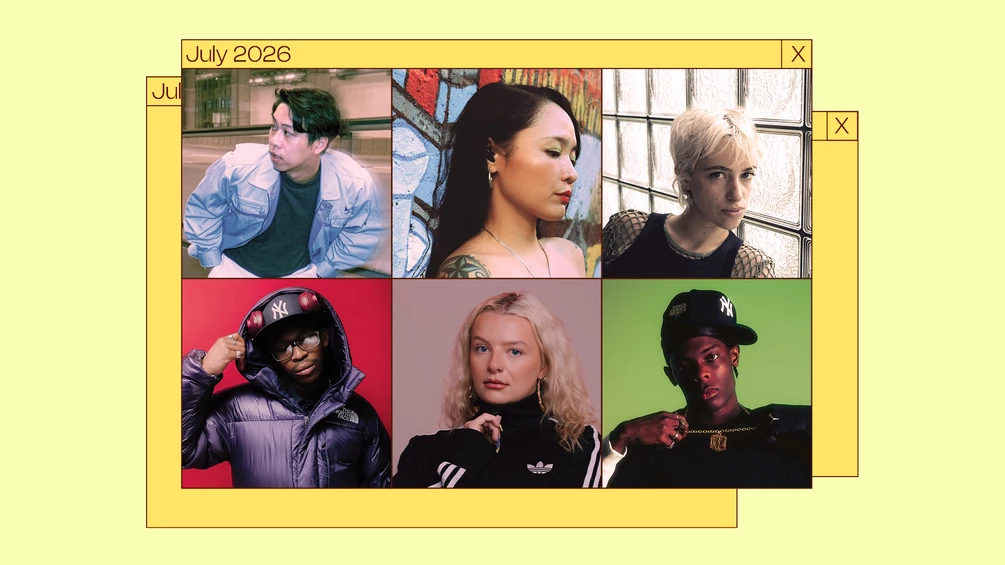
HangupsMusic.com – London, as the mid-summer heat of 2026 reaches its peak, the global electronic music scene is witnessing a profound transformation. No longer confined by the rigid boundaries of traditional genres, a new vanguard of producers and DJs is emerging, blending ancestral rhythms with futuristic synthesis. From the sun-drenched shores of the Philippines to the industrial echoes of Northern England, these artists are not merely playing music; they are constructing intricate cultural ecosystems. This month, we shine a spotlight on six essential figures whose creative output is reshaping the dancefloor through a lens of historical reclamation, emotional vulnerability, and cross-continental fusion.
At the forefront of the Filipino electronic renaissance is Ezzrei, a multifaceted artist whose work serves as a bridge between contemporary bass music and pre-colonial heritage. Based in the surfing haven of Siargao Island, Ezzrei’s journey began in 2015 when she realized the local scene lacked the sonic depth she craved. Her background as a music journalist provides her with a unique, analytical perspective, allowing her to approach the turntable as a researcher would a primary source. As the founder of the Continuum Bass collective and Kanto Cult Radio, she has moved beyond the role of a performer to become an architect of a sustainable musical infrastructure.
Ezzrei’s sound is a sophisticated tapestry of dubstep, jungle, and footwork, often infused with the spirit of avant-garde jazz. Her upcoming "Baby Vortex" EP is a testament to this, drawing inspiration from the improvisational philosophies of Sun Ra and John Coltrane. In tracks like "Sinta," she masterfully integrates the kubing—a traditional bamboo jaw harp—into a high-velocity juke framework, while "Ang Daigdig Ko’y Ikaw" utilizes psychedelic samples of Celeste Legaspi to reinvent the jungle aesthetic. For Ezzrei, every rhythmic layer must justify its existence, reflecting the "sonic ancestry" of the Philippines where every life event is punctuated by specific instrumentation. Her goal is to build a system that outlives the ephemeral nature of club nights, fostering an ecosystem of education, publishing, and international collaboration.
In London, the energy is being recalibrated by Joshua Gadget, a Nigerian-born artist who transitioned from the world of professional dance to the DJ booth following a career-altering injury. This physical background is the engine behind his performances; Gadget views dancers as the "heartbeat" of any room. His rise has been meteoric since 2023, fueled by a "don’t-ask-don’t-get" tenacity that saw him playing for amapiano royalty like Uncle Waffles within months of picking up the craft. Gadget’s sets are famously spontaneous, eschewing pre-planned playlists in favor of a "troubleshooting" approach that reads the room’s collective psyche in real-time.
His signature sound is a "melting pot" of the cultures he inhabits—a seamless blend of Nigerian Afrobeats, Southern African amapiano, and UK-centric EDM and R&B. Whether he is pivoting from the jagged, syncopated intensity of gqom to the soulful depths of Afro-house, Gadget maintains a commitment to education through sound. His viral presence on platforms like TikTok has not diluted his credibility; rather, it has amplified his role as a tastemaker at institutions like fabric and Colour Factory. As he eyes future stages in Ibiza and South Africa, Gadget remains a vital link between the African diaspora and the global electronic mainstream.
Across the channel in Paris, the artist known as Bambi is championing a different kind of intensity—one rooted in patience and atmospheric immersion. Her approach to DJing is a direct rejection of the modern "banger-per-minute" mentality. Instead, she crafts slow-motion soundscapes where dub techno and downtempo ambience act as a hypnotic mist, slowly enveloping the listener before transitioning into psychedelic techno or pitched-down Goa trance. For Bambi, the process of evolution is as important as the music itself, a philosophy born from a childhood of R&B and a formative period of discovery during the pandemic.
A resident at the Macadam club in Nantes and a member of the HORS-SOL crew, Bambi’s music feels inherently tied to the natural world. Her recent release "Lotus Glow" on the Woozy label captures this organic essence, sounding as if it were composed for the vast, open-air settings of festivals like Norway’s Monument. By prioritizing a gradual build-up, she ensures that when the rhythm finally takes hold, the audience is already deeply submerged in her world. Her career is a reminder that in an industry often obsessed with rapid-fire results, there is immense power in taking one’s time.
The concept of fusion takes on a literal meaning in the work of Hong Kong’s FINGERGAP (Leo Cheng). He describes his creative process through the metaphor of a "Strawberry Matcha Latte"—a combination of seemingly disparate elements that either create a new sensation or cancel each other out. By pairing the romantic, tonal lyricism of classic Canto-pop with the frenetic, 160-BPM pulse of Chicago footwork, Cheng has found a way to preserve the sentimentality of love songs within a high-intensity club environment.
Cheng’s work is deeply influenced by the late DJ Rashad, specifically the ability to sample emotive vocals without losing their soul. In his single "One Bit Faster," the linguistic nuances of Cantonese provide a poetic depth that is rare in modern dance music. For FINGERGAP, music is a playground for curiosity, where the "finger gap" between two hands held tight becomes a metaphor for the spaces where different cultures and genres can meet and thrive.
Returning to London, the producer SIMMS is making waves by looking backward to move forward. In just a few years, he has established himself as a premier architect of atmospheric jungle, reviving the "cosmic" aesthetic popularized by labels like Good Looking Records in the 1990s. His "Traversal Tapes" EP is a masterclass in this style, utilizing bubbling arpeggios and expansive pads that recall the work of legends like LTJ Bukem and Seba.
However, SIMMS is no mere revivalist. His output ranges from soulful, R&B-infused bootlegs on his "Pretty Ppl Love Jungle" project to the "tearout" energy found in his more aggressive club sets. He credits his growth to the vibrant UK collective scene—groups like Distant Planet and Sexy Lady Massive—which he views as the lifeblood of the genre. By blending the polished, "intelligent" jungle of the past with a modern, inclusive club sensibility, SIMMS is ensuring that the genre remains a diverse and evolving force in 2026.
Finally, we look to Bolton, where Megan Wroe is injecting a dose of Northern soul into the UK garage revival. Wroe’s sound is a vibrant homage to the club compilation CDs of her youth, filtered through a contemporary "NUKG" lens. Her music is characterized by "organ-spritzed" melodies and a vocal prowess that bridges the gap between pop accessibility and underground grit. Her "Lovestep" project—which functions as a label, an event series, and an EP title—captures the essence of classic dance music, from Big Ang bootlegs to the trance-inflected energy of ATB.
Wroe’s collaborative spirit, particularly her work with Sheffield’s Silva Bumpa, has solidified her position as a central figure in the new garage movement. Her tracks are designed for the "neon" glow of the dancefloor, yet they possess a songwriting depth that hints at her ambitions to write for other artists or even explore band-based projects. In Megan Wroe, the UK scene has a talent who can turn the nostalgia of a Bolton childhood into the soundtrack of the future.
As we navigate the mid-point of 2026, these six artists represent the shifting tides of the global underground. They are proof that the most exciting developments in electronic music occur when artists embrace their specific cultural identities while remaining open to the infinite possibilities of the digital age. Whether through the preservation of Filipino rhythmic traditions, the high-energy "troubleshooting" of a London dancefloor, or the slow-burn techno of the Parisian outdoors, the future of the scene is in capable, innovative hands.
