
 By Azzam Bilal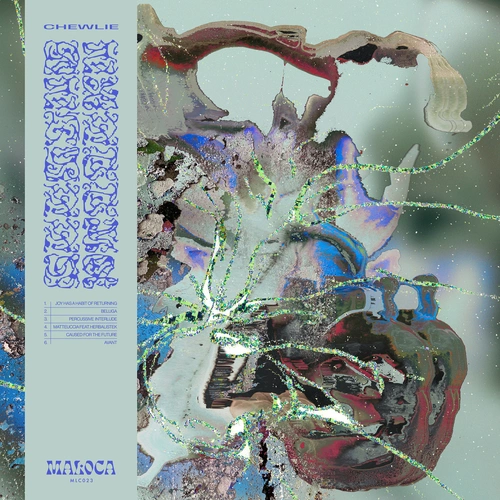
HangupsMusic.com – Bern, Switzerland, has long maintained a reputation for its steady, albeit sometimes overlooked, contributions to the European electronic underground. However, the emergence of Chewlie has effectively recalibrated the regional soundscape, drawing international attention toward a meticulous and highly evolved brand of club music. Her latest offering, the Seeking Pattern EP, serves as a definitive manifesto for this new direction, blending the structural weight of traditional bass music with an avant-garde sensibility that prioritizes intricate textures and rhythmic unpredictability. This release does more than just fill a dancefloor; it invites a deep-listening experience that rewards those who pay attention to the smallest acoustic flickers.
The centerpiece of the EP, "Joy Has a Way of Returning," acts as a masterclass in tension and release. The track opens with a deceptive fragility, characterized by shimmering, ethereal pads that seem to hang suspended in a vacuum. For the first minute, the listener is enveloped in a lush, ambient atmosphere that suggests a contemplative, melodic journey. However, this serenity is abruptly shattered by a bass drop of immense physical presence. This specific moment of transition is where Chewlie displays her profound understanding of dubstep’s historical lineage. The drop carries the same visceral, goosebump-inducing gravity found in the seminal works of Bristol’s Joker—specifically the neon-lit purple sound of "Tron"—or the legendary Skream remix of La Roux’s "In for the Kill." It is a nod to the golden era of UK bass, yet it feels entirely contemporary due to the surgical precision of its execution.
As "Joy Has a Way of Returning" progresses, it refuses to settle into a predictable groove. The initial anthemic energy begins to mutate, as the stereo field becomes populated with eccentric drum patterns and disembodied vocal snippets. The track undergoes a metamorphosis, shifting from a peak-time club weapon into what can only be described as an "after-hours creeper." This fluidity is a hallmark of Chewlie’s production style; she is not content with a static loop, instead opting for a narrative structure where sounds are introduced, discarded, and reimagined in real-time. It is a sophisticated approach that bridges the gap between the visceral needs of the rave and the intellectual demands of experimental IDM.
The EP’s title, Seeking Pattern, feels like an apt description of Chewlie’s creative process. Throughout the record, there is a sense of searching—a quest to find order within chaotic sound palettes. This is perhaps most evident on the track "Beluga," a composition that thrives on unlikely juxtapositions. Here, Chewlie introduces a strange, almost pastoral flute melody that is soon joined by a rhythmic element that sounds remarkably like a mechanical frog. This duet between the organic and the synthetic creates a surrealist sonic landscape, evocative of a digital rainforest. The sound design is microscopic in its detail, with every click, pop, and croak positioned with intentionality. It is "future club" music in the truest sense, moving away from standard synthesizer presets in favor of bespoke, artisanal textures that defy easy categorization.
On "Caused for the Future," the producer explores the concept of kinetic energy through high-frequency percussion and skittering synths. The melodic elements here move with a frantic, nervous energy—reminiscent of mouse feet scurrying across a hard surface. This track highlights Chewlie’s ability to manipulate the listener’s perception of space. The sounds aren’t just coming through the speakers; they seem to be darting around the room, utilizing the full breadth of the stereo image to create a sense of claustrophobia followed by sudden expansiveness. It is a dizzying display of technical prowess that never loses sight of the rhythmic drive necessary for a club environment.
The stylistic foundations of Seeking Pattern sit somewhere in the fertile soil between dubstep and drum & bass, but Chewlie’s work contains multitudes that transcend these labels. While the sub-bass frequencies provide the necessary foundation for the tracks to function in a sound-system context, the mid and high-range frequencies are where her personality truly shines. There is a playful, almost mischievous quality to her sound design, even when the underlying mood is dark or brooding. This duality—the heavy and the light, the mechanical and the organic—is what sets her apart from her contemporaries in the bass music scene.
Chewlie’s rise within the Bern-based scene is also a testament to the growing decentralization of electronic music innovation. While London, Berlin, and Bristol remain traditional hubs, the meticulous craftsmanship found on Seeking Pattern suggests that some of the most exciting developments in bass music are happening in the quiet corners of Europe. The Swiss producer has managed to absorb the history of the genre while remaining unburdened by its clichés. She isn’t trying to recreate the sound of 2008; she is using the tools of the past to build a bridge to a more complex, rhythmically diverse future.
The complexity of the EP also speaks to a broader trend in electronic music where the boundaries between genres are becoming increasingly porous. In Seeking Pattern, one can hear echoes of the "deconstructed club" movement, where the tropes of dance music are stripped down and reassembled in jarring, non-linear ways. However, Chewlie maintains a certain level of accessibility that other experimental producers often discard. Even at her most abstract, there is a rhythmic "pattern" to be found—a pulse that keeps the listener grounded even as the sounds around them become increasingly alien.
From a technical perspective, the engineering on the EP is flawless. The low-end is clean and powerful, providing a solid anchor for the more experimental flourishes occurring higher up in the frequency spectrum. The way she handles vocal snippets is particularly noteworthy; rather than using them as traditional hooks, she treats the human voice as just another texture to be chopped, pitched, and woven into the fabric of the beat. These vocal elements often emerge and vanish like ghosts, adding a haunting, human element to an otherwise highly technological soundscape.
Ultimately, Seeking Pattern is a record about evolution. It is about a producer finding her voice and pushing the limits of what club music can be. It challenges the listener to move beyond passive consumption and to engage with the music on a granular level. Whether it is the earth-shaking drops of "Joy Has a Way of Returning" or the microscopic animalistic chirps of "Beluga," Chewlie demonstrates a level of control and vision that is rare for a rising artist. This EP does not just seek patterns; it creates new ones, establishing a blueprint for the next generation of bass-driven electronic music.
As the global club scene continues to look for fresh perspectives, Chewlie’s work stands as a beacon of originality. She has successfully navigated the difficult path of creating music that is both physically impactful and intellectually stimulating. Seeking Pattern is more than just a collection of tracks; it is a vivid, high-definition exploration of the possibilities inherent in modern sound design. For those willing to dive into its complex layers, the rewards are immense, offering a glimpse into a future where the dancefloor is a place of constant transformation and discovery. Through this release, Chewlie has not only put Bern on the map for a new audience but has also asserted herself as one of the most compelling architects of sound in the contemporary electronic landscape.
