
 By admin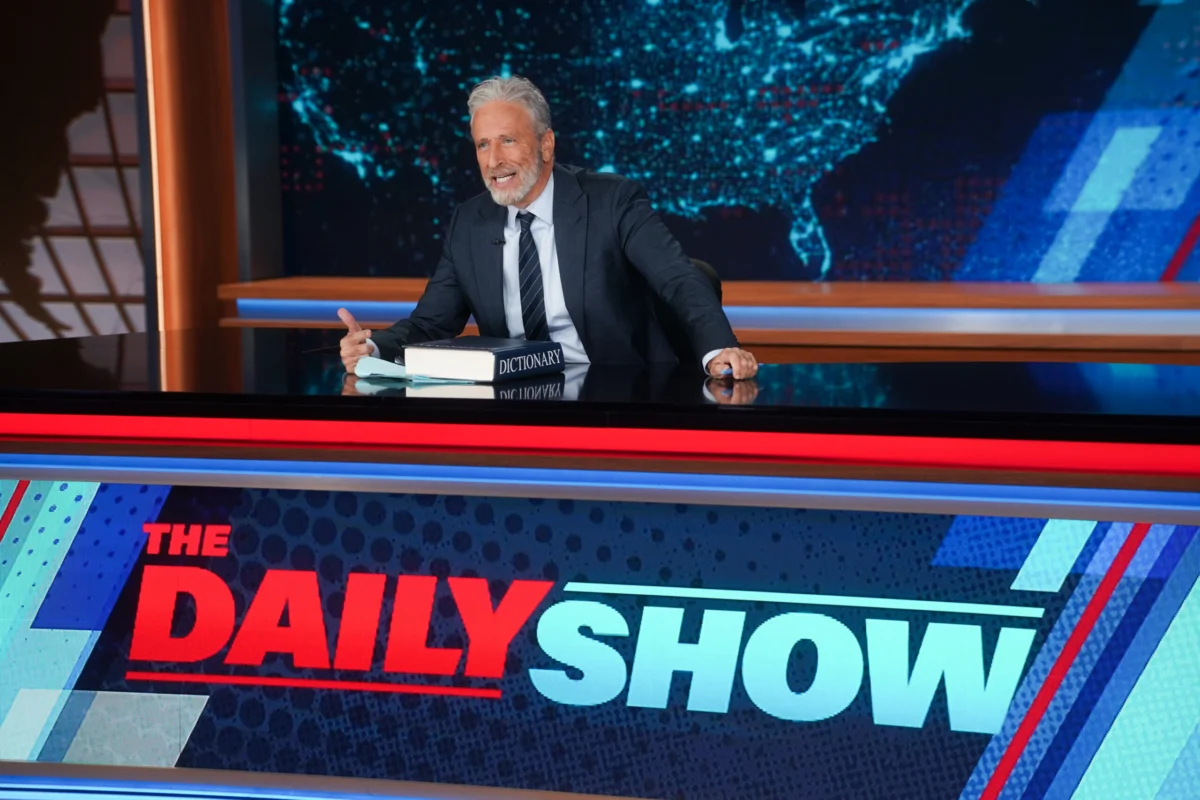
HangupsMusic.com – New York, NY – The return of Jon Stewart to the helm of The Daily Show has once again solidified his role as a pivotal voice in American socio-political discourse, a commentator whose sharp wit often cuts through the noise of contemporary challenges to reveal deeper societal currents. In a recent broadcast that reverberated across social media and traditional news outlets, Stewart offered a searing indictment of the nation’s current trajectory, likening the prevailing atmosphere to a "dizzying, chaotic carnival ride." His commentary, delivered with his signature blend of exasperation and incredulity, provided a potent reflection of widespread public anxiety, underscoring how cultural figures like Stewart often serve as vital barometers for the national mood.
Stewart’s analysis painted a vivid picture of a country grappling with a confluence of domestic disarray and international instability. He articulated a sense of pervasive "madness," citing a range of seemingly disparate issues that collectively contribute to a feeling of systemic breakdown. Among these, he highlighted the increasingly unmanageable lines at Transportation Security Administration (TSA) checkpoints, a tangible symbol of infrastructural strain that directly impacts the daily lives of millions of Americans. This domestic frustration was juxtaposed against a backdrop of escalating tensions in the Middle East, a reminder of global uncertainties that further compound internal anxieties. The bizarre anecdote of "planes driving into trucks" served as a darkly comedic illustration of the unpredictable malfunctions that seem to plague modern systems, pushing the boundaries of what might be considered normal operational failures. In this landscape, Stewart quipped, the only respite he found was in the escapist comfort of reality television, a sardonic nod to the search for normalcy amidst chaos, only to be interrupted by yet another unfolding crisis.
Beyond the immediate headlines, Stewart delved into the deteriorating state of American infrastructure, specifically pointing to the nation’s airports. He argued that the U.S. doesn’t require external conflict to degrade its own systems; rather, these critical hubs appear to be "collapsing all by themselves." This observation resonated with a public increasingly accustomed to news of delays, cancellations, and overstretched facilities. The physical and psychological toll on American travelers, already navigating a stressful environment, became a central point of his critique. It was within this context of heightened stress and operational inefficiency that Stewart introduced the administration’s controversial decision to deploy agents from Immigration and Customs Enforcement (ICE) to assist with airport security and passenger flow.
Stewart’s incredulity was palpable as he questioned the logic behind introducing an agency widely perceived as contentious into an already fraught environment. His rhetorical query – "What incredibly uncontroversial American enforcement agency would we deploy to our airports to ease passengers’ journey?" – underscored the perceived absurdity of the choice. The deployment of ICE agents, an agency often associated with heightened enforcement and a sometimes-aggressive posture, to "calm the situation" at airports was met with Stewart’s characteristic satirical comparison: "It’s kind of like the way we calm our dogs during thunderstorms with a blanket of fireworks." This analogy brilliantly captured the dissonance between the stated intention of easing passenger journeys and the likely effect of introducing a potentially intimidating presence into a space where many travelers already feel vulnerable.
The controversy deepened as Stewart brought to light the conflicting narratives surrounding the ICE agents’ qualifications for their new airport roles. Transportation Secretary Sean Duffy had publicly asserted that ICE agents were well-suited for the task, claiming they "run the same type of security machines at the southern border." This official endorsement suggested a seamless transfer of skills and a logical solution to the TSA’s capacity issues. However, Stewart, with his keen journalistic instinct, immediately challenged this claim. He played a subsequent clip featuring White House Border Czar Tom Homan, who directly contradicted Duffy’s assertion, unequivocally stating that ICE agents are, in fact, not trained in operating X-ray security equipment.
This glaring discrepancy exposed a significant breakdown in communication and coordination at the highest levels of government, revealing a policy decision potentially made without a clear understanding of its practical implications or the capabilities of the personnel involved. Stewart seized upon this administrative disarray, remarking dryly, "ICE isn’t trained on X-rays. No surprise. They don’t really seem to be trained on anything, actually." This cutting observation, while delivered with humor, highlighted a serious concern about the competence and preparedness of an agency being tasked with a critical new responsibility. The larger question, as posed by Stewart, reverberated with profound implications: "Who the fuck even thought it was a good idea to send America’s most hair-trigger agency into America’s most hair-raising environment?"
This particular phrasing encapsulates the core of Stewart’s critique. "America’s most hair-trigger agency" refers to ICE, an organization whose enforcement tactics, particularly regarding immigration, have often drawn intense scrutiny and controversy, sometimes being perceived as aggressive or overly reactive. Placing such an agency in "America’s most hair-raising environment" – the modern airport – creates a volatile combination. Airports are inherently stressful places, characterized by tight schedules, security protocols, and the diverse anxieties of travel. Introducing a law enforcement presence that many perceive as highly charged risks escalating rather than de-escalating the already palpable tension. For a music news publication, Stewart’s ability to distill complex political issues into such vivid and memorable phrases underscores the power of cultural commentary to articulate widespread public sentiment and critique governmental decisions with both wit and gravitas. His words resonate because they give voice to the unspoken frustrations and anxieties experienced by a significant portion of the populace.
Stewart further illuminated the source of this perceived governmental incoherence by showing a video of then-President Donald Trump taking personal credit for the idea of deploying ICE to airports. This segment served to underscore Stewart’s broader argument about the nature of governance during that period: "It’s so fucking stupid. Meanwhile, the rest of us suffer under Donald Trump’s attention deficit-style of government by whim." This characterization painted a picture of policy decisions driven by impulse and personal directive rather than thorough analysis, expert consultation, or long-term strategic planning. Such an approach, Stewart argued, leaves "America, and really the world, to helplessly navigate the turbulence that Trump causes."
Stewart’s commentary, in its entirety, serves as more than just political satire; it functions as a cultural mirror, reflecting the anxieties of an era marked by rapid change, political polarization, and a perceived decline in institutional competence. His ability to connect seemingly disparate issues – from airport lines to international relations, from bureaucratic inefficiency to the highest levels of executive decision-making – into a coherent, if frustrating, narrative speaks to his enduring relevance as a public intellectual and satirist. For audiences of music and culture, Stewart’s articulate critique provides a framework for understanding the socio-political currents that often inform artistic expression, revealing how comedy, like music, can be a powerful tool for social commentary and a catalyst for public dialogue. His work on The Daily Show, whether in his initial run or his more recent return, consistently demonstrates how incisive humor can be an indispensable instrument for dissecting the absurdities and challenges of contemporary life, prompting reflection and, perhaps, even a demand for greater accountability from those in power.
