
 By Rose Miami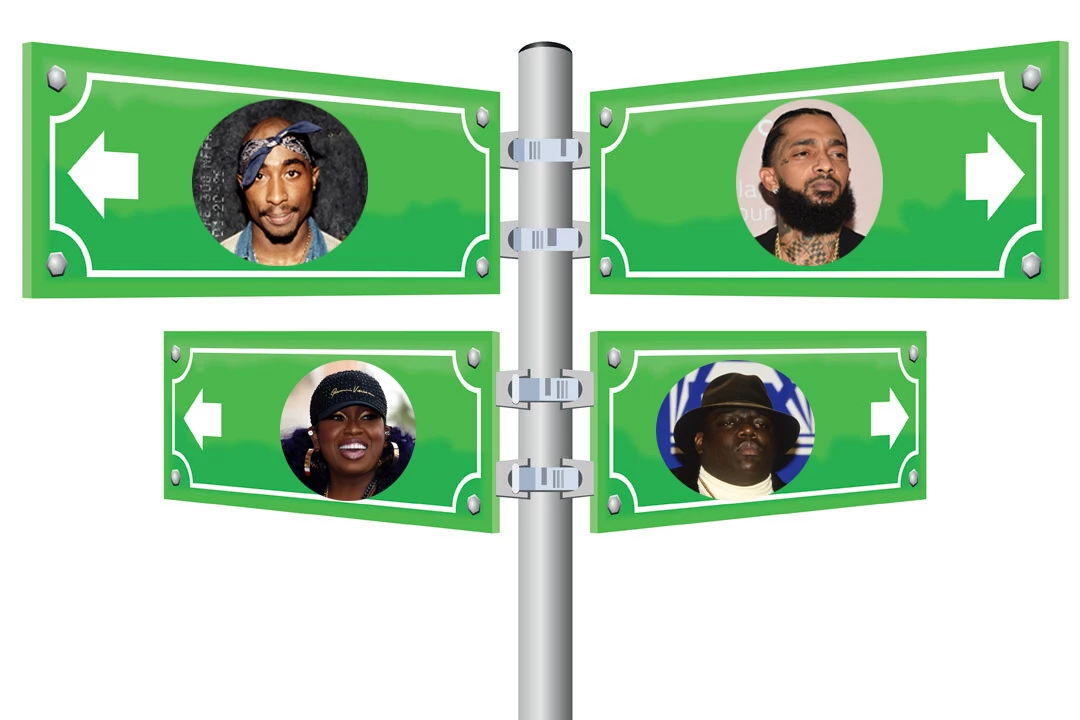
HangupsMusic.com – As the enduring legacy of hip-hop continues to be celebrated through prestigious inductees into institutions like the Rock and Roll Hall of Fame, a more grounded yet equally symbolic form of recognition is taking root within communities: the naming of streets after iconic artists. This trend, deeply rooted in hometown pride and a desire to immortalize influential figures, signifies a profound acknowledgment of hip-hop’s cultural impact, mirroring the honor bestowed upon pioneers of other American music genres.
The genesis of this movement can be traced back to 2009 in the vibrant borough of Queens, New York City. It was there that the legendary trio Run-DMC was permanently etched into the fabric of their native Hollis. The intersection of 205th Street and Hollis Avenue was officially designated Run-DMC JMJ Way, a poignant tribute not only to the group’s unparalleled contribution to music but also a heartfelt remembrance of their late DJ, Jam Master Jay. This act of civic commemoration set a precedent, demonstrating how municipalities could honor their most celebrated artists by integrating their names into the very geography of their origins.
Since that landmark designation, the practice has evolved, particularly in paying homage to artists whose lives were tragically cut short. The undisputed king of New York hip-hop, The Notorious B.I.G., is now eternally remembered in Brooklyn. In 2019, the corner of Fulton Street and St. James Place, a significant locale in Biggie’s narrative, was renamed Christopher Wallace Way. This renaming served as a powerful celebration of his indelible mark on the genre and a tangible symbol of his enduring presence in his hometown. The momentum for such tributes has been amplified in recent years, coinciding with the broader Hip Hop 50 celebrations. Most recently, the Bay Area city of Oakland, California, honored the late, great Tupac Shakur by dedicating Tupac Shakur Way in November 2023. The unveiling of the street sign, occurring 27 years after his untimely death, underscored the enduring power of his artistry and his deep connection to the city that embraced him.
Tupac’s sister, Sekyiwa "Set" Shakur, eloquently articulated the significance of this honor during the dedication ceremony. She shared, "It’s a moment that I know my brother would be proud of. Establishing love and peace in the Oakland community especially mattered to him. Being able to represent safety to his people mattered to him… Let his spirit live on the rest of these years in these streets and in your hearts." Her words highlighted the personal and community-driven sentiment behind these street namings, emphasizing how they serve as living monuments to the artists’ values and their commitment to their roots.
Behind many of these significant street dedications stands the tireless advocacy of LeRoy McCarthy and his company, HeteroDoxX Inc. McCarthy’s journey began in 2013 with an initial, albeit unsuccessful, proposal to co-name St. James Place and Fulton Street in honor of Christopher Wallace. However, his unwavering dedication and persistent efforts have been instrumental in bringing about street namings for a diverse roster of hip-hop luminaries. His advocacy has paved the way for recognitions of artists such as Tupac Shakur, the iconic Wu-Tang Clan, the aforementioned Biggie Smalls, the late Phife Dawg of A Tribe Called Quest, and numerous others.
McCarthy shared his perspective on the broader implications of this movement, stating, "It’s a great look in America for hip-hop art and culture to have the same respect as other American music creations: blues, country, jazz, rock & roll, etc. have received over the decades, including a Hip Hop Resolution in the U.S. Senate." He expressed immense pride in HeteroDoxX Inc.’s role in initiating and fostering this momentum. "I am proud that my company HeteroDoxX Inc. initiated for this momentum to happen, in NYC, at Capitol Hill, and across America, starting in 2013 with Christopher ‘Notorious B.I.G.’ Wallace Way in Brooklyn, N.Y., through to the 2023 dedication of Tupac Shakur Way in Oakland, Calif." His vision extends beyond mere street signs; it encompasses a broader societal recognition of hip-hop as a legitimate and influential art form on par with any other established American musical tradition.
The profound connection hip-hop artists often maintain with their hometowns makes being honored with a dedicated street name one of the highest forms of local appreciation. These street namings serve as tangible testaments to their impact, not only on the music industry but also on the communities that shaped them. This practice has become a cherished method for cities to express gratitude and ensure that the legacies of their most influential musical figures endure for generations to come. The growing list of artists who have received this honor reflects the increasing mainstream acceptance and cultural significance of hip-hop.
Among the pantheon of artists who have had streets named in their honor, several stand out for their indelible contributions and the profound love they inspired in their communities. These individuals, through their lyrics, their passion, and their unwavering commitment to their craft, have left an indelible mark on the global cultural landscape. Their stories are woven into the fabric of their neighborhoods, and now, their names are literally a part of those streets.
The list of hip-hop titans whose names grace street signs continues to grow, a testament to the genre’s enduring power and influence. From the raw energy of DMX, whose anthems resonated with millions, to the entrepreneurial spirit of Rick Ross, who built an empire from his musical roots, these artists have transcended the confines of the recording studio. The lyrical prowess of Big Pun, whose intricate wordplay remains legendary, and the philanthropic vision of Nipsey Hussle, whose "The Marathon Continues" philosophy inspired a generation, are now permanently memorialized in the urban landscapes they once called home. Missy Elliott, a visionary artist and producer who consistently pushed creative boundaries, also joins this esteemed group, recognizing her groundbreaking impact on music and visual artistry.
These street namings are more than just symbolic gestures; they represent a recognition of hip-hop’s cultural sovereignty and its undeniable place in the annals of American art. As these streets bear witness to the daily lives of residents, they also serve as constant reminders of the artists who not only soundtracked moments but also shaped entire eras, leaving behind a legacy that continues to inspire and resonate. The practice of immortalizing hip-hop icons on street maps is a powerful affirmation of the genre’s lasting impact and a fitting tribute to the artists who have profoundly shaped our cultural narrative.
