
 By Azzam Bilal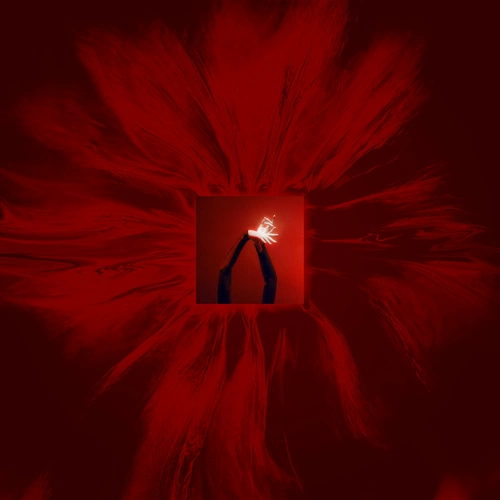
HangupsMusic.com – San Francisco, the intersection of classical tradition and electronic innovation has long been a space fraught with both immense potential and significant creative pitfalls. For decades, artists have attempted to bridge the gap between the rigid, storied structures of the symphony orchestra and the fluid, often chaotic textures of synthesized sound. While the history of music is littered with high-profile collaborations—ranging from Daft Punk’s cinematic triumph with the Tron: Legacy score to the populist, stadium-filling nostalgia of "Classical Ibiza" performances—the results have frequently felt more like novelty acts than cohesive artistic statements. Often, the electronic elements serve as a mere rhythmic metronome for the strings, or the orchestra acts as a glorified pad for the producer’s synthesizers. However, the release of Mere Mortals by Floating Points, recorded in collaboration with the San Francisco Ballet Orchestra, marks a sophisticated entry into this canon, attempting to move beyond the gimmick and toward a genuine hybridity.
Sam Shepherd, the polymath behind the Floating Points moniker, is perhaps uniquely qualified for such an ambitious undertaking. With a background that spans a PhD in neuroscience and a discography that ranges from the fractured dance-floor anthems of Elaenia to the profound, meditative jazz of Promises—his 2021 collaboration with the late Pharoah Sanders and the London Symphony Orchestra—Shepherd has spent his career dismantling the boundaries between high art and club culture. In Mere Mortals, Shepherd is not merely seeking to add "class" to his electronic compositions; he is attempting to find a shared language between the organic breath of woodwinds and the cold, precise oscillations of his modular setup. The project was originally conceived as a score for a contemporary ballet choreographed by Aszure Barton, premiering at the San Francisco Ballet’s 2024 season. As a standalone recording, it offers a fascinating, if occasionally fragmented, window into Shepherd’s evolving philosophy on sound.
The album’s strength lies in its refusal to play it safe. Where many orchestral-electronic crossovers lean into lush, cinematic tropes, Mere Mortals frequently leans into tension and dissonance. This is most evident in "Movement 3 – Rage of the Gods," a standout track that serves as the record’s visceral heart. Here, Shepherd invokes the spirit of Igor Stravinsky’s The Rite of Spring, utilizing the orchestra not for melody, but for percussive impact and jagged, rhythmic violence. The movement is underpinned by a furious electronic pulse that recalls the minimalist techno of Plastikman’s "Spastik," creating a sonic environment where the distinction between a live drummer and a programmed machine becomes blurred. The orchestral drones are edgy and uncomfortable, scraping against the ears in a way that feels ancient and futuristic simultaneously. It is in these moments of friction that the "classical/electronic hybrid" finally finds its raison d’être; the music does not just exist in two worlds, it creates a third, more volatile one.
As the record progresses, the listener is treated to a masterclass in timbral blending. In "Movement 6 – Pandora’s Theme," Shepherd demonstrates a delicate touch in how he introduces synthetic elements into a classical framework. The piece begins with soaring, emotive strings and the light, fluttering textures of woodwinds, evoking a sense of mythic wonder. However, as the movement reaches its climax, a gnarled, distorted synth arpeggio begins to emerge from the orchestral floor. Rather than clashing with the instruments, the synthesizer seems to grow out of them, like a digital vine wrapping itself around an oak tree. This interplay highlights the "sympathetic partnership" mentioned by critics, where the two mediums play off each other’s inherent strengths. The electronics provide a grit and a low-end frequency that an orchestra cannot reach, while the San Francisco Ballet Orchestra provides a human unpredictability and a breath-driven phrasing that machines cannot replicate.
The technical proficiency of the San Francisco Ballet Orchestra is on full display throughout the recording, particularly during the more rhythmically demanding sections. In "Movement 8 – Falling to Earth," the percussion section takes center stage, engaging in a heart-racing dialogue with Shepherd’s synth crackle. The use of the kettledrum here is masterful, providing a grounded, booming gravity to the ethereal, high-frequency static of the electronics. The build-up is relentless, creating a sense of physical weight that feels entirely appropriate for a work designed to accompany the kinetic movements of professional dancers. It is a reminder that both the orchestra and the synthesizer are, at their core, tools for manipulating air and emotion, and Shepherd treats them with equal reverence.
However, the transition from a live, multi-sensory ballet performance to a home listening experience is not without its challenges. Mere Mortals was designed to be seen as much as heard, and stripped of the visual narrative provided by Aszure Barton’s choreography, certain passages can feel somewhat transitory. There are moments where the music seems to be waiting for a dancer to leap or a scene to change, leading to a sense that the listener is only getting part of the story. Some critics have described the album as a "side salad" compared to the "full-on banquet" of the live performance, and there is a kernel of truth to this. Without the context of the stage, the pacing can occasionally feel uneven, with shorter movements serving as bridges that lack the independent weight of the more robust compositions.
Yet, even in its quieter moments, Mere Mortals offers significant rewards for the patient listener. "Movement 10 – Her Gift" is a testament to Shepherd’s ability to craft profound beauty out of minimal resources. The track is a masterclass in ambient texture, featuring a "tickling" electronic atmosphere that feels like light reflecting off water. Here, the orchestra recedes into a supportive role, providing a soft, pillowy bed of sound for Shepherd’s delicate melodic explorations. It is a moment of pure grace that provides a necessary counterpoint to the "rage" and "falling" found elsewhere on the album. It suggests that the "mortals" of the title are not just capable of violence and hubris, but also of immense tenderness.
The broader significance of Mere Mortals in the landscape of contemporary music cannot be overstated. We are currently living through a period where the "neo-classical" label is often applied to simplistic piano loops and generic string arrangements intended for "focus" playlists. Floating Points, by contrast, is engaging with the orchestra as a complex, living organism. He is not interested in the easy win; he is interested in the difficult synthesis. By bringing the San Francisco Ballet Orchestra into his world, he is challenging the audience to listen more deeply to the textures of the instruments we think we know.
Ultimately, Mere Mortals stands as a highly successful experiment that proves orchestral and electronic music can be more than just "common bedfellows"—they can be soulmates. While it may not be the definitive, "essential" record that permanently settles the debate on this crossover genre, it is a significant leap forward. It avoids the trap of blindly aping the cadences of either side, instead focusing on a shared exploration of dynamics and texture. For fans of Floating Points, it is a fascinating expansion of his sound palette. For fans of contemporary classical music, it is a bold demonstration of how technology can be used to enhance, rather than replace, the human element of a symphony. As the final notes of the record fade, one is left with the impression of a composer who is just beginning to scratch the surface of what is possible when the machine and the mortal finally find their rhythm.
