
 By Azzam Bilal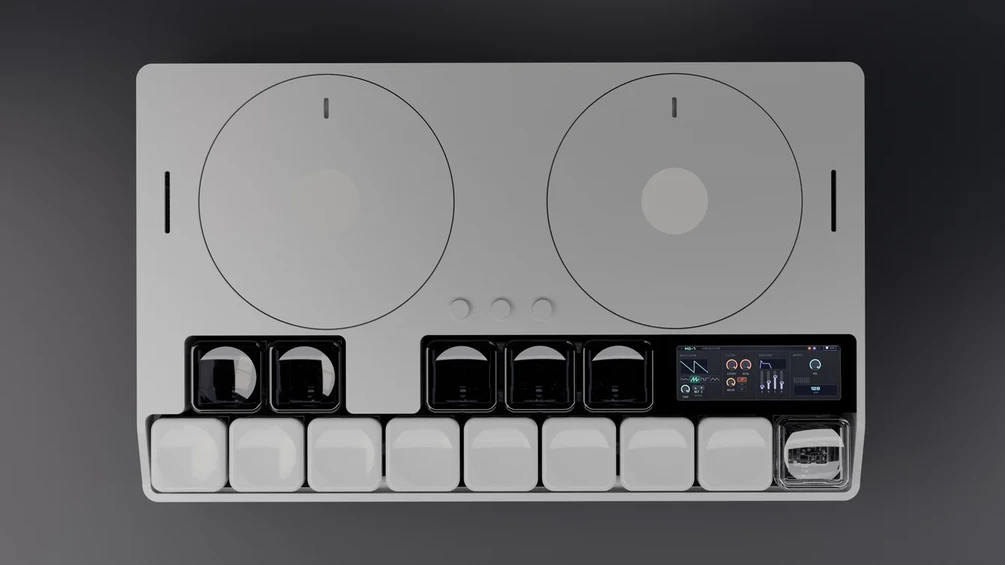
HangupsMusic.com – Hong Kong, the landscape of portable electronic music instruments is witnessing a significant shift toward sensory-focused design with the official unveiling of the MD-7 by Mach Devices. This new hardware startup, headquartered in the burgeoning tech hub of Hong Kong, is attempting to bridge the gap between digital flexibility and the physical intuition of analog gear. The MD-7 is not merely another entry into the crowded "pocket synth" category; it is a specialized tool designed to address one of the most common complaints in modern synthesis: the disconnect caused by screen-heavy workflows. By prioritizing haptic feedback and open-source flexibility, Mach Devices is positioning the MD-7 as a future-forward instrument for producers who value tactile engagement as much as sonic depth.
At the core of the MD-7’s innovation are its dual motorized haptic discs. Unlike standard rotary encoders or potentiometers found on most synthesizers, these discs utilize Field-Oriented Control (FOC) motors. This technology allows the hardware to provide variable physical resistance and active feedback to the user’s fingertips. In practice, this means the device can simulate the "feel" of a specific parameter. If a user is scrolling through a list of oscillators, the discs can provide a notched sensation for each selection. If they are adjusting a filter cutoff, the resistance can change to reflect the resonance or the slope of the curve. This "feel the patch" philosophy aims to liberate the musician from constant screen-gazing, allowing the ears and hands to lead the creative process in a way that feels more organic and less clinical.
The physical interface of the MD-7 is rounded out by a 13-button backlit keyboard. These keys are described as "chunky," suggesting a robust build quality intended for performance rather than just delicate studio tweaking. The compact form factor is clearly designed for mobility, fitting into the lineage of devices like the Teenage Engineering OP-1 or the Korg Volca series, yet it carves out its own niche through its unique mechanical interaction. The backlit nature of the interface ensures that the device remains functional in low-light environments, such as darkened stages or late-night travel sessions, reinforcing its identity as a go-anywhere production tool.
Beyond its physical attributes, the MD-7 is built on a foundation of radical transparency. Mach Devices has committed to an open-source model for the unit’s firmware, which includes the digital signal processing (DSP) engine and the internal sequencer. By hosting the source code on GitHub, the company is inviting a community of developers and DIY enthusiasts to rewrite the instrument’s DNA. This approach effectively makes the MD-7 a "forever" device; if a user desires a different type of synthesis—perhaps moving from subtractive to FM or granular—the community or the individual can develop and share new firmware to facilitate that change. This level of customization ensures that the hardware will not become obsolete as software trends evolve, as the user base itself can drive the device’s functional updates.
The technical specifications of the MD-7 reflect a modern understanding of connectivity and power management. The device features two USB-C ports, a design choice that solves several common headaches for mobile producers. One port is dedicated strictly to power and charging the internal battery, while the second serves as a multi-functional data hub. This second port handles MIDI communication, digital audio output, and even supports USB microphone input, making the MD-7 a potentially self-contained recording and synthesis rig. For traditionalists and those working in mobile environments, a standard 3.5mm headphone jack is included. Additionally, a microSD card slot provides expandable storage, which is essential for saving complex patches, sequencer patterns, and potentially high-fidelity audio samples used within the DSP engine.
The announcement of the MD-7 comes at a time when "screen fatigue" is a prevalent topic among electronic musicians. As software instruments become more powerful, they often become more complex to navigate, requiring deep menu-diving and constant visual confirmation. Mach Devices is betting on the idea that the next generation of creators wants to return to a more physical relationship with sound. The haptic motors in the MD-7 are not just a gimmick; they represent a sophisticated application of industrial robotics technology to the world of music. By providing physical cues for digital actions, Mach Devices is attempting to replicate the muscle memory associated with vintage hardware while maintaining the portability and price point of modern digital gear.
Speaking of pricing, the MD-7 is currently positioned at £303.00. This price point is particularly competitive, landing right between the entry-level "gadget" synths and the high-end professional portable workstations. It suggests that Mach Devices is targeting the "prosumer" market—musicians who are serious about their craft but require tools that are both affordable and innovative. However, potential buyers will need to exercise a degree of patience. The company has announced a release window of September 2026. This long lead time suggests that the MD-7 is currently in the late stages of prototyping or early production, and the company is taking a cautious approach to manufacturing and software refinement to ensure the final product meets the high expectations set by its ambitious feature list.
The role of the community will be pivotal in the MD-7’s success. Open-source hardware often lives or dies by the strength of its user base. If Mach Devices can foster a vibrant ecosystem on GitHub, the MD-7 could become a standard platform for experimental synthesis. We have seen similar trajectories with devices like the Monome Norns or the Organelle, where the manufacturer provides the "brain" and the "body," but the community provides the "soul" through endless software variations. The MD-7 adds a new layer to this concept by providing a "body" that can physically react to the software, a feat that few other open-source projects have attempted at this scale.
Early demonstrations of the MD-7, including clips of the unit integrated with a looper engine, showcase a device that is surprisingly capable for its size. The sequencer appears to be intuitive, and the haptic discs seem to offer a level of precision that standard encoders lack. For live performers, the ability to feel where a filter is set without looking down could be a game-changer, allowing for more engagement with the audience and a more fluid performance style.
As the industry moves toward 2026, the MD-7 stands as a testament to the decentralization of music technology. No longer are the major Japanese or American corporations the sole gatekeepers of innovation. Startups from Hong Kong and other global tech centers are increasingly leading the way in niche, high-concept hardware. Mach Devices is tapping into a global desire for instruments that feel like "instruments" rather than computers in plastic boxes.
In conclusion, the Mach Devices MD-7 represents a sophisticated blend of mechanical engineering and software philosophy. Its use of FOC motors for haptic feedback addresses a fundamental sensory gap in digital synthesis, while its open-source nature ensures a long and varied lifespan. While the 2026 release date is a significant wait for eager synthesists, the promise of a truly tactile, community-driven mini-synth is a compelling narrative in the evolution of electronic music hardware. As development continues, the industry will be watching closely to see if this Hong Kong startup can deliver on its promise to make us "feel" the music in a whole new way.
