
 By admin
HangupsMusic.com – The MTV Video Music Awards, a cultural touchstone often critiqued for its evolving identity, once again proved its enduring relevance and unique entertainment value. Far from fading into obscurity, the 2026 iteration, under the seasoned guidance of veteran producer Van Toffler, captivated a substantial audience, drawing 8.43 million viewers across CBS and MTV. This impressive figure marked the show’s strongest performance since 2015, solidifying its position as a must-watch event in the annual entertainment calendar. From Madonna’s cannabis-infused collaboration with Seth Rogen to poignant tributes to music legends and groundbreaking directorial recognition for Taylor Swift, the broadcast delivered a kaleidoscope of unforgettable moments, punctuated by a few head-scratchers. In the immediate aftermath, Rolling Stone connected with Toffler for an exclusive deep dive, unraveling the intricate planning and unexpected turns that shaped this year’s monumental event.
One of the night’s earliest and most widespread points of confusion stemmed from the delayed start of the VMAs on MTV, a direct consequence of a football game overrun on CBS. Toffler acknowledged the widespread bewilderment, particularly among MTV’s dedicated viewership, who traditionally tune in directly for the music spectacle. "There was definitely a plan in place," Toffler clarified, explaining that while a football game running over is a common occurrence for CBS audiences, it was an unfamiliar disruption for MTV viewers. He revealed that the show did, in fact, commence punctually, but the live feed to MTV was held back for approximately 20 minutes due to the extended game. The crucial misstep, Toffler admitted, was the absence of a clear on-screen message informing viewers that the VMAs would begin live immediately following the game’s conclusion. This omission, leading to a moment of "terror" in the production truck as images of Madonna’s performance began circulating on social media before the official MTV broadcast, served as a valuable "lesson learned" for future multi-platform events.
The digital landscape presented another unforeseen challenge: a proliferation of fabricated red-carpet images featuring celebrities who were not actually present. Toffler expressed surprise at this specific issue, highlighting the broader difficulties in maintaining control over content in the age of instant sharing. He noted the growing trend of inviting social media creators directly into the venue, as well as performers bringing their own dedicated social media teams to capture and disseminate behind-the-scenes footage. This democratization of content creation, while enhancing engagement, simultaneously makes it "hard to keep things under wraps and keep any secrets any longer," contributing to the rapid spread of both authentic and inauthentic information.

Behind every major awards show lie countless hours of outreach and negotiation, and the 2026 VMAs were no exception. Rumors had circulated about potential appearances from musical powerhouses Miley Cyrus and Rosalía. Toffler confirmed that both artists were indeed approached for "potential moments" during the broadcast. However, scheduling conflicts ultimately prevented their participation; Rosalía was reportedly touring in South America, and Cyrus had prior commitments. Despite these near-misses, the show secured a powerful performance from Kacey Musgraves, who delivered a "pretty brave moment" with her rendition of Dolly Parton’s iconic "I Will Always Love You." Toffler detailed the collaborative effort, leveraging archival footage from a previous Dolly Parton TV special to showcase the legend’s vibrant personality, seamlessly transitioning into Musgraves’ heartfelt tribute. He credited Musgraves with the inspired idea to conclude her performance with a brief, impactful clip of Dolly, underscoring the brilliance that musicians bring to the creative process.
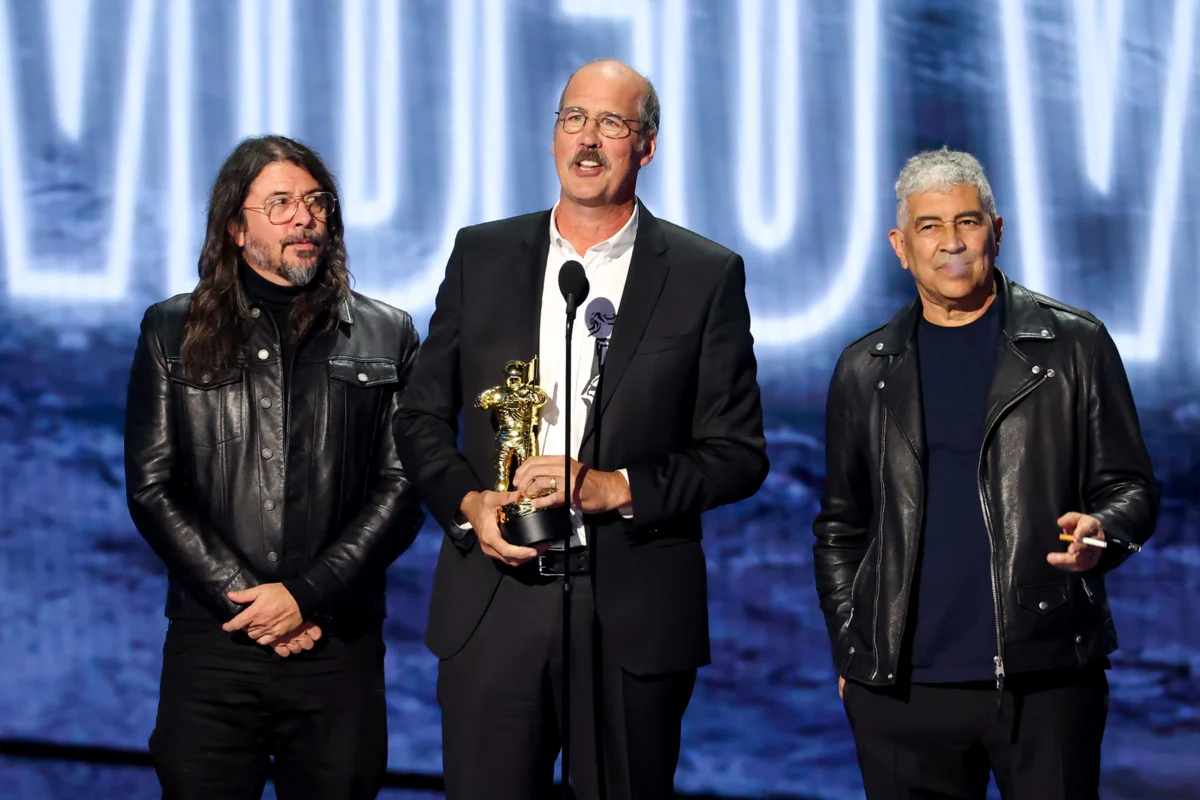
The decision regarding a Nirvana tribute was a particularly sensitive one, given the band’s iconic status and the lasting impact of Kurt Cobain. While the band has performed with guest vocalists in recent years, Toffler and his team consciously opted against a live musical tribute. "It’s like if you go see Paul and Ringo perform. It’s not the Beatles; it’s Paul and Ringo. Nirvana’s not Nirvana without Kurt," Toffler articulated, emphasizing the irreplaceable presence of Cobain. Instead, the focus was placed on honoring Nirvana’s profound influence on music video and culture, with Chuck D — an artist much admired by the band members — presenting the prestigious Vanguard Award. This approach, Toffler explained, aimed to celebrate their legacy authentically rather than attempting to "assemble somebody who sounded like Nirvana." Crucially, the tribute was undertaken with the full blessing and participation of Kurt Cobain’s family, including Frances Bean Cobain and Courtney Love, who approved every aspect, from the archival footage to the choice of presenter, though they were not present live.
Madonna’s explosive opening number, marking the release of Confessions II, was a testament to her enduring ability to push boundaries and collaborate creatively. Toffler praised her unique individuality and her knack for challenging production teams. The performance was a "wonderfully collaborative" effort, blending ideas from the production team, such as transforming the MTV logo into her own and conceptualizing the iconic bathroom stalls, with Madonna’s distinct artistic vision. A highlight of the opener was the unexpected array of cameos, all personally selected by Madonna herself. This roster included Sombr, Debi Mazar, Seth Rogen, Andrew Watt, and Fab 5 Freddy, among others, many of whom are figures from her storied past. The appearance of Seth Rogen, a late addition to the lineup known for his advocacy for cannabis, led to an unplanned on-stage smoking incident. Toffler, while admitting to being "far away from the stage" in the truck, offered a playfully evasive "neither confirm nor deny" when pressed on the authenticity of the "weed-toking" moment, noting with amusement, "everyone decided to smoke on TV last night."
Taylor Swift’s recognition with the Artist Director Honors was a significant moment, highlighting her growing prowess behind the camera. Toffler revealed that the idea for this special award originated internally within the production team. After reviewing Swift’s expansive body of work and her remarkable evolution across genres and roles, the team collectively recognized her exceptional contributions to visual storytelling. "She’s an artist who has thrived in front of the camera and behind the camera, in all genres of music," Toffler stated, recalling Swift’s early days on CMT and her journey to becoming a "true visionary." The decision was made to honor her directorial achievements, a move that clearly resonated deeply with Swift, who acknowledged the award as particularly meaningful. Her acceptance speech, delivered with palpable gratitude, underscored her commitment to this aspect of her artistry. The night was further cemented as a triumph for Swift when her visually spectacular short film, "The Fate of Ophelia," deservedly clinched the coveted Video of the Year award, a testament to her continuous push for creative excellence in both music and its accompanying visuals.

The George Michael tribute emerged as a deeply moving and musically rich segment. Featuring a diverse lineup of contemporary artists including Sombr, Raye, Teddy Swims, and Adam Lambert, the performance paid homage to the legendary artist. Toffler fondly recalled details like Sombr wearing one of George Michael’s actual jackets, a subtle yet powerful nod to his legacy. The tribute underscored a fascinating shift in music consumption patterns, where "streaming has eradicated generations," allowing a seamless blend of classic and current artists. Toffler reminisced about George Michael’s seminal role in MTV’s early history, recalling the controversies surrounding videos like "I Want Your Sex" and "Justify My Love," which challenged censors and redefined music video aesthetics. He contrasted this with the present, where a diverse audience can appreciate both Nirvana and Måneskin, or George Michael and Lisa, Raye, and Sienna Spiro. This generational fluidity, Toffler mused, was "a fortuitous part of the show: We could book old and young."
Among the evening’s riskier, yet ultimately rewarding, choices was the "frenetic" performance by Yung Lean. Toffler confessed that the team was captivated by a particular video from Yung Lean and, against conventional wisdom, decided to "take that swing" by attempting to recreate its unique energy on the VMA stage. This involved bringing in an international team from London and a host of young performers, creating three minutes of controlled "mayhem." While many mainstream viewers might have been left wondering, "What the hell is on the stage at the VMAs?", Toffler knew that for a certain demographic, particularly teens, Yung Lean’s work was already a phenomenon. A humorous anecdote from the performance involved a last-minute censorship decision: Yung Lean, known for smoking in his videos, was given an ice cream cone to shove into the camera instead of a cigarette. The irony was not lost on the production team when, moments later, Pat Smear subtly lit a cigarette on stage, highlighting the unpredictable nature of live television.
As the curtain fell on the 2026 VMAs, a new record was reportedly set, with Taylor Swift potentially holding the most VMAs in history. Toffler also anticipated significant "bumps in streaming consumption" for newer artists like Sienna, Madonna, and Raye, a tangible measure of the show’s impact. Looking ahead, Toffler expressed uncertainty about the long-term future of the VMAs themselves. "Hell if I know," he quipped, contrasting it with a time when he might have confidently predicted "a thousand of them." Despite this ambiguity, his passion for producing live television with musicians remained unwavering. "It’s so different from movies and scripted TV," he explained, highlighting the unique collaborative spirit with artists who are "individualistic and talented, and they do what they want to do." Providing them with cutting-edge technology and a grand stage, and then simply "letting them go," is a source of immense enjoyment for Toffler. He concluded with a heartfelt hope that this "art form sticks around," ensuring that the unique magic of live music television continues to inspire and entertain for years to come.
