
 By Azzam Bilal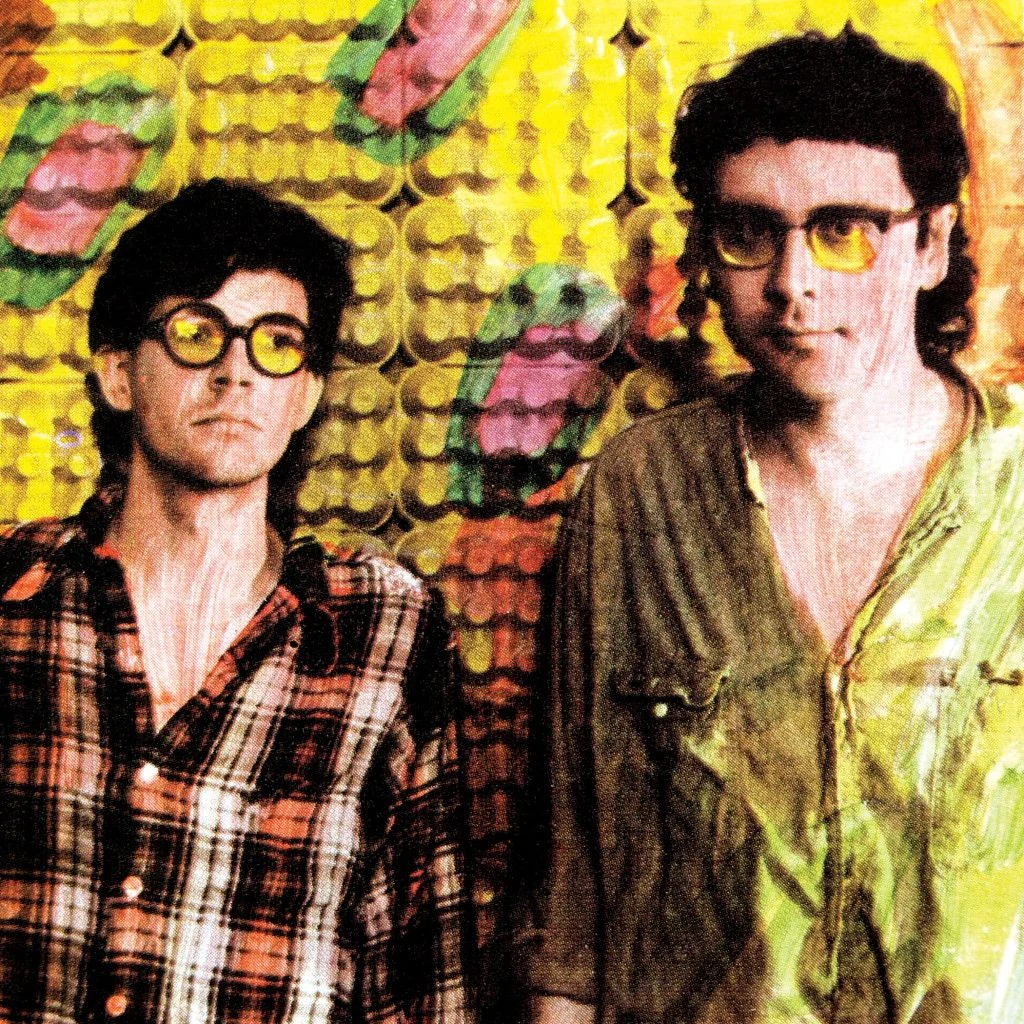
HangupsMusic.com – The underground music community is mourning the loss of David Fair, a seminal figure in the world of outsider art and a co-founder of the legendary avant-garde punk outfit Half Japanese. David, who established the band alongside his brother Jad Fair in the mid-1970s, passed away on August 30 at the age of 74. The news was confirmed by Jad Fair, who shared a poignant, uncaptioned photograph of the siblings on social media, later clarifying to the press that David’s death followed a battle with cancer. His departure marks the end of an era for a specific brand of American indie-rock that prioritized raw enthusiasm and creative liberation over technical perfection.
The story of Half Japanese is often cited as the ultimate blueprint for DIY (do-it-yourself) music. Emerging in 1974, the duo’s origins were as nebulous as their sonic output, with their early days split between Michigan and Maryland. In their formative years, the Fair brothers existed in a creative vacuum, producing music primarily for their own amusement within the confines of their bedrooms. They were not classically trained musicians; rather, they were enthusiasts of sound, treating instruments as toys to be explored rather than tools to be mastered. This lack of formal restraint allowed them to capture a sense of pure, unadulterated joy that few of their contemporaries could replicate.
As they moved from private recordings to homemade cassettes, their audience began to grow through the burgeoning underground tape-trading networks of the 1970s. Their reputation eventually reached the ears of the British independent label Armageddon, leading to a series of singles that paved the way for their monumental 1980 debut, 1/2 Gentlemen/Not Beasts. This release was an audacious statement: a triple-LP box set that defied every convention of the era. It was a sprawling collection of deconstructed cover songs, frantic punk outbursts, and minimalist noise experiments. At a time when the music industry was leaning into high-gloss production and stadium rock, Half Japanese offered a chaotic, lo-fi alternative that felt dangerous, funny, and entirely human.
David Fair’s contribution to the band’s legacy extended far beyond his performances on record. He was the author of a legendary mini-manifesto titled "How to Play Guitar," a document that would become a sacred text for generations of punk purists and bedroom musicians. In this writing, David famously railed against the "orthodoxy" of musical education. He argued that the traditional obsession with learning chords and scales served only to limit a player’s imagination. "If you ignore the chords, your options are infinite," he famously wrote, suggesting that one could master the instrument in a single day simply by deciding to play it. This philosophy—that the desire to create was the only prerequisite for being an artist—became the cornerstone of the Half Japanese ethos.
This radical approach to creativity was mirrored in the band’s eclectic discography. Under the guidance of the Fair brothers, Half Japanese songs swung wildly between sweet, earnest odes to love and bizarre, fantastical narratives about monsters and supernatural entities. They frequently engaged in intertextual play, writing songs about more mainstream artists or historical figures, often blending these themes with free-form noise blowouts. By the mid-1980s, the band’s sound began to shift slightly. On their 1984 album Our Solar System, released via the Iridescence label, there was a noticeable move toward more structured, albeit still unconventional, songwriting.
During this period, the band’s orbit expanded to include a rotating cast of contributors, such as Ricky and John Dreyfuss. While Jad remained the constant center of the project, David began to step back from the core lineup during the 1980s to pursue other interests. Despite this retreat, the Fair brothers remained iconic figures in the global underground. Their influence was perhaps most famously championed by Kurt Cobain of Nirvana. Cobain, who frequently wore Half Japanese t-shirts and cited them as a primary influence, invited the band to open for Nirvana during the In Utero tour in 1993. This high-profile endorsement introduced the Fair brothers’ "no-rules" philosophy to a mainstream audience that was, at the time, increasingly hungry for authenticity.
The mythology of the band was further solidified in 1989 with the release of the documentary Half Japanese: The Band That Would Be King, directed by Jeff Feuerzeig. The film captured the eccentricities and the genuine bond between the brothers, portraying them not as "failed" musicians who couldn’t play, but as visionary artists who chose a different path. It helped cement their status as the kings of a certain kind of "outsider" music, placing them in the same pantheon as artists like Daniel Johnston or the Shaggs, though with a much more deliberate sense of punk-rock defiance.
As the 1990s and early 2000s progressed, Half Japanese continued to release music, including two albums on the Alternative Tentacles label: 1997’s Bone Head and 2001’s Hello. While David was not a primary participant in these specific recordings, his influence remained embedded in the band’s DNA. Following a period of relative quiet, the group saw a significant resurgence in 2012 when Jeff Mangum of Neutral Milk Hotel invited them to reunite for the All Tomorrow’s Parties festival. This sparked a full-scale return for the Fair brothers. In 2014, they released Overjoyed, an album produced by John Dieterich of Deerhoof, which was hailed as a triumphant return to form. This late-career renaissance was accompanied by a series of high-quality reissues of their back catalog through Fire Records, ensuring that their early, rare recordings were preserved for new generations of listeners.
In his final decade, David Fair remained creatively active, primarily through solo projects and collaborative efforts released via the Thick Syrup label. These later works continued to reflect his lifelong commitment to spontaneous creation and artistic honesty. Travis McElroy, the founder of Thick Syrup, paid tribute to David on social media, describing him as a "one-of-a-kind human being" who taught others that music did not have to follow a prescribed set of rules. McElroy noted that David’s life was a testament to the idea that one could create art simply because they felt a fundamental need to do so.
David Fair’s legacy is not found in chart positions or technical virtuosity, but in the liberation of the amateur. He helped dismantle the gatekeeping barriers of the music industry, proving that a guitar was not a weapon of exclusion, but a tool for universal expression. By refusing to learn the "right" way to play, he discovered a thousand new ways to communicate. His work with Half Japanese remains a vital reminder that in the world of art, enthusiasm is often more important than expertise, and that the most profound sounds are often those made by people who simply refuse to be told what they cannot do. David Fair leaves behind a body of work that is as challenging as it is charming, and a philosophical impact that will continue to resonate wherever a teenager picks up a guitar and decides to make a noise of their own.
