
 By Azzam Bilal
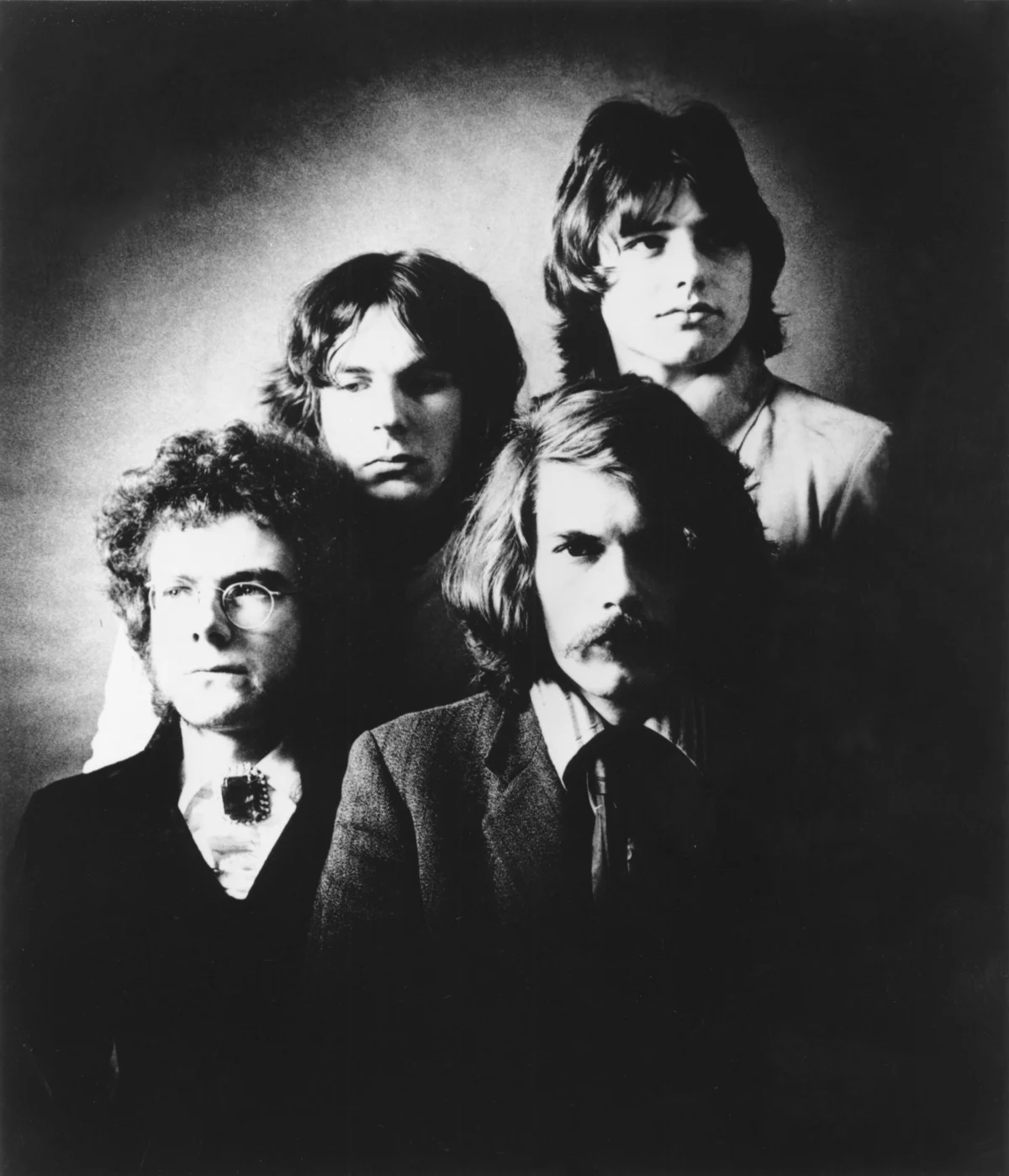
HangupsMusic.com – The landscape of progressive rock has lost one of its most foundational and inventive figures. Michael Giles, the virtuoso drummer whose polyrhythmic mastery helped launch King Crimson into the stratosphere of music history, has died at the age of 84. His passing was confirmed by Discipline Global Mobile (DGM), the long-standing record label and archival home of King Crimson, in a poignant tribute shared on Monday. While the label did not disclose a specific cause of death, the news has prompted a global outpouring of reflection on a career that redefined the possibilities of the drum kit in a rock context.
Giles was not merely a timekeeper; he was a sonic architect. Alongside guitarist Robert Fripp, he provided the essential DNA for what would become one of the most influential bands in the history of avant-garde and progressive music. From the whimsical, eccentric pop of the late 1960s to the crushing, jazz-inflected intensity of the early 1970s, Giles’s career was defined by a restless search for new textures and a refusal to adhere to the standard backbeat of his era.
Born in 1942, Michael Giles’s journey into the professional music world began in earnest alongside his brother, bassist Peter Giles. The siblings were a formidable rhythm section, honing their craft in various Bournemouth-based outfits before moving to London. It was there, in 1967, that they formed the trio Giles, Giles, and Fripp with a young, disciplined guitarist named Robert Fripp. The group’s output was a peculiar blend of psychedelic pop, music hall humor, and complex arrangements. Their sole album, 1968’s The Cheerful Insanity of Giles, Giles and Fripp, remains a cult curiosity, showcasing a band caught between the lingering innocence of the mid-60s and the brewing complexity of the decade’s end.
While Peter Giles eventually stepped away from the professional music grind to pursue a career as a solicitor’s clerk, Michael and Fripp remained convinced that a more potent musical statement was within reach. In early 1969, they recruited multi-instrumentalist Ian McDonald and bassist/vocalist Greg Lake, effectively forming the first iteration of King Crimson. The impact was immediate. This was a band that possessed the volume of heavy rock but the precision of a chamber orchestra and the improvisational spirit of a jazz quartet.
The group’s ascent was meteoric. Within months of their formation, they had secured a prestigious slot opening for the Rolling Stones at their massive Hyde Park free concert in July 1969. Playing before hundreds of thousands of people, King Crimson—and Giles’s explosive drumming—left an indelible mark on the London scene. Even Jimi Hendrix was reportedly moved by their performance, famously declaring them "the best band in the world" at the time.
However, it was the release of their debut album, In the Court of the Crimson King, in October 1969 that forever altered the trajectory of rock music. The album’s opening track, "21st Century Schizoid Band," featured Giles delivering a performance of staggering complexity. His ability to navigate the song’s jagged, unison riffs with pinpoint accuracy, while maintaining a sense of swing and organic flow, became a blueprint for generations of progressive metal and fusion drummers. On more ethereal tracks like "I Talk to the Wind" and the title epic, Giles demonstrated a different facet of his talent: a delicate, orchestral sensibility. He treated his cymbals like tuned percussion and his fills like melodic phrases, creating a sense of space and atmosphere that was rarely heard in the heavy-handed rock of the period.
Despite the monumental success of the debut, the internal pressures of a grueling United States tour in late 1969 took their toll. Giles and Ian McDonald, finding the lifestyle of a touring rock band increasingly incompatible with their personal well-being and musical aspirations, made the difficult decision to leave the group at the height of its initial fame. Their departure signaled the end of the original lineup, though Giles’s connection to the band’s orbit remained.
In 1970, he returned as a session contributor for King Crimson’s second outing, In the Wake of Poseidon. His drumming on tracks like "Cat Food" displayed a playful, jazz-fusion edge that highlighted his versatility. That same year, he and McDonald released their own collaborative effort, McDonald and Giles. The album is often cited by aficionados as a "lost" progressive masterpiece, leaning into pastoral beauty, intricate vocal harmonies, and extended instrumental passages that allowed Giles to explore a more lyrical side of his percussion style.
As the 1970s progressed, Giles transitioned into a highly sought-after session musician. His reputation for "musical sensitivity," as noted by DGM, made him a favorite for artists who required more than just a steady pulse. His credits during this era were remarkably diverse, spanning the sophisticated pop of Bryan Ferry and Neil Sedaka to the soulful rock of Steve Winwood and the disco-adjacent sounds of Yvonne Elliman. This period showcased Giles’s professional adaptability; he could be a powerhouse when required, but he was equally adept at providing the subtle, tasteful embellishments that elevated a radio-friendly pop song.
Giles’s solo output was sparse but deeply personal. He recorded a solo album titled Progress in 1978, a work that delved into his interest in atmospheric arrangements and jazz-rock fusion. However, the album remained unreleased for decades, finally seeing the light of day in 2002. In 1995, he collaborated with fellow percussionist Jamie Muir and David Cunningham on Ghost Dance, a soundtrack for a Ken McMullen film that further emphasized his interest in avant-garde soundscapes and experimental rhythms.
In the early 2000s, Giles enjoyed a creative homecoming of sorts when he co-founded the 21st Century Schizoid Band. Comprised primarily of King Crimson alumni—including his brother Peter, Ian McDonald, and Mel Collins—the group focused on performing the material from the band’s first four albums. For fans, it was a rare opportunity to see Giles perform the classic 1969 repertoire with the same fire and finesse he had possessed decades earlier. The project served as a living testament to the enduring power of that early music and Giles’s central role in its creation.
Reflecting on his legacy, DGM’s official statement emphasized that Giles was "instrumental in establishing King Crimson as one of the most innovative and influential bands in the history of progressive music." The label further praised his "extraordinary rhythmic imagination" and his "highly inventive approach to drumming," noting that these qualities were "fundamental to the band’s pioneering sound."
For students of the instrument, Michael Giles remains a towering figure. Unlike many of his contemporaries who relied on sheer volume or massive drum kits, Giles often worked with a relatively modest setup, proving that tonal variety and rhythmic complexity were a matter of touch and imagination rather than equipment. His use of the snare drum, characterized by a crisp, snapping tone, and his inventive use of tom-tom rolls that seemed to tumble across the measures, influenced everyone from Bill Bruford to modern prog-metal technicians.
The death of Michael Giles marks the closing of a chapter for the 1960s British avant-garde. He was a man who helped bridge the gap between the structured world of classical and jazz and the burgeoning, rebellious world of rock and roll. Through his work, he proved that a drummer could be a poet, a mathematician, and a visionary all at once. While King Crimson would go on to evolve through dozens of lineups and stylistic shifts under Robert Fripp’s leadership, the "rhythmic imagination" of Michael Giles remained the bedrock upon which the entire edifice was built. His recordings remain as a permanent record of a musician who never stopped listening for the sound that lay just beyond the conventional.
