
 By Azzam Bilal
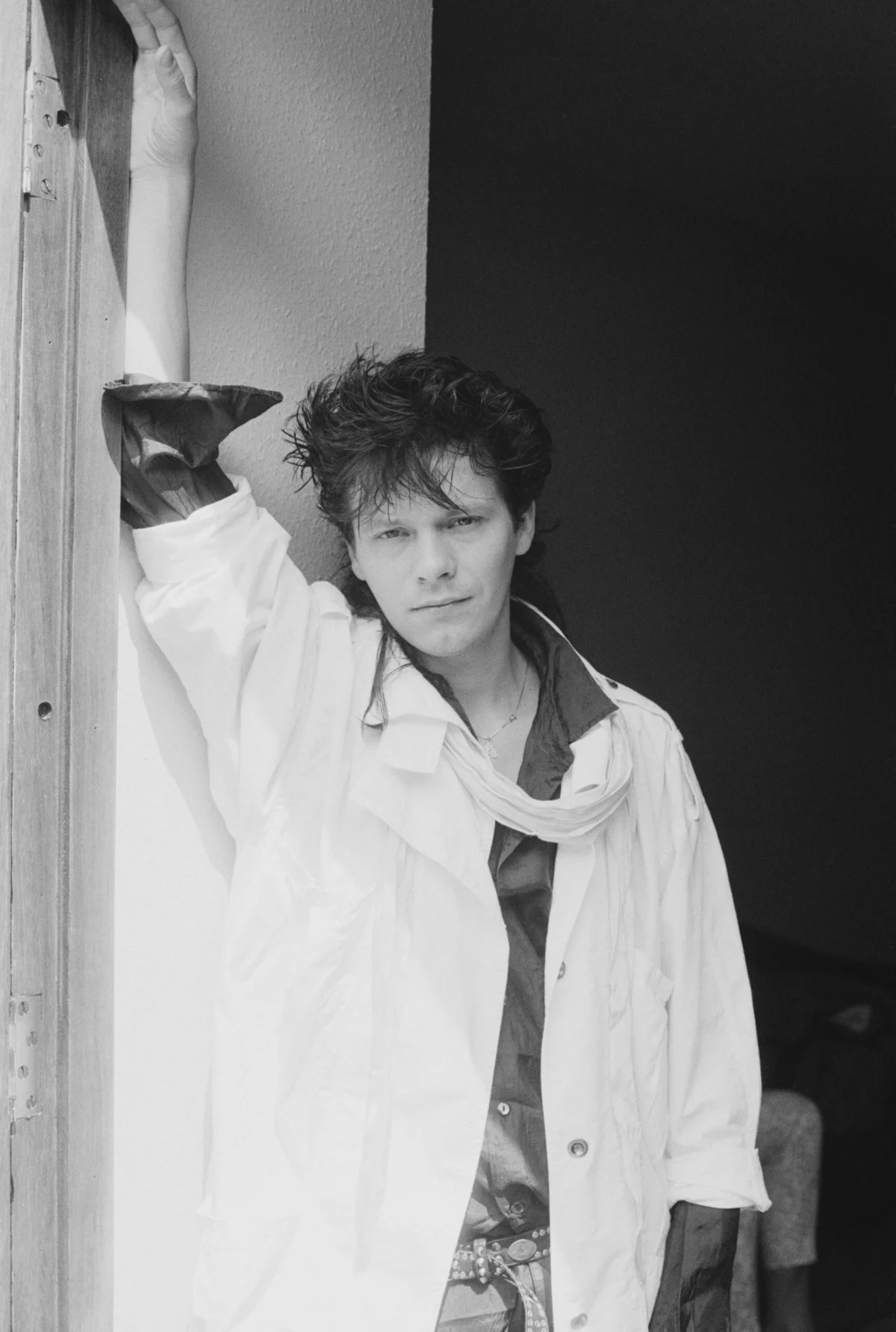
HangupsMusic.com – London, The landscape of contemporary pop and rock music is today mourning the loss of a true sonic architect. Andy Taylor, the virtuoso guitarist whose aggressive, funk-infused riffs propelled Duran Duran from the club circuits of Birmingham to the heights of global superstardom, has passed away at the age of 65. The news was confirmed in a poignant joint statement released by his bandmates and his wife, Tracey, noting that Taylor died peacefully at home following a courageous and protracted battle with stage 4 metastatic prostate cancer. His passing marks the end of an era for the "Fab Five," the quintet that defined the aesthetic and auditory spirit of the 1980s, and leaves a void in the hearts of millions of fans who were captivated by his "indelible fire and swagger."
Born in Cullercoats, Tyne and Wear, in 1961, Taylor’s journey into the pantheon of rock history began with a singular sense of ambition. While the burgeoning New Romantic scene in London was preoccupied with synthesizers and fashion, Taylor brought a grittier, North East sensibility to the table. In 1980, he responded to an advertisement in Melody Maker seeking a "live-wire guitarist." That search led him to the Rum Runner, a legendary nightclub in Birmingham that served as the laboratory for a new kind of musical alchemy. It was there that he met keyboardist Nick Rhodes, bassist John Taylor, and drummer Roger Taylor. In a moment of cosmic coincidence that the guitarist would later chuckle over in his 2008 autobiography, Wild Boy, the three rhythm section members realized they all shared the same surname, despite having no familial relation. With the subsequent addition of vocalist Simon Le Bon, the definitive Duran Duran lineup was forged, and the music world would never be the same.
Taylor was far more than just a session player in the band; he was a primary songwriter whose contributions provided the necessary friction to the band’s polished pop exterior. While Nick Rhodes handled the atmospheric electronics and John Taylor provided the disco-influenced basslines, Andy Taylor injected a raw, rock-and-roll energy that prevented the band from being pigeonholed as mere "synth-pop." His work on "Girls on Film" and the band’s debut single "Planet Earth" demonstrated a sophisticated understanding of how to blend post-punk aggression with danceable grooves. When the band signed to EMI Records in late 1980, they were poised for a meteoric rise, but few could have predicted the scale of the "Duran-mania" that was about to unfold.
As the 1980s progressed, Duran Duran became the face of the "Second British Invasion," a cultural movement heavily fueled by the advent of MTV. Andy Taylor’s guitar work on seminal tracks like "Hungry Like the Wolf" and "Rio" became the soundtrack for a generation. His riffs were catchy yet complex, echoing the influence of his heroes in Chic and Roxy Music while maintaining a modern, high-tech edge. The music videos for these tracks, often filmed in exotic locales like Sri Lanka and Antigua, cast the band as cinematic icons. Yet, beneath the glossy surface of the videos, Taylor remained a "no-nonsense" musician. His bandmates often recalled his dry wit and his ability to keep the group grounded amidst the dizzying heights of fame. He was the anchor that ensured the music remained the priority, even as they played to sold-out stadiums and graced the covers of every major magazine in the world.
However, the pressures of constant touring and the divergent creative interests of the band members eventually began to take a toll. By 1984, following the release of the massive Seven and the Ragged Tiger album and the subsequent global tour, a rift had formed. While some members wanted to lean further into electronic experimentation, Andy Taylor yearned for a heavier, more guitar-centric sound. This creative tension led to the formation of The Power Station, a supergroup that saw Andy and John Taylor team up with legendary drummer Tony Thompson of Chic and the soulful powerhouse Robert Palmer. The project was a massive success, yielding hits like "Some Like It Hot" and a high-octane cover of T. Rex’s "Get It On (Bang a Gong)." For Andy, it was a chance to flex his muscles as a hard-rock guitarist and producer, working alongside luminaries like Bernard Edwards.
The mid-80s were a period of flux for Taylor. Although Duran Duran famously reunited for a high-profile performance at Live Aid in 1985—an event that remains one of the most-watched musical moments in history—it served as a temporary truce rather than a permanent reconciliation. In 1986, Taylor officially departed the group to pursue a solo career. His debut solo effort, Thunder (1987), showcased his love for arena rock, while 1990’s Dangerous further cemented his reputation as a formidable solo artist and producer. During this period, his influence extended beyond his own recordings; he became a sought-after collaborator, contributing his talents to projects for artists ranging from Rod Stewart to Belinda Carlisle.
The story of Andy Taylor and Duran Duran, however, was far from over. The magnetic pull of their shared history brought the original lineup back together in the early 2000s. This "Fab Five" reunion was greeted with immense fanfare, leading to a series of sold-out arena tours and the 2004 album Astronaut. For a few years, it seemed as though the old magic had been recaptured. Yet, the same internal pressures and creative disagreements that had fractured the band in the 80s resurfaced. In 2006, midway through the recording of a new album, Taylor left the group for the second and final time. In his memoir, he reflected on this period with a characteristic lack of sentimentality, noting that while the drug-fueled chaos of the early years was gone, the "internal disagreements" remained a hurdle they could not overcome. He wrote candidly about how history seemed to repeat itself, a testament to the complex chemistry that exists within any great artistic collective.
In the years following his final departure from the band, Taylor remained active in the industry, though he stepped back from the relentless pace of the limelight. He continued to write and produce, and in 2019, he surprised fans with the release of the single "Love or Liberation." However, behind the scenes, he was facing his greatest challenge. In 2018, Taylor was diagnosed with stage 4 metastatic prostate cancer. He kept the diagnosis private for several years, choosing to focus on his health and his family.
The world only became aware of his condition in November 2022, during Duran Duran’s induction into the Rock & Roll Hall of Fame. It was a moment that should have seen all five original members on stage together for the first time in nearly two decades. When Andy was conspicuously absent, Simon Le Bon took to the podium to read a letter from his "brother." In the letter, Taylor revealed his diagnosis, explaining that while his condition was not immediately life-threatening, there was no cure. He expressed his profound pride in the band’s achievements and his joy at being recognized by the Hall of Fame, stating, "I’m sure as hell glad I’m around to see the day." The announcement cast a somber shadow over the celebration, but it also sparked a massive wave of support from the global music community.
In the months following the induction, Taylor remained defiant and productive. He spoke openly about his treatment, including his experiences with innovative therapies that he hoped would inspire others facing similar battles. He even collaborated with his former bandmates once again, contributing guitar parts to Duran Duran’s 2023 Halloween-themed album, Danse Macabre. It was a fitting final act—a musical reconciliation that allowed the "indelible fire" of his guitar to burn one last time on a Duran Duran record.
Andy Taylor’s legacy is one of technical brilliance and unyielding authenticity. He was the rock-and-roll heart of a pop revolution, a man who could transition seamlessly from a funky, staccato riff to a soaring, melodic solo. He helped define the sound of a decade, but his influence transcends the 1980s, living on in the countless guitarists who found inspiration in his "swagger" and his "no-nonsense" approach to the craft. As the music community reflects on his life, the words of his bandmates resonate most clearly: he was there at the very beginning, and his contribution to their story was nothing short of essential. He leaves behind his wife, Tracey, their children, and a body of work that will continue to move and inspire listeners for generations to come. The "Wild Boy" has found his peace, but the fire he lit remains unextinguished.
