
 By Azzam Bilal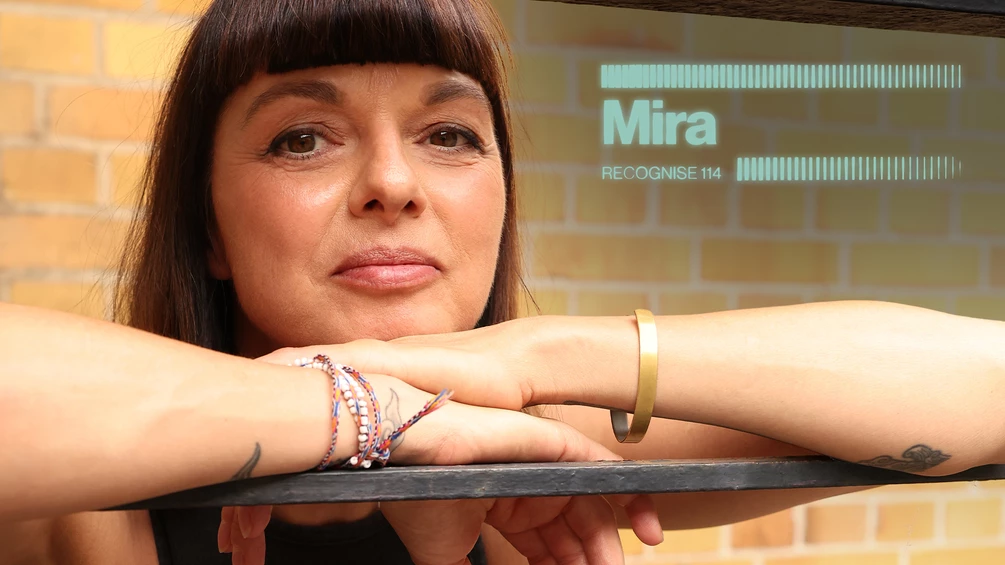
HangupsMusic.com – Berlin, Germany — In a contemporary electronic music landscape often dominated by the "attention economy"—where viral ten-second clips and rapid-fire drops dictate the trajectory of many careers—Mira Mahn remains a steadfast symbol of the slow burn. Known globally by her stage name, Mira, the Berlin-based DJ and producer has spent the last three decades cultivating a reputation for patience, precision, and an uncanny ability to guide dancefloors through sprawling, multi-layered narratives. As she reaches the milestone of 30 years behind the decks, the longtime Kater Blau resident is not merely looking back at her legacy but is actively redefining it, bridging the gap between her roots in the post-Wall German underground and the evolving digital frontier of the future.
Mira’s journey is inextricably linked to the unique historical vacuum of 1990s Germany. Born in the East, she came of age during a period of radical transformation. When the Berlin Wall fell, it didn’t just open borders; it opened a vast playground of abandoned industrial spaces and derelict buildings that became the tabula rasa for a new generation of ravers. Mira recalls this era as one of "crazy freedom," where the lack of formal structure allowed for an "out of control" beauty. It was in these lawless, makeshift venues that she first discovered the transformative power of electronic music.
The process of becoming a selector in those early days required a level of dedication that is hard to fathom in the age of instant digital downloads. Mira spent countless hours in record shops, often facing the scrutiny of "judgy vinyl shop owners" who questioned why a young woman from the East was hunting for obscure decade-old tracks. This tenacity, however, helped her develop a sharp ear and a diverse musical vocabulary. Her early influences were not limited to a single genre; she drew inspiration from the fearless eclecticism of pioneers like Laurent Garnier. Her early sets were a testament to this curiosity, fearlessly blending the raw energy of techno with the rhythmic grit of 2 Live Crew, the synth-pop elegance of Human League, and the disco-inflected grooves of Giorgio Moroder.
By the time she relocated permanently to Berlin in 2006, Mira had already honed the foundational elements of her sound. She found a spiritual and professional home at Bar25, the legendary riverside open-air venue that epitomized the hedonistic, bohemian spirit of Berlin’s mid-2000s club scene. When Bar25 eventually evolved into Kater Blau (often referred to simply as Kater), Mira remained a central figure. For over 15 years, she has served as a resident at the club, using it as a "personal playground" to experiment with the long-form sets that have become her signature.
In Berlin, Mira explains, there is a unique cultural expectation that allows a DJ to be "edgy." Unlike the commercial touring circuit where DJs are often pressured to provide instant gratification to a rotating crowd, the Berlin audience is there to be part of a shared experience. Mira views her relationship with the dancefloor as a collaborative effort, famously stating that she "can’t play alone." Her sets at Kater are legendary for their duration and depth, often lasting between 12 and 15 hours. This timeframe allows her to move beyond the constraints of a standard two-hour club set, providing the space to build tension, explore minimal textures, and eventually reach a melodic crescendo that feels earned rather than forced.
This philosophy of patience extends into her work as a producer and A&R head. At Kiosk I.D., the label arm of the Kater collective, Mira oversees a roster that prioritizes authenticity over "big names." Working pro bono, she focuses her energy on unearthing innovative talents like Argia, Yoram, and MANTi—artists who share her commitment to intentional, narrative-driven music. Her own productions, such as the 2025 collaboration "Laika" with Landikan, mirror this approach. The track, a tribute to the first canine space traveler, uses pulsing synths and warm piano keys to tell a bittersweet story, proving that deep house can be both playful and profoundly emotive.
Mira’s adaptability is perhaps best demonstrated by her relationship with Burning Man. While many in the "punk" and "political" underground bubble of Berlin view the Nevada desert festival with skepticism, Mira has embraced it as a necessary challenge. Since her first "Burn" in 2016, she has become a regular fixture at camps like Distrikt and Tierra Bomba. The harsh environment of Black Rock City—characterized by blinding sandstorms and the constant threat of equipment failure—forced her to adapt her technical setup, eventually leading her to trade her traditional vinyl for a time-coded digital system. She describes the experience as "survival mode," a refreshing contrast to the controlled environments of European nightclubs.
This willingness to embrace change is a recurring theme in Mira’s career. While some veterans of the vinyl era view the rise of AI and digital technology as a threat to the soul of the industry, Mira remains optimistic. She notes that she has heard the "death of vinyl" proclaimed at least five times over the last thirty years, only to see it experience a renaissance with every new generation. To her, new technologies are tools that can "refresh" creativity rather than dilute it. "I’m not so afraid about this new era," she says, likening classic records to "a good old car you would never give away." For Mira, the medium is secondary to the message: if a DJ can facilitate a meaningful musical journey, the specific technology used becomes irrelevant.
To celebrate her three-decade milestone, Mira recently contributed to DJ Mag’s "Recognise" mix series, providing a set that serves as a departure from her usual deep house aesthetic. The mix is a high-octane exploration of her 90s roots, heavily featuring electro, breakbeats, and bass music. Recorded at Kater Blau with the full sound system and lights engaged to capture the club’s energy, the three-hour set features over 50 tracks. It is a dense, fast-moving journey that stays between 130 and 150 BPM, yet it maintains her signature slow-burning intensity. The tracklist is a masterclass in curation, blending 2003 minimal classics like Plastikman’s "Mind in Rewind" with modern sub-heavy bangers from Chris Lorenzo and Kah-Lo. It also highlights her connections within the industry, featuring Adiel’s atmospheric remix of Acid Pauli, a longtime friend and collaborator.
The "Recognise" mix serves a specific purpose for Mira: it is a declaration of her refusal to be pigeonholed. "My idea behind this mix is that you can’t put me in a box," she asserts. This refusal to stagnate is precisely why she has remained relevant for 30 years. Whether she is jamming live with Parisian artist Remcord or hosting her annual "Katzen Tanzen auf’m Tisch" (Cats Dancing on the Table) birthday extravaganza—a 72-hour marathon of music that takes place every November—Mira is constantly evolving.
Looking ahead, Mira shows no signs of slowing down. She is currently finalizing two new EPs, which are expected to be released by early 2027. These projects promise to continue her exploration of "honed style" and patient grooves. As she navigates the fourth decade of her career, Mira remains a vital bridge between the heritage of the Berlin underground and the global future of electronic music. Her longevity is a testament to the idea that in a world of fleeting trends, there is still a profound craving for the long-form story, the deep connection, and the artist who is willing to wait for the perfect moment. For Mira, the journey has always been more important than the destination, and after thirty years, the story is far from over.
