
 By admin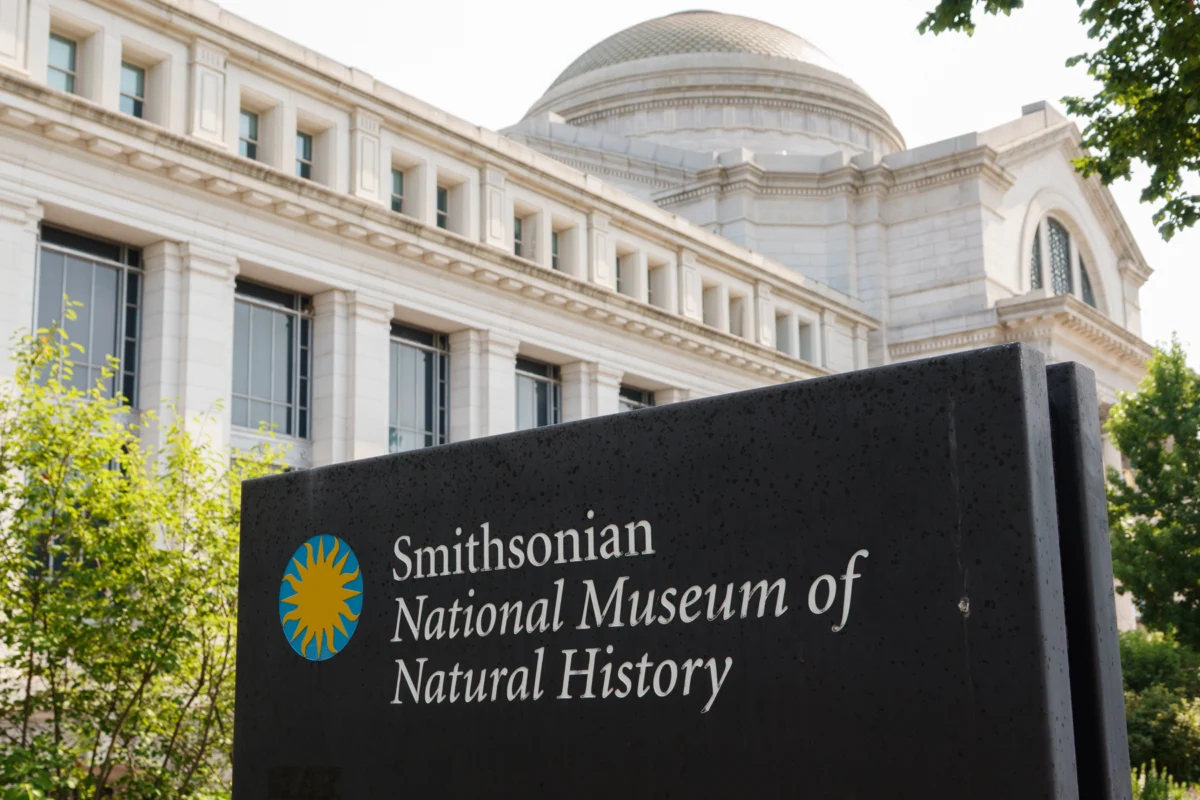
HangupsMusic.com – Washington D.C., the nation’s capital, a city synonymous with monumental history and world-class cultural institutions, is currently grappling with an unprecedented directive that challenges the very essence of historical interpretation. In a move that has ignited debate across academic, cultural, and political spheres, the administration is reportedly allocating $84,000 to erect prominent signage outside the revered Smithsonian National Museum of American History. These planned installations are not commemorative or informational in the traditional sense; rather, they are intended to serve as warnings to visitors, suggesting that the venerable institution has succumbed to what officials term "woke" ideologies and now presents a skewed portrayal of the nation’s past.
This initiative stems directly from the former President’s long-standing ambition to reshape the aesthetic and narrative landscape of Washington D.C., a pursuit now overtly channeled into a contentious ideological campaign. Documents released by the Interior Department, including correspondence from Interior Secretary Doug Burgum, have outlined the administration’s intent. These signs, as detailed in a letter acquired by The Atlantic, are designed to highlight what the administration perceives as "personal viewpoints that the curators of the exhibits are seeking to advance," rather than an objective historical account. This intervention signals a significant escalation in the ongoing "culture war" that has increasingly permeated public discourse and governmental policy.
The foundation for this directive was laid well over a year prior. In March 2025, the President issued a sweeping executive order titled "Restoring Truth and Sanity to American History." This order explicitly targeted what it deemed "improper ideology" within the vast network of Smithsonian properties, setting the stage for direct governmental oversight into curatorial practices. Following up on this, in July of the subsequent year, another executive order was enacted, specifically authorizing the installation of temporary signage aimed at presenting the administration’s preferred historical interpretation directly to museum patrons. These signs are now slated for imminent deployment, transforming the exterior of a national treasure into a billboard for political contention.
At the heart of this dispute is a fundamental disagreement over how the Smithsonian, an institution that has meticulously documented centuries of American experience since its establishment in the 1960s, approaches its mandate. The administration’s core grievance is straightforward: it asserts that the museum has veered too far into what it labels as "woke" territory. The July executive order articulated this concern in no uncertain terms: "Once widely respected as a symbol of American excellence and a global icon of cultural achievement, the Smithsonian Institution has, in recent years, come under the influence of a divisive, race-centered ideology. This shift has promoted narratives that portray American and Western values as inherently harmful and oppressive."
The points of contention are multifaceted, primarily revolving around the Smithsonian’s presentation of the nation’s intricate and often fraught history concerning race and racism. Critics of the museum’s current approach, including the former President and his allies, have consistently argued for a softening or outright re-framing of unflinching depictions of America’s violent and prejudiced past. They contend that such narratives cast the country in an unduly negative light, undermining a more celebratory national story. Beyond racial history, the administration has also taken issue with museum exhibits that acknowledge and explore the experiences of transgender or gender non-conforming Americans, as well as those that delve into the complex and evolving history of sexual and gender politics within the United States. This broad critique extends to any historical interpretation that deviates from a narrowly defined traditionalist perspective.
National museums like the Smithsonian typically operate under a mandate to collect, preserve, and interpret artifacts and stories that reflect the nation’s collective memory and cultural heritage. This mission inherently involves a dynamic process of re-evaluation, as new scholarship emerges and societal understandings evolve. The inclusion of diverse perspectives – those of marginalized communities, indigenous peoples, and various identity groups – has been a hallmark of modern museology, aiming to create a more comprehensive and inclusive historical record. The administration’s intervention, however, suggests a desire to freeze or even reverse these interpretive shifts, advocating for a singular, government-sanctioned version of history.
According to reports in The New York Times, further communications from the Interior Department clarified the specific intent behind the prospective signage. These letters indicated that the signs would "ensure parents bringing young children to the museum are equipped to protect the well-being of their children." The warnings would specifically highlight exhibits that "present ideological viewpoints inconsistent with biology, including ideologies that sex is not binary, that biological men can be women and that biological men should be permitted to compete in women’s sports." This justification links the historical narrative to contemporary debates on gender identity, bringing specific political grievances directly to the museum’s entrance.
The term "woke," once a colloquialism rooted in African American Vernacular English signaling awareness of social injustices, has been weaponized in recent political discourse. For many conservatives, it has become a catch-all pejorative for progressive ideologies, particularly those emphasizing identity politics, systemic racism, and LGBTQ+ rights. By labeling the Smithsonian "woke," the administration aims to delegitimize its curatorial choices and align the institution with what it portrays as divisive and radical viewpoints, thereby appealing to a specific political base. This move reflects a broader trend of challenging academic freedom and institutional autonomy in the name of cultural purity.
The implications of such a directive extend far beyond the museum’s immediate premises. By turning one of Washington D.C.’s most vital cultural and educational institutions – a significant driver of tourism and a global beacon of American heritage – into a battleground for specific culture war grievances, the administration sets a concerning precedent. It risks undermining public trust in historical scholarship, transforming venues of learning and reflection into arenas of partisan contention. The decision to spend $84,000 on these contentious signs, money that could otherwise be allocated to educational programs, conservation efforts, or new exhibits, further highlights the administration’s priorities.
This episode underscores a tension between political authority and the independence of cultural institutions. It reflects a view where the former President’s personal grievances and political agenda are positioned to supersede established academic scholarship, curatorial expertise, and the nuanced exploration of American history. For those invested in the arts, education, and public understanding, this intervention represents a significant challenge to the integrity of cultural institutions and the freedom to interpret and present a complex, multifaceted national story. The impending installation of these signs will mark a visible manifestation of this ideological struggle, turning a revered public space into a stark symbol of the ongoing battle for the narrative of America.
