
 By Azzam Bilal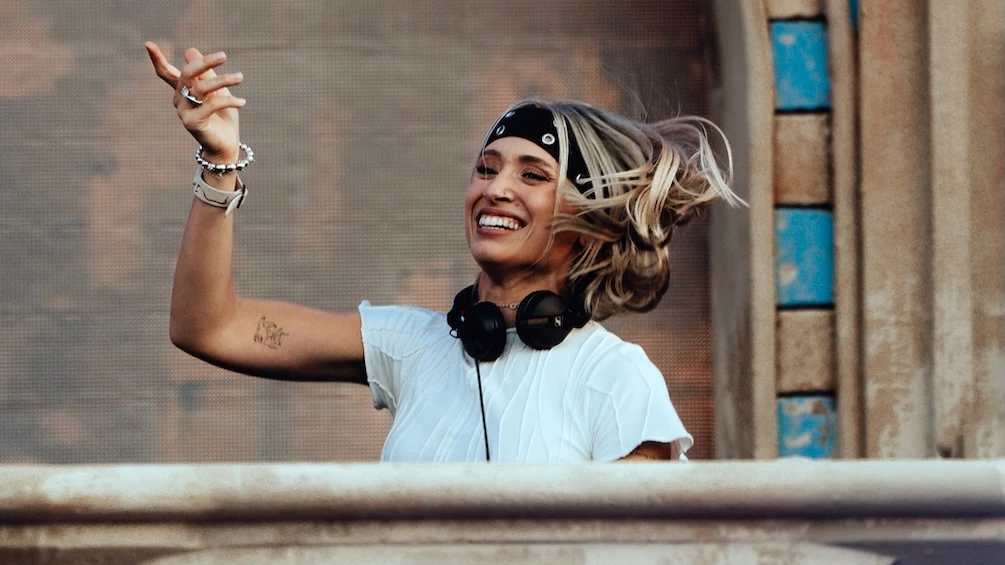
HangupsMusic.com – Boom, Belgium, as the dust settles on the sprawling plains of De Schorre following the monumental conclusion of Tomorrowland 2026, the electronic music community finds itself once again grappling with a fundamental question of the modern era: is the dancefloor a place for personal liberation or a stage for digital documentation? This conversation has been reignited with particular fervor by Belgian hard techno sensation Novah, whose meteoric rise has coincided almost exactly with the dominance of social-media-driven rave culture. In a series of candid reflections shared during the festival’s high-octane weekends, Novah offered a nuanced perspective on the "phone problem" that plagues contemporary nightlife, providing a voice to the growing segment of artists who fear that the soul of the clubbing experience is being filtered through a five-inch screen.
Speaking backstage during the first weekend of the festival, shortly after delivering a high-energy performance that solidified her status as one of the genre’s most compelling new leaders, Novah sat down to discuss the evolution of the scene. While many artists have taken a hardline stance against mobile devices—ranging from stickers on camera lenses to outright bans—Novah’s approach is rooted in an emotional plea for presence rather than a regulatory mandate. She observed that the compulsion to record every "drop" and every peak moment of a set creates a barrier between the performer and the audience, effectively diluting the very energy that makes live electronic music transformative.
The artist admitted to a sense of melancholy when looking out from the booth only to be met by a sea of glowing rectangles. For Novah, a techno set is not a collection of isolated highlights intended for fifteen-second clips; it is a narrative journey. She emphasized that her performances are designed as cohesive stories, built on shifts in tension, emotional release, and rhythmic complexity. When a dancer focuses on framing the perfect shot, they inevitably disconnect from the "story" being told through the speakers. "Try to understand what I’m playing," she urged, pointing toward the importance of internalizing the music’s emotional weight rather than merely capturing its visual evidence. The tragedy, in her view, is that the act of filming inherently prevents the individual from fully experiencing the euphoria they are trying to preserve.
However, Novah’s critique is far from a one-dimensional "old man yells at cloud" rant. She occupies a unique and somewhat precarious position in this debate. Having broken through during an era where viral visibility is the primary currency of the music industry, she is acutely aware of the irony inherent in her stance. She acknowledged that her own platform and the global recognition she now enjoys are, in no small part, products of the digital ecosystem she is questioning. The very videos she finds distracting on the dancefloor are often the same ones that introduce her sound to a teenager in South America or a promoter in East Asia. This admission of the "phone paradox" adds a layer of sophisticated honesty to her argument; she isn’t "bashing" her fans, but rather expressing a protective concern for the quality of their experience.
The Belgian artist’s reflections also touched upon a generational shift in how we define a "good time." Reminiscing about her own formative years as a raver, Novah described a starkly different environment. In those days, the idea of a phone on the dancefloor was almost an oxymoron. The goal was to lose oneself—and occasionally lose one’s phone in the process—within the collective anonymity of the crowd. This lack of documentation allowed for a purity of expression; when no one is watching through a lens, the dancer is free from the performative pressure of the "social media gaze." For Novah, the mental health benefits of this unplugged state are profound. The ability to exist entirely in the "now" is a rare commodity in 2026, and she believes the dancefloor should be one of the few remaining sanctuaries where that presence is not only possible but encouraged.
The broader industry context of Novah’s comments cannot be ignored. Her remarks come at a time when the "No Phones" movement is gaining significant traction across the global clubbing landscape. Institutions like Berlin’s Berghain have long enforced strict bans to protect the privacy and immersion of their patrons, but the trend is moving into the mainstream. Major touring artists have begun implementing Yondr pouches—locked neoprene sleeves for mobile devices—to ensure their shows remain an ephemeral, shared secret. Novah’s discourse contributes to a middle-ground philosophy: one that asks for a voluntary shift in culture rather than a forced technological restriction. She suggests that while social media is a necessary tool for the modern professional, it should not be allowed to cannibalize the actual event it is meant to promote.
Novah’s presence at Tomorrowland 2026 was a testament to her current dominance in the hard techno sphere. Her Weekend One set on the Mainstage was a landmark moment, characterized by a relentless BPM and an industrial grit that felt surprisingly at home on the world’s most famous festival stage. It was during this set that Brazilian superstar Alok was spotted among the crowd, shedding his Mainstage-headliner persona to simply dance to Novah’s uncompromising sound. This moment of peer-to-peer respect underscored the raw, infectious energy Novah brings to her craft—an energy that, as she argues, is best felt when the hands are in the air rather than holding a device.
Following her Mainstage triumph, Novah returned for Weekend Two to command the Atmosphere stage, a venue known for its immersive production and its focus on the deeper, more intense shades of electronic music. Here, the "story" she spoke of was even more apparent. The Atmosphere stage, with its cavernous feel and dedicated techno audience, provided the perfect laboratory for her to test the limits of crowd connection. In this setting, the contrast between the dancers who were "lost" in the music and those who were viewing the set through their screens was even more pronounced.
The debate Novah has entered is one that reflects a wider societal struggle with digital saturation. As festivals like Tomorrowland continue to push the boundaries of visual production, the temptation to record everything becomes almost irresistible. Yet, the artist’s plea reminds us that the most vivid memories are rarely those stored on a cloud server. They are the ones etched into the nervous system through the physical vibration of a bass bin and the shared sweat of a thousand strangers.
As the final sets of Tomorrowland 2026 echoed through the Belgian countryside, Novah’s message remained a poignant takeaway for the tens of thousands in attendance. The modern industry may demand a digital footprint, and the "content" may be the engine that drives ticket sales, but the core of the rave remains an analog experience. By encouraging her fans to put down their phones, Novah isn’t just asking for better etiquette; she is advocating for the preservation of the dancefloor’s most sacred element: the unfiltered, unrecorded, and utterly temporary moment of human connection.
In the end, Novah’s perspective is an invitation to reclaim the dancefloor. It is a call to move away from the role of the spectator-documentarian and back toward the role of the active participant. As hard techno continues to evolve and reach ever-larger audiences, the balance between the digital and the physical will remain a central tension. Artists like Novah, who are brave enough to critique the very tools that helped build their careers, will be essential in ensuring that the future of electronic music is something we feel, rather than something we just watch.
