
 By Azzam Bilal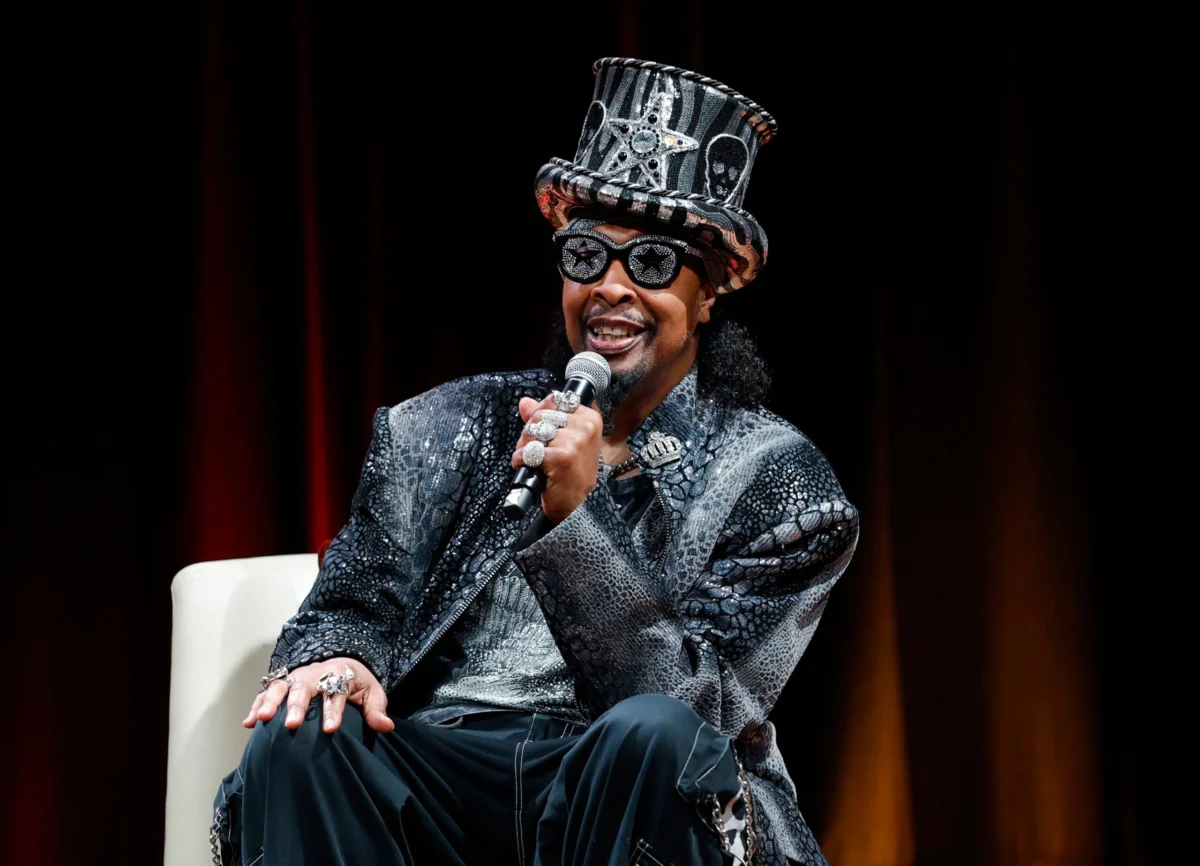
HangupsMusic.com – CINCINNATI, The landscape of American music is populated by titans, but few possess the kaleidoscopic brilliance and rhythmic gravity of William "Bootsy" Collins. In an announcement that has sent ripples through the global community of "Funkateers," the legendary bassist has revealed plans to release his first comprehensive memoir. Titled Funked Around, Found Out, the book is scheduled to arrive on bookshelves on March 23, 2027. This literary venture promises to be more than a simple autobiography; it is positioned as a definitive history of the groove, curated by one of its primary architects.
Collaborating with acclaimed pop culture historian Caseen Gaines, Collins intends to take readers on a deep dive through a career that spans more than half a century. From the humid recording booths of Cincinnati to the sold-out arenas of the "Mothership Connection" era, the memoir will chart the evolution of a self-taught prodigy into a global icon of cool. At 74 years old, Collins remains a vibrant force in the industry, and this book serves as a testament to his enduring influence on soul, rock, hip-hop, and the very concept of the "One."
The narrative begins in the heart of Ohio, where a young William Collins and his older brother, the late guitar virtuoso Phelps “Catfish” Collins, first began to experiment with the sounds of the street. Together, they formed the Pacemakers, a tight-knit outfit that quickly gained a reputation for their unrelenting energy and precision. The memoir will explore these formative years in Cincinnati, a city that served as a crucial, if often overlooked, hub for the development of rhythm and blues. The bond between the Collins brothers serves as the emotional backbone of the early chapters, illustrating how their familial synchronicity laid the groundwork for some of the most influential bass-and-guitar interplay in recorded history.
The trajectory of the Pacemakers took a historic turn in 1970. In a moment of industry upheaval, James Brown—the "Hardest Working Man in Show Business"—found himself without a backing band after a mutiny over pay and working conditions. The call went out to the young Pacemakers, who were whisked away to join the Godfather of Soul. Rechristened as the JB’s, this iteration of the band would go on to record foundational tracks like "Get Up (I Feel Like Being a) Sex Machine" and "Super Bad."
Funked Around, Found Out promises an unvarnished look at life under the strict baton of James Brown. While Brown was a mentor who taught Collins the fundamental philosophy of "The One"—the rhythmic emphasis on the first beat of the measure—he was also a notoriously demanding taskmaster. The book will detail the "fines" system Brown utilized to maintain discipline; missed notes, scuffed shoes, or a lack of eye contact could result in immediate financial penalties. This tumultuous relationship, characterized by a mix of profound respect and professional friction, eventually led to the Collins brothers seeking a different kind of creative freedom.
That freedom was found in the orbit of George Clinton. The memoir will meticulously document the transition from the military precision of the JB’s to the psychedelic, Afro-futurist chaos of the Parliament-Funkadelic collective. If James Brown taught Bootsy how to play the bass, George Clinton taught him how to be a star. It was during this period that the "Bootsy" persona truly crystallized—complete with star-shaped glasses, rhinestone-studded outfits, and the iconic "Space Bass." The book explores the internal dynamics of the P-Funk collective, delving into the occasionally challenging friendship between Collins and Clinton as they navigated the highs of superstardom and the complexities of managing a massive, multi-faceted musical movement.
However, the memoir is not merely a collection of studio sessions and concert dates. It promises to pull back the curtain on the more dangerous and surreal aspects of life on the road during the height of the funk era. Among the more provocative stories included is an account of the time Collins found himself in the crosshairs of a member of the Black Mafia Family in Florida. What started as a casual one-night stand reportedly escalated into a high-stakes confrontation, illustrating the often-perilous intersections of the music industry and the criminal underworld of the 1970s and 80s.
In another harrowing anecdote, Collins recounts an encounter with the Los Angeles Police Department that serves as a sobering reminder of the racial climate of the era. According to the bassist, members of Parliament-Funkadelic were once mistaken for escaped convicts by local authorities. The situation escalated into a "detailed cavity search," an invasive and humiliating experience that underscores the systemic challenges faced by Black artists even at the peak of their fame. By including these moments, Collins ensures that the memoir is not just a celebration of his music, but a candid reflection on the realities of being a Black man in America during a period of massive social transition.
Adding a modern perspective to the legendary bassist’s story, the book features a foreword by Snoop Dogg. The relationship between the two artists is well-documented, with Snoop frequently citing Bootsy as a primary influence on the G-Funk sound that dominated the 1990s West Coast rap scene. As a longtime friend and frequent collaborator, Snoop Dogg’s introduction is expected to bridge the gap between the pioneers of the 1970s and the hip-hop generation that sampled their grooves to create a new musical language.
Caseen Gaines, the book’s co-author, brings a wealth of experience in documenting the nuances of pop culture history. His involvement suggests that the memoir will be rigorously researched and contextualized, providing readers with a sense of the cultural and political environment that allowed funk to flourish. The partnership aims to balance Collins’ inimitable voice and slang—often referred to as "Boot-talk"—with a narrative structure that makes the history accessible to both die-hard "Funkateers" and casual music fans.
The title itself, Funked Around, Found Out, is a playful nod to the modern vernacular while retaining the irreverent spirit that has defined Collins’ career. It suggests a life lived without hesitation, a willingness to experiment, and a readiness to accept the consequences of a life lived in the spotlight.
In a statement regarding the upcoming release, Collins emphasized his commitment to transparency. He described the book as "the straight up, real deal," adding his signature flair by stating, "If I’m lyin’, I’m dyin’, and I ain’t ready to go yet." This sentiment captures the essence of what the memoir aims to achieve: a lively, honest, and perhaps slightly exaggerated retelling of a life that has been anything but ordinary.
As the 2027 release date approaches, the anticipation for Funked Around, Found Out is expected to grow. For many, Bootsy Collins is the living embodiment of the bass guitar’s power to move both the body and the soul. His journey from a teenager in Cincinnati to a Rock and Roll Hall of Fame inductee is a quintessentially American story, filled with innovation, struggle, and an unwavering commitment to the groove.
The book will likely serve as a vital historical document, preserving the stories of an era when music was being reinvented in real-time. Whether discussing the technical aspects of his unique bass tone or the spiritual philosophies that guided the P-Funk movement, Collins remains a singular voice. By the time the Mothership finally lands on the printed page, readers will have an unprecedented look into the mind of the man who taught the world how to "stretch" their ears and keep the funk alive.
