
 By admin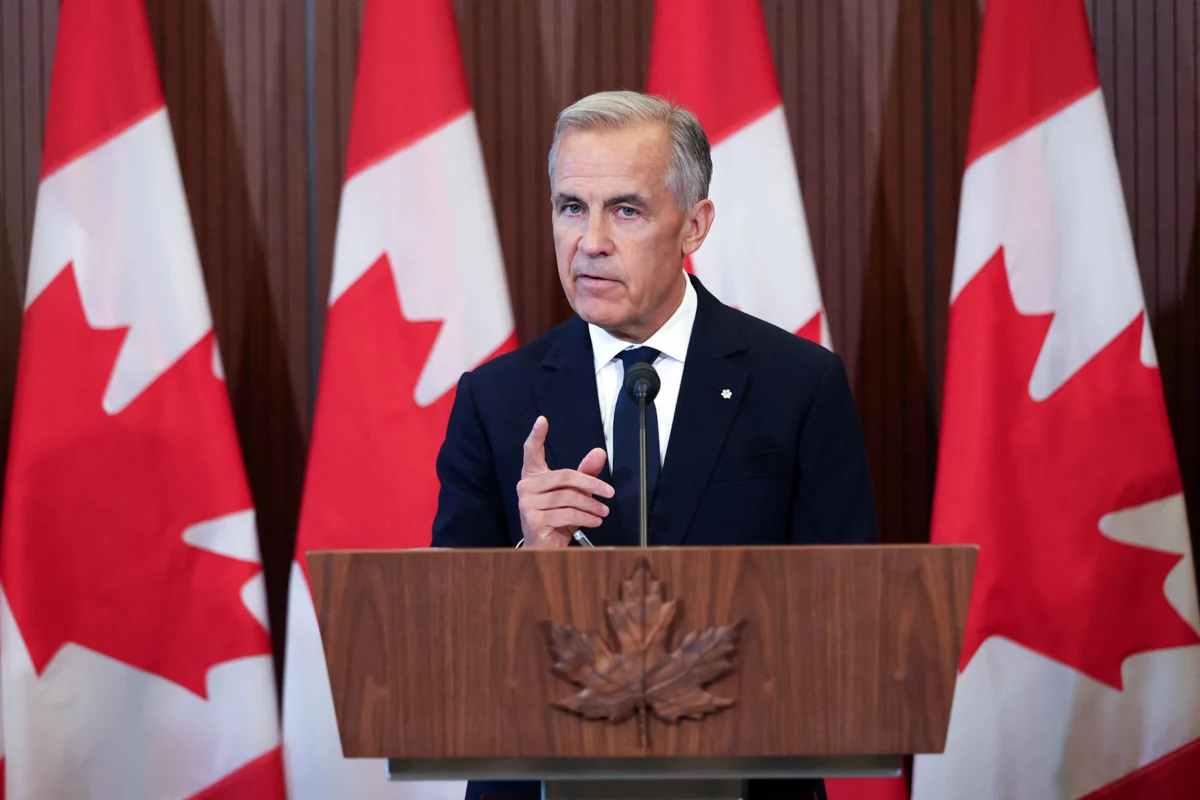
HangupsMusic.com – In an unfolding saga of international relations, Canadian Prime Minister Mark Carney emerged as a formidable counterpoint to then-U.S. President Donald Trump, a dynamic that observers suggest fundamentally challenged the very underpinnings of Trump’s executive authority. This geopolitical clash, far from being a mere trade dispute, evolved into a strategic confrontation that threatened to redefine global alliances and the perception of American leadership.
The Trump presidency was often characterized by a series of self-inflicted challenges, ranging from allegations of corruption and economic instabilities like rising inflation and gas prices, to the controversial actions of federal agencies and the perceived judicial extremism of the Supreme Court. Beyond these, critics frequently cited the president’s personal traits—vanity, self-pity, and an unprovoked, ultimately catastrophic military engagement in Iran—as stemming from an overarching conviction in his own unparalleled capabilities. However, many analysts now pinpoint a seemingly minor, almost quixotic decision as a pivotal moment in Trump’s political narrative: his administration’s unexpected pivot to economic aggression against Canada.
This aggressive posture against America’s northern neighbor, despite President Trump’s repeated and often bewildering assertions of his capacity to cripple the Canadian economy, paradoxically strengthened Canada’s resolve. Over a period of weeks, Prime Minister Carney, with a quiet yet profound efficacy, navigated the complex terrain, effectively curtailing the U.S. president’s capacity to lead the free world through anything other than what some described as an elaborate system of economic coercion.
A powerful historical analogy, rooted in the traditions of the Pacific Northwest’s Indigenous peoples, illuminates the situation: the potlatch. In this ceremonial display, a chieftain would conspicuously consume or even destroy valuable possessions to demonstrate the tribe’s immense wealth and power. To European observers, such acts seemed wasteful, yet for First Nations communities, it was a sophisticated assertion of dominance, a way to deter conflict by showcasing overwhelming strength. The destruction, far from being pointless, was a finely calibrated message of supremacy, a lesson familiar to every Canadian schoolchild.
President Trump, who frequently styled himself as a dominant figure, appeared to craft a contemporary, albeit inverted, form of this potlatch. By initiating an unprovoked trade conflict with Canada, his administration risked dismantling some of the United States’ most invaluable assets: its network of international alliances, the sanctity of its constitutional principles, global respect, established friendships, mutual trust, and the very rule of law. Instead of projecting an image of power, these actions, according to critics, exposed a fundamental vulnerability and a loosening grasp on diplomatic realities. In this chaotic approach, fueled by what many saw as historical ignorance and a desire to humiliate perceived adversaries, the administration seemed to prioritize domination over coherent trade policy or geopolitical strategy. The economic disruption inflicted upon farmers, fishermen, and auto workers on both sides of the border was interpreted by some as merely collateral damage in service of a presidential ego, the ultimate objective being a demonstration of control.
From a purely economic standpoint, the United States, with an economy more than a dozen times larger than Canada’s, might initially seem to hold an overwhelming advantage in a trade conflict. A "national cataclysm" north of the border, as some described it, might barely register within the vast American market. President Trump’s rationale for these trade wars, often citing an alleged "trade deficit," was frequently criticized as arbitrary, shaped by personal whims and amplified by a cohort of anti-trade advisors. This ever-shifting economic metric was perceived by Canadians as a tool for blackmail, accompanied by a relentless barrage of insults and social media pronouncements that were simultaneously infuriating and bewildering.
The president’s pronouncements often underscored this aggressive stance. "Just watch," he reportedly asserted, promising gratuitous punishment for Canada, likening his approach to an individual shouting at a television, yet wielding the immense power of the commander-in-chief. He famously declared, "All we have to do to cut our trade deficit with a country is not trade with them," a statement made in the Oval Office over a holiday weekend, threatening to halt trillions of dollars in commerce with Europe, Mexico, and Switzerland. This was followed by a social media post depicting American colors draped over all of North America, Greenland, and Iceland, visually asserting dominance. Yet, his most pointed threats were consistently directed at Canada: "If we don’t do any trading with Canada, if we just end all trade with Canada, we’d save ourselves $90 billion. Canada would be in a heap of trouble. I don’t think they’d exist. Because, again, they do 95 percent of their business with us." Such rhetoric, some argued, betrayed a fundamental misunderstanding of complex economic interdependencies.
Following the U.S. administration’s imposition of tariffs on Canada, justified by what were widely perceived as unsubstantiated claims regarding fentanyl trafficking, a steady stream of dismissive and often childish online commentary further inflamed diplomatic tensions. Operating within a framework often likened to a reality television show, complete with artificial deadlines and manufactured drama, President Trump then issued a 30-day ultimatum for a new trade agreement. Failure to comply, he warned, would result in additional 50 percent tariffs, invoking a previously untested statutory justification that many considered a blatant violation of existing bilateral treaties. Faced with the prospect of an increasingly unpredictable and lawless trading environment, Prime Minister Carney chose not to react impulsively. Instead, he engaged in negotiations in good faith, yet with a clear understanding of the underlying power dynamics, adopting a posture described by Canadians as "elbows up." In a classic maneuver, President Trump then prematurely announced a deal with Canada, attempting to corner Carney, but the Canadian leader refused to capitulate, a departure from the response of many other world leaders.
Much like the subjects of countless analyses of confidence tricksters, President Trump often exhibited an unshakeable belief in his own genius, convinced that he alone possessed the clarity to discern truth amidst global deception. The inherent flaw in such a perspective, however, is that those who believe themselves to be exceptionally cunning are rarely as astute as they imagine, especially when their self-deception leads them to embrace their own fabrications, only to encounter an individual capable of seeing through the facade.
Throughout his tenure, President Trump frequently anticipated unquestioning deference from various institutions—the Supreme Court, media networks, prestigious universities, and prominent law firms. This expectation of submission was also evident in his interactions with international figures, such as a former UK Prime Minister reportedly seen scrambling to retrieve his windblown papers, an image that quickly became emblematic of a perceived lack of respect. A common tactic in negotiations involves altering fundamental terms at the eleventh hour. This strategy was applied to Canada in the summer, just as Trump’s self-imposed deadline approached. His representatives reportedly attacked Canada’s distinct French culture, openly questioning the very notion of a separate Canadian national identity. Tariffs were levied on crucial industries—automobiles, lumber, steel, aluminum—and even, some noted with incredulity, on hockey sticks, seemingly to underscore his disdain for Canadian sensibilities.
Under the new terms President Trump sought to impose, the United States would effectively gain control over Canada’s future trade agreements, with Trump reserving the right to unilaterally alter the deal at any time, without notice. Such an arrangement, as Prime Minister Carney succinctly noted, would render any agreement meaningless. The underlying sentiment conveyed by some U.S. officials was stark, epitomized by hypothetical declarations such as, "Lake Ontario, that’s now Lake America, and your prime minister is a governor, and you’re going to wish that you were the 51st state by the time I get through with you."
Yet, in a surprising turn, President Trump’s aggressive posturing met an unexpected resistance in Mark Carney. The Canadian leader, while not actively seeking conflict, demonstrated an unwavering fearlessness. Unbeknownst to Trump, his bluster had led him into a carefully laid trap. By agreeing to negotiations that summer, a full year ahead of the broader North American treaty renewal, Carney had strategically chosen the timing for the inevitable confrontation. With Trump facing an upcoming election, the astute Carney had skillfully created significant leverage. He then amplified the dispute, accurately characterizing America’s actions as a "declaration of war," catching flat-footed American negotiators—who seemingly hadn’t taken Trump’s threats seriously themselves—and adding another layer of advantage to Canada’s seemingly weaker position.

In Carney, the U.S. administration encountered a leader of genuine strength—an understated yet resolute and self-assured individual, embodying Canada’s national character. The irony was palpable: Carney’s election the previous year was largely a direct consequence of Trump’s escalating trade tensions, as he defeated a conservative rival who many believed would have meekly acquiesced to America’s demands. Further irony lay in Carney’s political inexperience, which belied his seemingly genius-level instincts. This unassuming, lean banker, a stark contrast to Trump, proved equally ruthless in his own way. A self-made intellectual with degrees from Harvard and Oxford, Carney represented a meritocratic ideal. Raised by schoolteachers in northern Alberta, in a household that valued education and social responsibility, he ascended to the pinnacle of global finance through sheer intellect and diligence. His resume is a testament to extraordinary achievement, including leadership roles at both the Bank of Canada and the Bank of England, as well as experience at Goldman Sachs and with prominent businessman-turned-politician Michael Bloomberg. Having navigated the 2008 global financial crisis and the complexities of Brexit, Carney possessed a unique understanding of 21st-century economic self-destruction, equipping him to confront Trump’s disruptive trade policies—a fortuitous alignment for Canada.
Indeed, Carney’s mandate explicitly included managing such crises, and Canada had spent decades preparing for this type of conflagration. Living adjacent to a global superpower necessitates a keen awareness of its politics, a reality ingrained in Canadian understanding. As the ancient Chinese philosopher Sun Tzu noted, knowing one’s enemy is paramount in conflict. Carney’s profound familiarity with American dynamics provided him with the insight to exploit Trump’s evident vulnerabilities: a thin skin, hubris, impulsive behavior, and arrogance.
The adage "plan beats no plan" is fundamental to crisis management, a principle understood by executives, coaches, and any discerning individual. Effective leadership requires anticipating and understanding future challenges to avoid perpetual surprise and disarray. This principle defines Carney’s career, the guiding force behind his meticulously accumulated achievements. While Trump, like many historical figures, often eschewed reading, disregarded dissenting opinions, and relied solely on instinct, Carney was a meticulous student of power dynamics and historical precedents. He consistently advised Canadians to control what they could, advocating for diversification and "de-risking" the relationship with an increasingly unpredictable United States. While Europe might seem geographically distant, Russia’s actions in Ukraine and its subsequent withdrawal of resources presented new opportunities for resource-rich Canada. Although European Union membership might seem fanciful, Canadian distrust of America was steadily hardening into genuine anger. Similar logic applied to opportunities in Asia, with Carney actively forging new free trade agreements globally, pursuing a strategy to lessen Canada’s dependence on an unreliable American partner. The realization that Canada had few true allies within the U.S. political and media landscape further solidified this strategic pivot.
Given President Trump’s reputation for employing aggressive, strong-arm tactics reminiscent of Manhattan real estate negotiations, one can only imagine Carney’s strategic calculations when U.S. negotiators began directly targeting French-speaking Canadians and the very concept of a distinct national culture. Such a direct assault on national identity made it politically impossible for Canadians to accept humiliation and subjugation at the hands of what many perceived as an amoral aggressor. As Trump’s designated envoy, Howard Lutnick, escalated demands with last-minute, bad-faith stipulations, it became clear that Carney had no alternative but to withdraw from the negotiations, despite the immediate economic hardship America could potentially inflict.
Thus, Carney’s meticulously crafted plan was set in motion, bolstered by a nation unified in its outrage at America’s belligerence. While Trump could certainly harm Canada, the economic repercussions were not unidirectional. By directly confronting Trump, Carney drew him onto the economic battlefield at a moment when his presidency was already facing significant challenges, with calamitous midterm elections on the horizon. Key electoral races in states heavily reliant on trade with Canada—including Ohio, Maine, New Hampshire, Michigan, Wisconsin, Pennsylvania, and Alaska—became strategic targets. Canada had long-planned tariffs aimed at specific, economically sensitive sectors within these jurisdictions, designed to amplify pressure on an ill-prepared U.S. administration.
Beyond rudimentary insults and dismissive remarks, President Trump consistently demonstrated an absence of a coherent strategy or inclination toward compromise, typically reacting like a cornered animal. Furthermore, his personal vendetta against Canada garnered remarkably little popular support within the United States, an obsession that grew increasingly peculiar with each passing provocation. The struggling North American automotive industry, for instance, had been significantly disrupted by the administration’s policies, leading to billions in losses, particularly concerning electric vehicle development. The imposition of tariffs, effectively taxes, threatened to exacerbate affordability issues for working-class American consumers. The inherent uncertainty and unpredictability of these policies proved lethal to investment strategies, a reality well understood by business leaders and union representatives alike. Across the very "rust-belt" industries Trump claimed to protect, his tariff-taxes distorted markets and inflated costs, seemingly for no other purpose than to inflict harm upon America’s closest ally—an enemy, it seemed, only in the president’s fervent imagination.
The ultimate objective of these actions remained elusive, a question with no discernible rational answer.
Many Americans often held the belief that international observers differentiated between Donald Trump and the broader American populace. However, this self-serving illusion rapidly dissipated for Canadians as the United States waged what was perceived as an economic war of aggression, threatening to impoverish a friendly nation and heedlessly attack its history and sense of identity. When President Trump directly threatened the Canadian dollar, implicitly signaling his intent to undermine Canada’s economic competitiveness, it became front-page news across Canada, yet barely registered in the American press. The few American politicians who offered tepid defenses of Canada were notable not for their robust support of an ally or the rule of law, but for their scarcity and perceived ineffectiveness.
As the trade conflict escalated—or, as some speculated, potentially evaporated into another instance of "Trump Always Chickens Out" (TACO)—the damage to America’s global reputation appeared profound and lasting. Once American arrogance was exposed, it seemed to manifest everywhere, from a U.S. Treasury Secretary reportedly likening Canada to a "yipping dog," to a former President Barack Obama making a distracted appearance at a Toronto speaking engagement, seemingly eager to collect his fee and return to Chicago.
The concept of Damnatio Memoriae, the ancient Roman ritualistic destruction of all memorials to a disgraced tyrant, provides a historical parallel to the challenges facing President Trump’s legacy. His efforts to counteract such a historical erasure, through structures like his White House bunker and ballroom, or a victory arch commemorating no actual victory, were seen by many as doomed to be dismantled or repurposed after his presidency.
With a looming midterm election tsunami, President Trump was increasingly viewed as a lame duck on the international stage, albeit a particularly dangerous one grappling with corruption investigations and the specter of impeachment. However, the damage inflicted upon the nation’s brand—perceived as an "ugly American" and a wannabe neocolonialist hegemon—appeared irreversible. As the trade conflict intensified and Canada retaliated with measured, defensive actions, such as imposing taxes on golf clubs in response to tariffs on hockey sticks, Trump’s impulsive provocations only served to highlight his inability to formulate a winning strategy. When reality inevitably set in, forcing him to conclude his "mindless war" and declare himself the victor—a psychological necessity for his fragile persona—Trump, many believed, would further diminish himself and his country in the eyes of the world. Under his leadership, America risked ending up, much like the president himself, isolated, lost, and friendless.
Despite President Trump’s flailing attempts to wage a mutually destructive conflict, foreign investment in Canada continued to grow. A significant summit for investors, representing trillions of dollars, was held to extol the virtues of backing a reliable, trustworthy nation governed by the rule of law. By strategically holding its primary economic weapons in reserve, in accordance with Carney’s disciplined plan, Canada retained the option of deploying damaging export taxes on critical resources like oil, gas, electricity, and potash—measures that would severely impact American farmers and consumers, to be used only as a last resort. Nevertheless, Canada had already demonstrated to the world that defiance against Trump was possible, even for a nation with so much at stake. Bullies, by their nature, cannot withstand defiance, as it exposes their true character. In this context, Mark Carney, in the eyes of many, emerged as a de facto leader of the free world, advocating for nations too apprehensive to directly confront the American president. Consequently, under Carney’s leadership, Canada, in its understated yet resolute manner, began to forge a new identity as a law-abiding, underdog, yet fiercely independent nation—a reality palpable even to a 15-year-old English cousin, who, during a recent visit to London, expressed genuine awe at Canada’s willingness to stand firm against the bullying president.
"I would kill to be a Canadian," he reportedly remarked.
