
 By Azzam Bilal
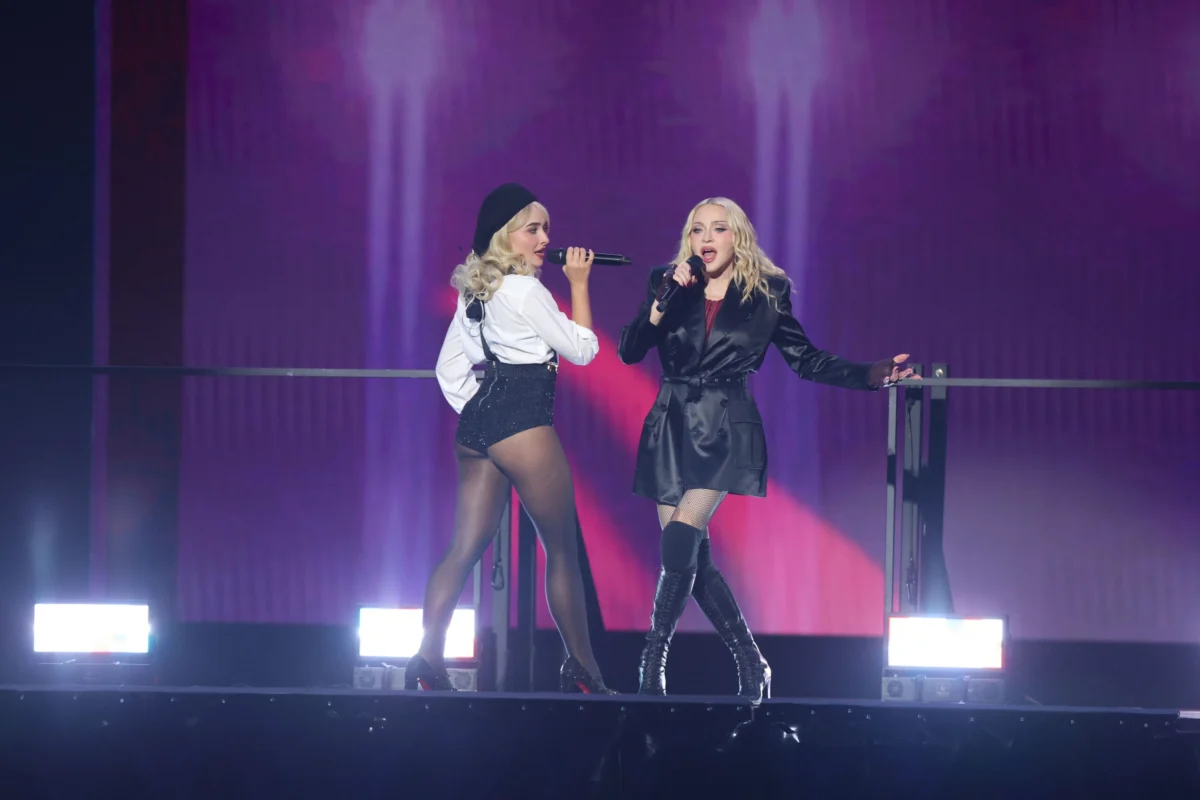
HangupsMusic.com – New York, The lights dimmed, the air crackled with a familiar, electric tension, and for the first time in over two decades, the woman who arguably built the foundation of the MTV Video Music Awards stood center stage once again. In a night defined by a collision of pop eras, Madonna returned to the VMAs not merely as a legacy act, but as the evening’s most formidable contender. Her appearance marked her first time opening the ceremony in 23 years, a staggering interval for an artist whose name is synonymous with the awards show’s most controversial and celebrated moments. By the time the curtains closed, it was clear that the "Queen of Pop" had not just returned to her throne; she had redesigned it for a new generation.
The spectacle began with a high-concept opening that bridged the gap between the 1980s underground and the hyper-polished digital age. Madonna took the stage to the pulsing, synth-heavy rhythms of "Bring Your Love," her latest collaborative single with pop sensation Sabrina Carpenter. The performance was a masterclass in the kind of avant-garde provocation that has long been Madonna’s trademark. In a daring visual metaphor for the industry’s voyeuristic nature, the duo was surrounded by a troupe of bondage-clad dancers who functioned as live steadicam operators, their movements choreographed to capture intimate, jagged angles of the performers that were broadcast simultaneously on the massive screens behind them. The synergy between Madonna’s seasoned stage presence and Carpenter’s bright, modern energy created a "passing of the torch" moment that felt less like a retirement and more like a recruitment.
The momentum did not stall after the opening notes. Later in the broadcast, the narrative of the evening shifted toward Madonna’s critically acclaimed new era, defined by her latest studio effort, Confessions II. In one of the night’s most talked-about set pieces, a bathroom stall appeared on stage—a nod to the grit of New York’s legendary nightlife. Out stepped Charli XCX, the current vanguard of "hyperpop," to join Madonna for a performance of "Danceteria Afterhours." The track, a freshly minted remix of the Confessions II standout "Danceteria," served as a sonic bridge between Madonna’s club-kid roots and the glitchy, high-speed future of electronic music. The chemistry between the two was palpable, turning the stage into a sweaty, high-fashion rave that felt more like a secret warehouse party than a televised awards ceremony.
The theatricality of the evening was further bolstered by a series of carefully curated cameos that celebrated Madonna’s wide-reaching influence on culture and film. Julia Garner, the actress long-rumored to be portraying the icon in a biographical film, made a striking appearance, alongside Madonna’s lifelong friend and muse, Debi Mazar. The stage was also graced by the rising artist Sombr and, in a moment of levity that broke the high-concept tension, actor Seth Rogen, who was seen casually smoking a joint as the cameras panned across the star-studded set. These appearances served as a reminder that Madonna’s world has always been a melting pot of high art, Hollywood glamour, and counter-culture rebellion.
The pinnacle of the night came when Madonna and Sabrina Carpenter were called back to the stage to accept the Moon Man for Best Collaboration. The win was a testament to the cross-generational appeal of "Bring Your Love," but it was Madonna’s acceptance speech that provided the most insight into her enduring work ethic. With her characteristic blend of wit and unapologetic directness, she shared the story of how the partnership began.
"I would like to briefly say how this collaboration came about," she told the cheering audience. "Anybody who knows me knows how impatient I am. When five days passed and I still hadn’t been connected to Sabrina or heard back whether she wanted to do a song with me, I took matters into my own hands and DM’d her directly." The anecdote drew laughter from the crowd, highlighting the "do-it-yourself" spirit that has allowed Madonna to navigate the industry for over four decades. She further charmed the audience by describing their creative process, noting that despite the high-tech nature of their music, she and Carpenter "write our lyrics down on pieces of paper like they did in the 1800s." This juxtaposition of old-school craftsmanship and modern distribution seemed to encapsulate the theme of her current career resurgence.
Statistically, the 2026 VMAs belonged to Madonna before she even stepped foot on the red carpet. She entered the night as the most-nominated artist of the year, racking up 13 nods on the strength of Confessions II. Her nominations spanned the most prestigious categories, including Video of the Year, Artist of the Year, Song of the Year, and Best Album. This dominant performance marks the third time in her storied career that she has led the VMA nominations. She previously achieved this feat in 1990, during the height of the "Vogue" phenomenon, and again in 1998, when the spiritual, electronic textures of Ray of Light and "Frozen" redefined her sound for the turn of the millennium. The fact that she is reaching these heights again in 2026 is a feat of longevity virtually unparalleled in the history of popular music.
To understand the weight of this return, one must look at the history Madonna shares with the MTV Video Music Awards. The last time she opened the show was in 2003, a night that remains etched in pop culture history for her medley performance with Britney Spears and Christina Aguilera. That performance, which famously concluded with a shared kiss between the icons, was a lightning rod for media attention and served as a definitive moment in the early 2000s zeitgeist.
However, her VMA legacy stretches back even further. In 1990, she delivered a performance of "Vogue" that remains a benchmark for awards show production, featuring an 18th-century French-inspired aesthetic complete with Marie Antoinette-style gowns and intricate choreography. Even earlier, she headlined the very first VMAs in 1984, where she performed "Like a Virgin" while rolling across the stage in a wedding dress, a move that shocked the industry and signaled the arrival of a new kind of superstar.
The 2026 ceremony felt like a deliberate nod to all these past versions of herself while firmly planting her feet in the present. By collaborating with artists like Sabrina Carpenter and Charli XCX, Madonna is not merely chasing trends; she is validating the new guard while reminding the world who set the template for them to follow. The critical reception of Confessions II has played a significant role in this "re-reclamation." The album has been hailed as a sophisticated evolution of the dance-pop sound she perfected on the original Confessions on a Dance Floor in 2005, blending nostalgic disco grooves with contemporary production.
As the night concluded, the narrative was not just about a comeback, but about the enduring power of reinvention. Madonna’s 13 nominations and her explosive performances served as a rebuttal to those who suggest that pop music is a young person’s game. In the world of the VMAs, where trends often burn out as quickly as they ignite, Madonna’s presence provided a sense of continuity and prestige. She remains the primary architect of the music video as an art form, and her return to the VMA stage was a vivid reminder that the Queen’s influence is as potent today as it was when she first climbed out of that wedding cake forty-two years ago. For fans and critics alike, the 2026 VMAs will be remembered as the night Madonna proved that she doesn’t just follow the beat of pop culture—she still dictates it.
