
 By admin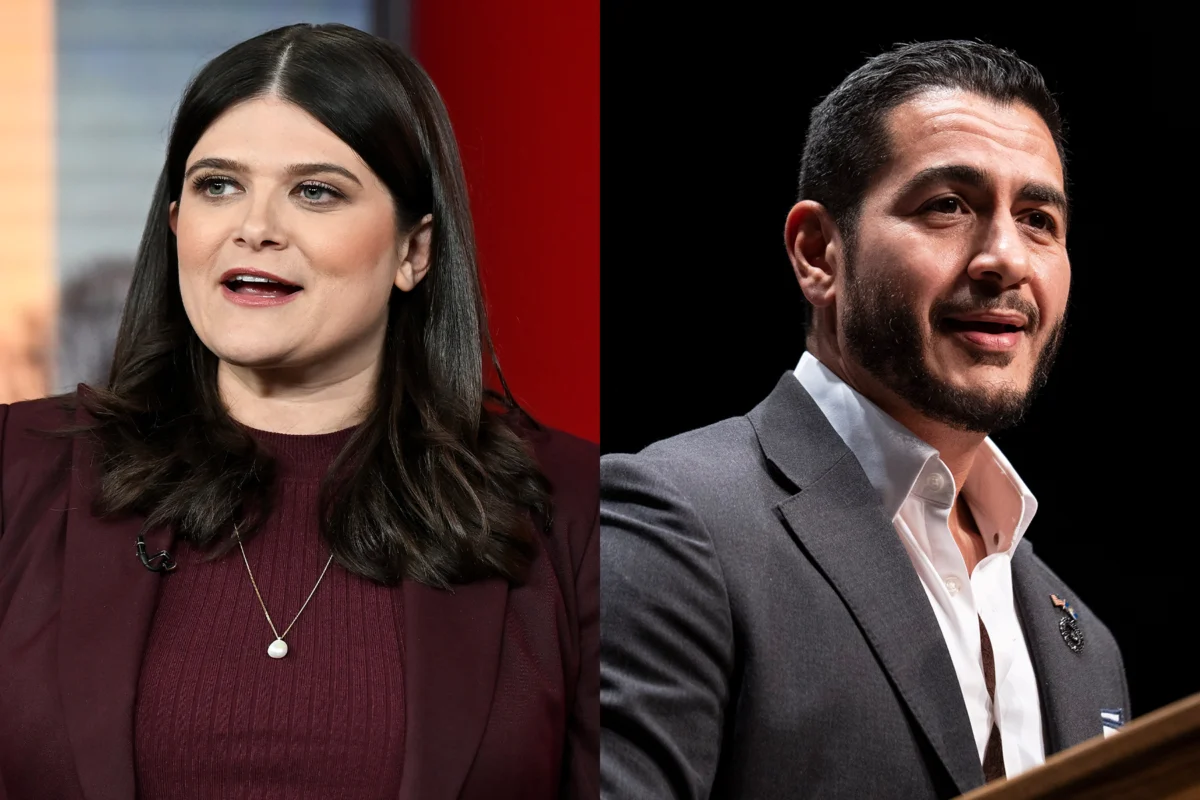
**HangupsMusic.com – Michigan, As the summer heat bears down on Michigan, the Democratic primary for a coveted U.S. Senate seat has ignited into a crucible, forging a contest that defies conventional wisdom and threatens to reshape the very bedrock of the party’s future. In one corner stands Abdul El-Sayed, an Egyptian-American physician and public health advocate, a figure who embodies the resurgent progressive spirit. Opposing him is Representative Haley Stevens, a seasoned incumbent with deep ties to the Democratic establishment. What began as a seemingly predictable race has morphed into an electoral spectacle, a clash of ideologies and generational shifts that reverberates far beyond the Great Lakes State.
El-Sayed’s journey to this moment is itself a narrative arc of political resilience. In 2018, he first captured the attention of Michigan voters with an insurgent gubernatorial campaign. Armed with an impressive academic pedigree—University of Michigan, Oxford, Columbia Medical School—but no prior political office, he championed a platform reminiscent of Senator Bernie Sanders. His message, centered on dismantling the corrosive influence of money in politics and untangling the intricate web connecting government and corporate power, struck a chord with a segment of the electorate. Yet, his efforts to challenge the entrenched political order and powerful special interests proved to be an uphill battle. The political machinery of the state, including key figures like Gretchen Whitmer, then a gubernatorial candidate herself, presented a formidable, unified front. Despite his passionate appeals, El-Sayed found himself facing an electorate that, at the time, seemed largely disengaged from the systemic reforms he proposed. He ultimately lost to Whitmer by a significant 22-point margin, a stark reminder of the establishment’s enduring power.
Fast forward eight years to 2026, and El-Sayed is back, not just as a candidate, but as a standard-bearer for a revitalized movement. His campaign for the Senate echoes his earlier crusade, distilled into a potent mantra: "money out of politics, money in your pocket, Medicare for all." This time, however, the political landscape has shifted dramatically. While the Democratic establishment, including Governor Whitmer and the state party apparatus, has once again thrown its considerable weight behind Stevens, and external groups like AIPAC have poured tens of millions of dollars into her campaign coffers, outspending El-Sayed by an astonishing 12-to-1 margin, the ground beneath their feet feels different.
The most striking indicator of this change comes from recent polling data, which places El-Sayed ahead of Stevens by a decisive 10 points heading into Tuesday’s primary. This unexpected turn of events suggests a profound recalibration of voter priorities and a potential rejection of the traditional political playbook. It’s a moment akin to the rare appearance of Halley’s Comet, a celestial event where established political gravity seems to lose its hold, and the conventional wisdom of endorsements and unlimited spending begins to look less like a winning strategy and more like a mutually agreed-upon pact of political obsolescence.
This new reality has squarely landed on Haley Stevens’ doorstep. Known for her pragmatic, "worker bee" approach and a distinct Midwestern accent that punctuates her promise to "stick-it-to-’em"—though the precise target of this resolve often remains somewhat ambiguous—Stevens has diligently pursued her campaign in her characteristic, industrious style. Her resume is impressive: serving in the U.S. House since 2019, she has cultivated a broad base of support from Democratic luminaries. Beyond Governor Whitmer, her endorsements include the retiring Senator Gary Peters, former Senator Debbie Stabenow, and Senate Majority Leader Chuck Schumer. High-profile figures like Representative Jim Clyburn have even traveled to Detroit to rally on her behalf. The airwaves are saturated with advertisements funded by AIPAC, a long-standing supporter of Stevens, strategically linking her past work on the Obama administration’s auto industry bailout to an implied, though never explicitly stated, endorsement from former President Barack Obama himself.
The overwhelming financial backing for Stevens, particularly from AIPAC, is widely understood to be an effort to prevent El-Sayed from becoming the first Muslim elected to the United States Senate. Yet, if the polls are to be believed, this formidable financial and institutional might has, thus far, failed to sway the electorate. The frustration within the Stevens campaign became palpable during the race’s final debate. There, Stevens launched a direct attack on El-Sayed, not for his policies, but for his perceived popularity. "My opponent here, Abdul, he is such a talented guy," Stevens conceded, perhaps begrudgingly. "He’s written three books, he’s had 300 podcasts. You know, he’s had all this attention, but the deal is we don’t need a celebrity candidate. We don’t need a celebrity senator. We need somebody who is committed to six years of hard, unglamorous work."
This line of attack, invoking the time-honored political adage of preferring a "work horse" over a "show horse," has historically resonated with Michigan voters. For decades, the state has tended to elect Democratic senators known more for their diligent, often understated, service than for charismatic flamboyance. So, what has fundamentally shifted in Michigan’s political calculus? Conversations with voters and activists across the state consistently point to two pivotal factors: the ongoing conflict in Gaza and the perceived political missteps surrounding Vice President Kamala Harris.
The issue of Gaza has emerged as a significant fault line within the Democratic Party, and particularly so in Michigan, home to a substantial Arab-American population. El-Sayed has relentlessly highlighted the massive AIPAC expenditures on behalf of Stevens, turning what was once a political asset for her into a heavy anchor in the current climate. What once served as a "life preserver" for Stevens in past elections, now threatens to drag her beneath the waves of public opinion. El-Sayed’s critics have attempted to label him as antisemitic due to his vocal opposition to unrestricted military aid for Israel, a charge he deftly counters by reminding reporters of his equally firm stance against unrestricted military aid for Egypt. He has also demonstrated a willingness to directly confront AIPAC, a rarity in American political campaigns. In a recent interview, El-Sayed addressed the organization head-on, declaring, "You picked the least capable candidate in America. If you think you can beat money out of politics, money in your pocket, Medicare for all, come." Stevens’ swift retort on social media, tweeting, "Everyone in America understands you want to blame all of your problems on Jewish Americans," underscored the raw tension and deep divisions this issue has exposed.
The second critical factor, according to many, stems from the political fallout surrounding Vice President Kamala Harris. At a recent El-Sayed event in Ypsilanti, former Representative Andy Levin, a scion of a prominent Michigan political family who himself lost a congressional primary to Stevens in 2022 following significant AIPAC spending due to his mild support for a two-state solution, offered a succinct explanation for the changed environment: "Gaza." Levin further elaborated that Harris’s electoral struggles in Michigan were not primarily due to the number of votes garnered by her Republican opponent, but rather her campaign’s pursuit of the "mushy middle." This strategy, he argued, left a significant portion of the Democratic base uninspired and politically disengaged. (It should be noted that Stevens’ supporters vehemently counter this narrative, suggesting that it was El-Sayed and other progressives, by backing an "uncommitted" slate against Joe Biden during the Michigan presidential primary, who ultimately dampened voter enthusiasm.)
After the Ypsilanti event, held at the Michigan Firehouse Museum, Levin gestured towards the spoked wheel of an antique fire truck, using it as a metaphor for political strategy. "We’re always told the battle is for the middle of the spoke," he observed, then moved his hand an inch to the left of the center. "But what if we strengthened and inspired this part?" This analogy perfectly encapsulates the strategic divergence at play: Stevens aims to appeal to the broad center, while El-Sayed seeks to galvanize and expand the progressive base.
Stevens’ closing argument in the primary centers squarely on the concept of "electability." Her campaign and allies have disseminated polls, some of questionable methodology, suggesting she would be a stronger contender against Republican nominee Mike Rogers in the general election. Indeed, many Michigan politicians who had previously criticized El-Sayed for his "uncommitted" stance—despite his swift endorsement of Harris once she topped the national ticket—are now hinting that they might struggle to support him in the general election. Stevens consistently emphasizes her proven ability to attract, precisely, that "mushy middle" in November. "I am the only one on this stage who has beaten MAGA four times," Stevens declared, referencing her multiple congressional victories in highly competitive suburban districts.
In a typical political cycle, such an argument might carry the day, particularly in a swing state like Michigan. But 2026 is demonstrably different. On Tuesday, Michigan Democrats will confront a fundamental question, one that transcends mere policy differences: What if the party chooses passion and transformative change over perceived safety and incrementalism? The answer they provide, the candidate they ultimately select, could send profound ripples throughout the Democratic Party, not just within Michigan’s borders, but across the national political landscape for years to come, signaling a potential new rhythm for American politics.
